

Skip to Main Navigation Skip to Sub Navigation Skip to Page Content
StopWaste.Org
StopWaste.Org
Green Building Bay-Friendly Stop Waste
  Bay-Friendly Plant Selection

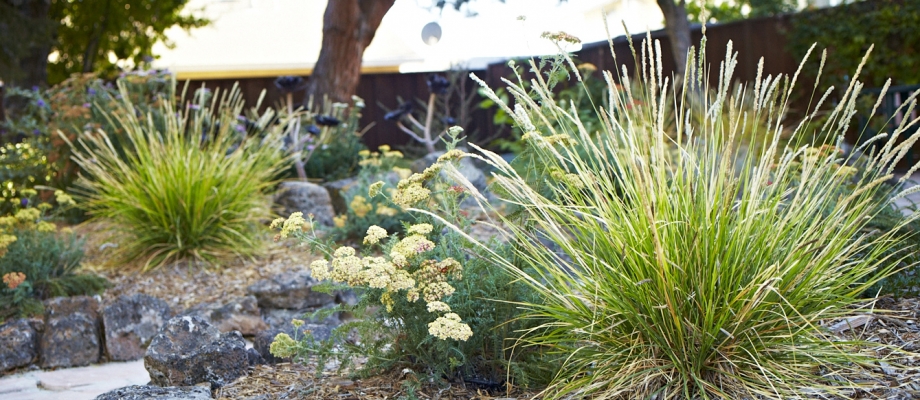
Native Landscaping A Bay-Friendly plant pallet addresses a variety of concerns including: reducing waste, minimizing water use and pest invasiveness, increasing resistance to pests, providing food and shelter for wildlife, matching a plants' horticultural requirements to soil conditions and climate.

In fact, selecting the right plant for the right place is a critical practice for meeting many of the principles of Bay-Friendly landscaping.  For example, reducing waste can be accomplished by selecting plants that match the microclimate and soil conditions.  Doing so can also conserve water and prevent pest problems - the first step in integrating pest management and thus protecting water and air quality.

Choosing plants that can grow to their natural size in the space allotted them can reduce labor and foster plant health.  On the other hand, selecting a plant or plants to grow in too small a space starts a lifelong battle with the plant's genetics, thereby inviting disease and insects, generating unnecessary waste or increasing the fuel load. 

Shearing is a horticulturally unsound practice that is labor intensive, encourages excessive new growth that can lead to unhealthy plants and increased waste.  What's more, sheared hedges and screens have lots of deadwood under the dense green crown because of the lack of light reaching into the hedge.  This dieback in the center of the plant often increases its flammability.  Replacing sheared hedges with plants that can also grow to their natural shape and size reduces the cost for labor to regularly shear the hedges and can decrease the fuel load while reducing waste. 

Invasive plant species used in landscaping often escape into our natural areas, where they can spread rapidly and out-compete natives, degrade wildlife habitat and increase the fuel load.  Never planting invasive species reduce wastes, contributes to healthy landscapes and prevents pollution.  Familiarize yourself with Invasive garden plants of the greater San Francisco Bay area, as well as suggested California native alternatives.  The cost of later pulling these species out of the landscape, neighboring sites or wild lands will be avoided.  Waste will then be reduced and ecosystem diversity protected.

Many California native plant species are adapted to little water during the dry summer, making their selection important for creating water conserving landscapes.  Plants from other Mediterranean climates (Chile, South Africa, Australia and the Mediterranean countries) are also well suited for minimizing water use.   Nurseries are offering more natives species than in the past, with the increased demand.

Specifying and planting a wide variety of California natives is part of integrated pest management: diverse plantings attract local beneficial insects and resist pest damage. Using the local, natural plant communities as a model can also help you create diverse, spectacular landscapes that conserve water, attract wildlife and protect the San Francisco Bay watershed.  The common local plant communities and local native plant lists found in this section are offered as ideas for ways to create beautiful, functional and Bay-Friendly landscapes.

Of course plant pallet should also appeal to the human audience in beauty and function.
Thoughtful plant selection, based on the above plant selection practices can yield beautiful landscapes that meet the needs of your clients, while conserving resources.


pachecho
"People are focused on how the landscape looks right after planting. This means that shrubs are planted so tightly that they can't reach maturity or flower and this leads to higher maintenance costs."
--George Pacheco, Owner/President, Pacheco Brothers Gardening, Hayward


© 2010  Alameda County Waste Management Authority & Alameda County Source Reduction and Recycling Board

space image