

Q: I’m shopping for a new home. What green building questions should I be asking the new home sales staff?
Q: What are the top things I can do NOW to green my home without spending any money?
Q: I’d like to remodel my home green, but I’m unsure about what products to use.
Q: What should I look for in a contractor?
Q: What is the best way to save water in my home?
Q: I think I'd like a green home but I'm not really sure what one looks like?
Q: I would like to build a green home or even just remodel my home in a green fashion. How can I find a builder who is willing to do that for me?
Q: Does building "green" cost more?
Q: I'm a builder and want to know how to better recycle my construction and demolition waste. Can you help me?
Questions on Indoor Air Quality (IAQ)
Q: What is a HEPA filter?
Q: How can I prevent air infiltration into my home?
Q: How can I prevent leaky ducts?
Questions on Energy Use
Q: What is the Home Performance Rating?
Q: Is solar energy better?
Q: Can I save energy by way of my water heater?
Q: What is the Energy Star sticker on appliances mean?
Questions on Materials
Q: Can I use wood flooring in my home and still qualify under green building criteria?
Q. What is the greenest flooring option I can use?
Q: What is certified sustainably harvested lumber and where can I find it?
Q: Why are "engineered" wood products better?
Q: What is recycled plastic lumber?
Questions on Windows
Q: What are the benefits of high-performance windows?
Questions on Cabinets, Finishes, Adhesives
Q: What are the alternatives to cabinets made from particleboard (PB) or medium density fiberboard (MDF)?
Q: What is a "less-toxic" finish?
Q: What are "low-toxic, solvent-free adhesives"?
Q: How long do VOCs outgas from paints? How about particleboard?
Questions on Siding, Trim
Q: Why is fiber-cement siding considered to be green?
Q: What constitutes fiber-cement siding and other exterior finish alternatives?
Questions on Insulation
Q: What types of green building insulation are available?
Questions on Quality and Affordability
Q: How does green building add quality?
Q: How is green building affordable?
Q: Why buy regional or local products?
Questions on Energy
Q: What is the most cost-effective way to reduce my 1920s vintage home's energy use?
Q: I don't like the way fluorescent light looks—are there other energy efficient lights?
Q: I’m shopping for a new home. What green building questions should I be asking the new home sales staff?
A: Basically, ask questions so that you understand if the builder is or is not knowledgeable about green building. This will help you assess whether they are trying to deliver a home that is higher quality than what you typically see in the marketplace: a green home that is energy and water efficient, durable and easy to maintain, and provides healthier indoor air quality for your family. You will quickly see if the builder is able to answer these questions with ease or not.
Some sample questions to ask:
- What are the green features that you have in your basic homes? Can you explain each of them to me?
- How many points on the GreenPoint checklist does your basic home achieve and will you give me your filled out checklist noting the particular features? (Note: Some cities require a certain number of points for new homes in their area. Find out if the builder is just doing the least required or if they are going beyond the minimum.)
- What are my green options that I could choose to add beyond your basic offering and can you explain their benefits to me?
- What is in the home to make it more energy efficient than what is required to pass California’s minimum Title-24 energy efficiency standards. OR What percentage above Title-24 standards is this home?
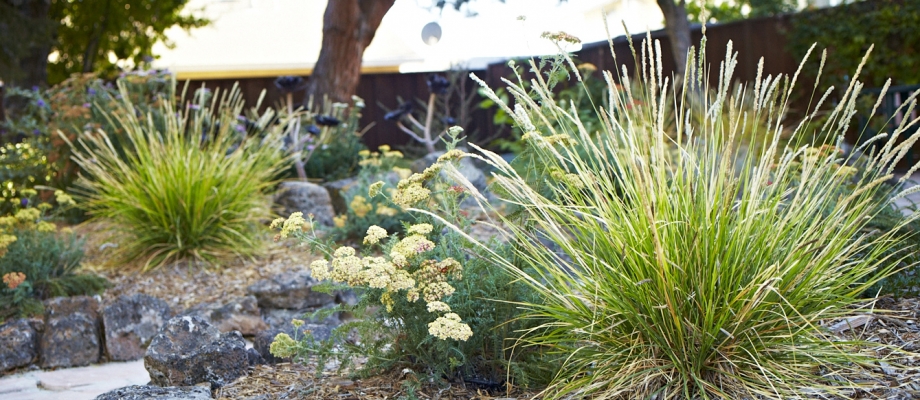
- What types of native and drought-tolerant plants, and high efficiency drip irrigations systems are you using on the homes, so that I will not have to spend as much money maintaining my landscape? Go to the Bay-Friendly Gardening website for more information.
- What features are you using to maintain good indoor air quality in this home? Answers you are looking for are: high efficiency pleated media air filters; No-VOC paints (250 grams/liter is already required by law – ask for no more than 150 grams/liter); super low-VOC wood finishes; super low VOC construction adhesives; cabinet and shelving materials with reduced formaldehyde; a sealed combustion furnace and water heater, a whole house vacuum system, hard surface flooring like tile, natural linoleum, bamboo, and stained concrete.
- What features are you using to consider our dwindling supply of natural resources when building this home? Answers you are looking for are: the significant use of engineered framing lumber; high recycled content insulation; recycled content tiles, lumber certified by the Forest Stewardship Council (FSC); recycled-content carpet, 100% recycled composite deck lumber, native and drought-tolerant plants using drip irrigation systems, a recycling center built into the cabinets.
- What features are you using to make this home energy efficient? Answers you are looking for are: an overall energy package that is 15% over Title-24 minimum energy code, insulation above code levels, high efficiency furnace (90 AFUE or higher), high efficiency air conditioning unit (12 SEER or higher), tankless water heaters, all Energy Star rated kitchen appliances, fluorescent light bulbs, a whole-house fan, ductwork sealed with mastic, ductwork located within the conditioned space, radiant barrier roof sheathing, planting of shade trees, and a whole-house performance test.
Q: What are the top things I can do NOW to green my home without spending any money?
A: First, before doing any construction and spending any money, you can immediately start operating your home in a green fashion.
Save energy by:
- turning off lights, TV, or stereo when you are not in a room
- using ceiling fans to cool yourself, but turning them off when you are not in the room
- don’t overheat or overcool your home, and adjust your system for when you are not home
Save water by:
- not running water from any fixture when you are not using it directly
- checking your timing schedule on your irrigation system and only running it when needed
- washing only full loads of laundry or dishes, or setting the water level to the appropriate depth
Improve indoor air quality by:
- taking your shoes off when you enter the home or using a sturdy welcome mat as this is how most of the dust and particles come into your home
- running your bathroom and stovetop exhaust fans to remove humidity and fumes
- keeping cleaning materials, pesticides and other hazardous chemicals safely stored in the garage rather than inside the home near the children. When you do buy these materials next time, try buying ones which are less toxic.
Lead a green lifestyle by:
- preventing waste before it starts, only buy what you need
- being conscientious about recycling and reusing as much as you can
- start trying to compost some kitchen and yard wastes
Q: I’d like to remodel my home green, but I’m unsure about what products to use.
A: First, you are looking for products that answer one or more questions comfortably for yourself:
- Will this product make my home more energy efficient and/or comfortable?
- Will this product save water?
- Is this product safe for my family when I use it or after it is installed? (will it offgas harmful chemicals?)
- Is this product durable so I won’t have to keep replacing or repairing it frequently?
- Is this product made from recycled materials?
- Is this product manufactured in an environmentally-friendly way?
- Is this product made locally?
Second, you should read the Home Remodeling Guidelines posted on this site to familiarize yourself with most of the issues in green building.
Third, you can go to the AccessGreen Directory linked from this site to Build It Green (www.builditgreen.org) and search (in any of three different ways) for any type of product you might be looking for. The database will list the product and the retail location where you can purchase it.
Fourth, when you are in the stores where you normally buy products for your home, ask the store staff or management what types of green products they carry, do they have a list of them, and are they are a member of Build It Green. The stores will respond with more green products only if they know that customers are asking for them!
Q: What should I look for in a contractor?
A: There is a lot at stake in choosing a building contractor for either a big or even a small job, because you are spending a lot of your hard-earned money, are expecting to receive a product or service that is going to last for a long time, and installation may take a long-time making your relationship pretty close for quite a while during construction and after to handle any follow-up.
First, take the time to thoroughly research and plan exactly why and what you’d like to do in your job.
Second, interview a number of contractors to understand the wide array of professionals you could get (also ask friends for recommendations of good contractors). You can also find a list of Certified Green Building Professionals on this web site or at builditgreen.org. During the interviews: see if they are properly licensed and insured; get references of past clients and definitely call them; ask to see photos and/or visit past jobs; ask them if they how about green building practices; ask for their advice on your project and how they would approach the job, and then ask for a written bid from the contractors with whom you feel the most comfortable.
Third, as you review the bids and the contractors, be sure you and they are clear on what it will cost, what will be done, how it will be done, what happens if things go wrong in the process, how are change orders handled, and what guarantees and warranties will you have that the work will be completed to your satisfaction. Most problems between contractors and homeowners are a result of a homeowner not doing good research to pick the best contractor for their job and a lack of good communication between the contractor and the homeowner resulting in differing expectations. Construction jobs will always have some problems along the way, but the key to picking a good contractor is how well she/he will resolve those problems along the way. Remember that, more times than not, you get what you pay for and headaches, problems, and bad communication can cost a lot more money than the initial bid price.
Fourth, take a deep breath. When you feel comfortable with everything: make your choice, read your contract thoroughly and ask questions before you sign, and then maintain good communication with your contractor to keep things running smoothly.
Q: What is the best way to save water in my home?
A: Actually, one of the best ways to save water is outside your home. Our irrigated landscapes use 30-70% of our home’s water. The first best thing to do is to improve your irrigation system operations by adjusting your timer to really only water when your plants need it. Most of us overwater our plants significantly. Second, run your system and adjust the sprinkler heads so that they actually hit the plant areas and don’t spray the sidewalk or your driveway, so that your precious water just runs down the street. Third, you could add a rain or a moisture sensor to the system, so that the system does not irrigate when the soil already has enough water for your plants. Fourth, you could change some of your larger, broadcasting sprinkler heads to drip hoses and heads that feed water directly to the plant root area, rather than losing so much water to the leaves and the atmosphere via evaporation. Use some mulch to try and keep the water in the soil and reduce weed growth. Finally, start to look at your plantings and slowly begin to try reducing the amount of plants that are big water users and increasing plantings of native and drought-tolerant plants. Do a small section at a time so you don’t get overwhelmed.
You can find all of this information and more in detail by downloading our new Bay-Friendly Landscape Guidelines or Bay Friendly Gardening
Q: I think I’d like a green home but I’m not really sure what one looks like?
A: A green home can look like your present home or any other home. It can also be a single-family home, a condo, or and apartment. The green features generally don’t show themselves so prominently, but tend to be subtle or even hidden. A great way to discover this is to participate in a Build It Green Home Tour (www.builditgreen.org) or attend an open house for GreenPoint Rated homes (www.greenpointrated.org).
Q: I would like to build a green home or even just remodel my home in a green fashion. How can I find a builder who is willing to do that for me?
A: Look for a Certified Green Building Professional (CGBP). Build It Green, a California non-rpofit organization, has trained and certified over 1000 industry professionals in green homebuilding practices. You can download the names and contacts of the graduates of this program at www.builditgreen.org.
If you have a builder that is not educated on green building you will have to work a bit harder to get what you want. First, encourage them to take the Certified Green Building Professional training to further their professional education. This class is held throughout California. Second, download the new home, home remodeling, or multifamily guidelines and checklists from our web site, give a copy to your builder, ask her/him to use the practices included in it. Third, try to follow the guidelines as best as you can and use the fact sheets, materials database, and free Ask an Expert service at Build It Green (www.builditgreen.org or 800-40-GREEN).
Q: Does building "green" cost more?
A: A first response is to ask "more than what?" It is kind of like asking, does building "better" cost more or does building more attractive cost more or does a "better" car cost more? The answer is sometimes yes and sometimes no. It all depends on what you are comparing it to and what "it" is that you want to get?
"Green" building cannot be easily defined as costing more, the same or less than "standard" building, because standard building has an unlimited range of prices just like green building can have. This is not an easy or simple side-by-side comparison. A building is a gigantic mix of costs in design, systems and materials choices, construction methods, and operational methods filled with thousands of decisions that can be made by the designer, builder, or owner. Costs and results vary based upon who designs, builds and maintains the building. Costs vary based upon the design, the materials used, the places where materials are purchased, and who assembles them. This is true of green or standard building.
Green buildings seek to achieve high quality buildings that are conscientiously designed to save energy, water, and maintenance, to use materials in a resource efficient manner, to maintain healthy indoor air quality, and to use low-maintenance landscapes. The most important words in the previous statement are higher quality. Higher quality can be achieved at less, the same or more cost than the "standard" building, based upon the choices made in design, materials, and construction method as well as the creativity and experience of your design and construction team. One also has to look at how much and what your definition of higher quality or green is that you looking for.
So to conclude on the question of "does it cost more?" That is for you to look at comprehensively on your own. You, the buyer, determine the standard of what typical buildings look like, because you buy everything the building industry sells, and if you want something different, better, greener, or whatever characteristic, you have to tell the industry with your dollar. Most of us in the industry green or not, try to build quality buildings, but we are of the opinion that you, the buyer, have set your standards a bit too low for what you are buying in a home or a commercial building.
Q: I’m a builder and want to know how to better recycle my construction and demolition waste. Can you help me?
A: An easy way to start is to download the "Builder’s Guide to Reuse and Recycling" on this site. It guides a builder through the process of dismantling, sorting, handling, and recycling each of the materials and lists where to take them for reuse or recycling. The site also has the C&D ordinances of local cities so you can see what each of them requires.
Questions on Indoor Air Quality (IAQ)
Q: What is a HEPA filter?
A: A HEPA (High Efficiency Particle Arresting) filter can remove the smallest pollutants from the air stream flowing through the home's air handler. These filters are rated up to 99% efficient in the removal of indoor air pollutants. They are, though, incredibly restrictive to air flow and can severely inhibit the function of your heating/cooling system if the system is not designed to handle them. Other filters, such as electronic, electrostatic, and pleated media fabric types will filter the air at various stages of efficiency that will perform very successfully for your system without extra engineering (stay between a filtration rating of MERV 6 and 12 for the best performance with the least problems).
Q: How can I prevent air infiltration into my home?
A: Blown-in or foamed insulation ("total-fill") and advanced sealing and weatherstripping are effective methods for tightening a home. These techniques reduce unwanted air infiltration and the loss of conditioned air. Sealing the home with an advanced sealing techniques (new construction) or with basic sealing from the inside (existing home) can make a big difference in heating/cooling bills and overall comfort, as well as reduce the infiltration of outside pollutants, such as dust, pollen, molds, carbon monoxide, odors, and excess humidity.
Q: How can I prevent leaky ducts?
A: Studies have shown a typical duct system leaks from 20-40% of the heated air that's supposed to be getting to the rooms of your house. This is bad for your comfort and energy bill, but it could be worse for your health and safety. A leaky duct system can create pressure differences in your heating system that can draw in contaminants like dust from the attic, excess humidity from the outdoors, soil gasses from the crawlspace, or flue gasses from the fireplace or gas hot water heater. The duct system should be sealed at all joints and penetrations with brush-on, low-VOC, water-based mastic, rather than less effective duct tape. The ducts should also be professionally tested for leakage (with a "duct blaster" machine) and achieve a leakage rate of less than 10%.
Questions on Energy Use
Q: What is the Home Performance Rating?
A: The Home Performance Rating is the state recognized home energy rating system (HERS) in California, called CHEERS (www.cheers.org). Trained Home Performance Raters use uniform, nationally recognized guidelines to review a home's energy related components (levels of insulation, types of windows, local climate, efficiency of mechanicals, utility rates, etc.) and issue an energy rating for a home. Upon your request, the rater can additionally use a testing devices to see how leaky your home is, how leaky your ducts are, if the proper airflow is coming from each duct register, and if your HVAC system is backdrafting dangerous combustion gases. Measured on a scale of 1 to 100, the rating scale indicates how energy efficient a home is, with higher scores meaning greater efficiency. Like a miles per gallon figure for a car, the rating gives homeowners and homebuyers a basis for comparing the energy efficiency of various homes. Over time the rating score can be used as an indicator of additional value for a home that is energy efficient.
Q: Is solar energy better?
A: Good passive solar building design takes advantage of the sun's "free" energy to help heat your home and in turn, save you energy. Solar water heating is already cheaper than using electricity to heat water. Solar electric (photovoltaics or PVs) is becoming more affordable especially with today’s state rebates. To find out more about solar energy, visit the California Solar Center at www.californiasolarcenter.org or the Northern California Solar Energy Society at www.norcalsolar.org.
Q: Can I save energy by way of my water heater?
A: Most heat is lost from pipes close to the water heater (within six feet), where the temperature is being maintained at the water heater's set point. The higher the temperature, the greater the heat loss through uninsulated pipes. It's similar to cooling a hot cup of coffee more quickly by putting a metal spoon in it. Look for readily available water heaters with an Energy Factor (EF) of at least 0.60 and use hot water insulation blankets and pipe insulation to minimize energy loss. In a typical home, your water heater is heating water 24 hours a day, 365 days a year, therefore even slight increases in efficiency are an important improvement. Another option is to use an on-demand or tankless water heater that only heats water exactly when you open a faucet.
Q: What is the Energy Star sticker on appliances mean?
A: Energy Star is a government-backed program helping homeowners and businesses protect the environment through superior energy efficiency. Energy efficient choices can save families about a third on their energy bill with similar savings of greenhouse gas emissions, without sacrificing features, style or comfort. If looking for new household products, look for ones that have earned the Energy Star. They meet strict energy efficiency guidelines set by the EPA and US Department of Energy. If looking for a new home, look for one that has been built and tested to earn the Energy Star designation. For answers to all you questions about Energy Star, visit their website at www.energystar.gov.
Questions on Materials
Q: Can I use wood flooring in my home and still qualify under green building criteria?
A: Yes, but typical green home criteria advocate the use of domestically harvested hardwood, reused wood, rapidly renewable flooring (like bamboo), or certified sustainably harvested wood.
Q. What is the greenest flooring option I can use?
A. Many factors are involved in determining the "greenness" of a product, and those factors must be weighed in relation to personal tastes and the specific requirements of the project. In determining the best options, consider what the use will be (high traffic entry, kitchen, children’s playroom, bathroom, bedroom, etc.) and what your personal preferences are. Some people just love the feel of carpet, while others find it hard to clean and prefer hard surfaces that hold less dirt.
For new construction on a concrete slab first floor, a simple flooring is to just use the concrete slab foundation and have it steel troweled to a slick surface, then colored with a pigment, stain or acid, and then sealed with a clear sealer. "Green" floor finishes include carpet made with recycled polyester, nylon or even new natural materials like corn silk, sisal, seagrass, and wool. Tile is always a good choice for a durable hard surface, but you can go even better in the green department by buying a tile that is made from recycled materials. If you like the feel of wood, choose a local wood (to promote the local economy and reduce transportation pollution), a recycled wood (to reduce the stress on new forests), or a new wood that is certified by the Forest Stewardship Council (FSC) which certifies that the wood comes from sustainably harvested forests. The final recommendation is to choose a durable floor covering that comes from rapidly renewable sources such as bamboo, cork or natural linoleum.
Always look for flooring that is durable, and consider maintenance requirements. Choosing a product that is locally available or manufactured will reduce environmental impacts from shipping. A locally quarried stone may be an environmentally responsible choice for one site, while for another reclaimed wood from a nearby site may make more sense.
Finally, make sure other materials required to install or finish the product have low or no VOC content.
Q: What is certified sustainably harvested lumber and where can I find it?
A: Sustainably harvested lumber is harvested using forestry practices that maintain the diversity of native species, while maximizing the quality and quantity of timber grown under sustained-yield management principles. These principles include developing a formal plan to ensure long-term forest management, minimizing the damage to remaining forest during harvesting, protecting local biodiversity and watersheds, prevents over-cutting of popular timber species, planting trees on degraded or cleared land with an emphasis on native species and ecosystem restoration, and developing positive relationships with local communities and workers. Consumers will encounter a number of organizations certifying lumber, but the system preferred by green building experts due to its strict standards and world-wide acceptance is the certification from the Forest Stewardship Council (FSC). You can locate FSC materials by going to the AccessGreen database at www.accessgreen.builditgreen.org.
Q: Why are "engineered" wood products better?
A: Engineered wood products use smaller, younger trees, avoiding the use of larger, older trees that are found in disappearing old growth forests. Engineered lumber achieves the same or better structural characteristics as solid dimensional lumber with 10-50% less wood material, again saving trees. Engineered wood products are also factory manufactured to be strong, light and straight, eliminating the waste associated with warped, twisted or otherwise unusable solid lumber.
Q: What is recycled plastic lumber?
A: A number of recycled-content deck products are currently on the market. They are typically made of 100% recycled plastic or a 50/50 mix of recycled plastic and waste wood chips or sawdust. These products are very low-maintenance and extremely durable. They require no annual application of sealers and they do not warp, twist, rot or splinter. It is an attractive, safer, cost-effective alternative to chemically treated wood and avoids the need for logging precious woods like redwood and cedar.
Questions on Windows
Q: What are the benefits of high-performance windows?
A: Perhaps more than any other building components, windows have seen a significant increase in performance resulting from new technologies, from "low-e" glass coatings to gas-filled windows. While high performance windows may cost slightly more, when the rest of the home's heating system is adjusted accordingly, these costs can be offset and the on-going energy savings will pay back that extra cost more quickly. However, the most frequent selling point for these high-performance windows is the added comfort over a standard window. To find out more about high performance windows, visit the Efficient Windows Collaborative at www.efficientwindows.org.
Questions on Cabinets, Finishes, Adhesives
Q: What are the alternatives to cabinets made from particleboard (PB) or medium density fiberboard (MDF)?
A: Traditional particleboard is made with urea formaldehyde resin (glue) that is considered a human carcinogen. An alternative is an MDF that uses a resin that is formaldehyde-free. This MDF can be made with wood sawdust or with straw. As a last resort, one can also use at least two coats of a good sealer (to lock in the formaldehyde somewhat) on all six sides of every panel of plywood, particleboard or MDF used in the cabinetry.
Q: What is a "less-toxic" finish?
A: Less-toxic finishes are typically water-based finishes that are very low odor, or contain few or no unhealthy volatile organic compounds (VOCs).
Q: What are "low-toxic, solvent-free adhesives"?
A: Less-toxic typically refers to lower VOCs (typically measured in grams per liter). Old adhesives tend to be solvent-based and high VOC (250-800 grams/liter). Today, you can easily buy equally or better performing adhesives that are water-based and range from 0 to 250 grams per liter VOC. Always consider health issues and look for the lowest VOC level you can get in any product (adhesives, paints, sealers, caulks, etc.).
Q: How long do VOCs outgas from paints? How about particleboard?
A: VOCs or volatile organic compounds are a very large class of chemicals that offgas malodorous and often unhealthy fumes. Common chemicals in this group for paints are toluene, benzene, acetone, and formaldehyde, while for particleboard it is formaldehyde.
Paints offgas as many VOCs as they can in a short period of time. It is said that paints offgas 80-90% of their VOCs within a couple of weeks of their application, while the last 10-20% offgases over the next year rising during times of higher temperature and humidity. The VOCs are transported into the air to be breathed in by occupants, attached to soft materials such as clothes, drapes, furniture and carpeting, and dissipated to the outdoor air to help cause low level smog. Ways to avoid VOC are to buy paints with very low or no VOCs at all. Federal standards require water-based paints to generally be under 250 grams/liter in VOC content and oil-based paints to be under 380 grams/liter in VOC content. Water-based paints have improved radically over the last few years in quality and there are few reasons to use oil-based paints anymore. We like to recommend and personally only use no-VOC paints for wall and ceiling painting. All of the major paint manufacturers make a no-VOC paint and they have all improved their formulations significantly to the point where these are some of the highest quality paints.
Particleboard is made with urea formaldehyde based glue, which it is said offgases fairly slowly over many years; some people say seven to ten years. Due to voluntary regulations and some customer pressure, the levels of formaldehyde have been reduced by most manufacturers, but they can still be significant to sensitive people. Some manufacturers have taken pains to alter their glues and some even have formaldehyde-free glues that they use. A nice thing to recommend is a formaldehyde-free medium density fiberboard (MDF), which is a denser form of what you may know as particleboard typically used for cabinets and shelving. It is more expensive than standard particleboard, but it is a high quality product, and is a small cost in the assembly of the entire cabinet considering how much labor is typically used in a job versus the materials.
As an overall direction, we like to promote the concept of "prudent avoidance" in dealing with chemicals from building materials. We know many of these chemicals range from little to very unhealthy, but the science has not and will probably never be able to tell us exactly how safe or harmful they are, so why not just try to avoid them in the first place whenever yu can. We’d have some better answers if the scientists could convince some humans to be willing to live in a lab for 20 years and be tested for all of these chemicals and their various mixtures, but they have not had many volunteers.
Questions on Siding, Trim
Q: Why is fiber-cement siding considered to be green?
A: Although significant energy is required to make cement, cementitious siding does not require multiple layers of paint throughout a house’s life-cycle and it avoids using wood or plastics. Additionally, it is less expensive than many other alternatives allowing you to spend money on other green aspects of the home.
Q: What constitutes fiber-cement siding and other exterior finish alternatives?
A: Fiber-cement siding is made of a mixture of cement and some type of fiber (typically wood). Highly durable, it holds paint longer and does not warp, split, rot or get attacked by termites. Other durable, green building siding options include stucco and locally produced brick and stone. Long lasting, low maintenance exterior finish products reduce replacement frequency, resulting in cost savings, reduced landfill impact, and fewer resources devoted to maintenance and replacement.
Questions on Insulation
Q: What types of green building insulation are available?
A: You can choose between several types of recycled content insulation with no added formaldehyde. Cotton batt insulation uses recycled trimmings from jeans factories, while blown-in fiberglass (often up to 30% recycled content) or cellulose (75-95% recycled) typically gives you a tighter better insulated home, because there is less opportunity for air leakage, while cotton batt insulation. Spray-on, expanding foams make for very tight insulations, and there is even one manufacturer that uses soybeans as the base material. Typical insulation levels are R-15 in the walls, R-30 in the attic, and R-11 on basement walls. New energy codes anticipated over the next year will increase these requirements. Appropriate insulation levels in walls, attics and on basement walls make the home more resistant to energy loss, lowering energy bills, improving comfort, reducing pollution related to energy production and saving precious resources.
Questions on Quality and Affordability
Q: How does green building add quality?
A: Green building adheres to higher building and material standards than conventional construction, which translates to overall improved performance of the home and increased homeowner satisfaction. Alameda County Waste Management Authority promotes these products, practices and systems so you can save money, time, and environmental resources through reduced maintenance, replacement, and energy costs. Features that might be included in a home built following green building criteria are: Extra Energy Efficient Shell - going beyond code, the home provides a quieter, more comfortable interior that reduces energy use and lowers energy bills. Healthier Paints, Sealers, Adhesives and Solvents - less-toxic formulas reduce exposure to harmful chemicals. Controlled Ventilation and Filtration - provides a safer and healthier indoor environment by filtering out allergens and preventing moisture from collecting inside walls and crawlspaces (standing moisture could result in potentially dangerous mold). Natural Alternatives to Wood Flooring - in flooring and countertops, materials like bamboo, cork, and linoleum offer a natural look while being more stable and more long-lasting than conventional products. Innovative Bio-Composite Products - new products made from a mixture of natural and artificial materials add more durability to homes while still maintaining their natural look. Recycled-Content Ceramic Tile - performs like conventional ceramic tile, but utilizes typically wasted materials. Fiber Cement Siding - lasts 30 years longer than conventional siding products and is significantly easier to maintain. Healthier Insulation - a variety of options are available including less-toxic, recycled content, and high-density insulations.
Q: How is green building affordable?
A: Buyers save money, because energy efficient homes generate increased value and durability, while lowering utility bills and maintenance costs. It may also be possible to qualify for a higher loan amount for a lower monthly cost. Examples of other first cost or operational savings include: Advanced Framing Technique - provides more insulation while saving on lumber costs. Extra Energy Efficient Shell - going beyond code, the shell provides a quieter, more comfortable interior that reduces energy use and lowers energy bills. Passive Solar Siting and Design - uses nature's free energy to supplement heating and lighting and reduce utility bills. Radiant Floor Heating - generating an ambient temperature of 65 degrees can provide the same comfort as a forced air system generating an ambient temperature of 72 degrees, shaving 20% to 40% off heating bills.
Q: Why buy regional or local products?
A: Buying regional products reduces transportation costs and energy, and keeps dollars in the local economy. A major tenet of sustainability is making use of resources from the immediate region.
Questions on Energy
Q: What is the most cost-effective way to reduce my 1920s vintage home’s energy use?
A: That depends on how much energy it is using right now, how much you want to reduce your energy use, and how much you are willing to invest at your personal "cost-effective" criteria. The most cost effective way to reduce energy for any building is to take a look at your personal habits and your personal perception of your comfort level, which are by far the largest determinant in energy use for any building. It is totally free to adjust the thermostat setting down in the winter and up in the summer. For example, depending on the weather and your particular home design and heating/cooling system you can lower your energy costs by 3-14% for every degree you move up on your summer thermostat from 72 degrees. That’s a lot of money for simply adjusting the thermostat. Another easy habit in the summer is to try to cook outdoor on the grill rather than indoors in the oven or on the stove, thereby not heating up the home.
For your old home, you probably don’t have insulation or double-paned windows anywhere, so your heating and cooling are probably working pretty hard to keep up with the thermostat setting. Adding insulation to the ceiling or attic floor is a very inexpensive action to take. It will keep the warmth from escaping up and out during the winter and during the summer, it will reduce the hot attic temperatures from coming down into the living space. Adding insulation to your walls can be a pretty expensive proposition, but may be worth it for comfort sake rather than just an energy savings sake. Upgrading your windows from single-pane to double pane is not cost-effective for energy sake, but may be worth it for you in terms of added comfort in the winter and in exterior noise reduction.
Caulking, sealing and weatherstripping the leaks around the home is also very inexpensive and can be done by the homeowner. Install good weatherstripping around all doors, windows, and attic or basement access hatches. Caulk or use canned minimal-expanding foam around every light switch, outlet, air duct register, window, door, plumbing penetration, dryer vent, chimney and water heater flue, etc.
It is also cost-effective to have your heating and cooling equipment serviced to make sure it is operating safely and effectively. You can also have your equipment tested for tightness and then repaired based on the results. On average, nationally, ductwork leaks about 25%. That means you are wasting 25% of your conditioned air into your neighborhood.
Other easy things to do for summer savings are to protect your home from the sun coming in too strong through your windows and heating up your home. In the winter, you like the sun coming in to warm up the home, but in the summer, this is by far the number one reason that a home is uncomfortable. It is inexpensive to get solar screens that block about 70% of the heat coming through the windows and that dually act as bug screens. You can take these off in the winter and let the maximum sun come in during those months. Planting deciduous trees to block some of the sun also works great, so that the leaves block the sun during the summer and the when they fall in the fall and winter, they allow the sun to get o the windows.
Another easy summer savings comes from installing ceiling fans, which do not change the temperature, but make you feel cooler with the breeze, which consequently allows you to be equally comfortable in 3-4 degrees higher temperature than without the breeze. In addition, installing a whole house fan in an upstairs hallway can allow you to flush all of the hot air in your home in the evening and bring in cooler outdoor air.
A final easy summer technology is the installation of a radiant barrier, which is a roll of sturdy aluminum fabric that is stapled to the underside of the roof rafters to block 95% of the radiant heat coming from the hot roof and pushing through the attic insulation into your living space.
We could go on and on with inexpensive tips, but for more information on saving energy in your home visit Pacific Gas and Electric’s residential website at http://pge.com/res/.
Q: I don’t like the way fluorescent light looks—are there other energy efficient lights?
A: Do not discount all fluorescent lights yet, because there are many options in the market. Residential lighting is generally limited to being sold in three forms; incandescent (the typical "light bulb" that has barely changed in form nor improved much since Thomas Edison), fluorescent (the familiar 4 foot tubes, circles and ever-expanding varieties of compact shapes), and halogen (the small bright hot lights). They each have different characteristics; fluorescents are for ambient lighting and use the least energy, halogens use twice as much energy and are used for clear, short distance spot or task lighting, while incandescents use three to four times as much energy and are used for general task lighting. Halogens and incandesents use a lot of their energy in producing heat in the fixture and room (80-95% of their electrical energy goes into heat).
The input energy used for creating the light is measured in watts. The amount of visible light output is measured in lumens. The lumens-to-watt ratio is the efficacy. Energy efficiency is measured by how much light one gets for the amount of energy input. You can be energy efficient by: using higher efficacy lights, installing the appropriate lights for the appropriate use and location, focusing or reflecting lights, dimming lights, using light or motion sensors, and not using lights where they are not necessary.
Light quality is measured by a combination of color rendering index (CRI) and color temperature. CRI is measured on a 1 to 100 scale, indicating how well the light represents true color; sunlight is rated 100 CRI, incandescent bulbs measure 90-98, older, cool white fluorescent lights that make your skin look sickly blue measure about 50, while new fluorescents measure up to 95. So, when buying lighting, you should generally look for a higher CRI.
Color temperature of the light output is measured in degrees of Kelvin (1500-6000K) and that measure indicates a yellow, white or blue type of light. Choose a temperature based upon the softness or crispness that you desire; lower K (1500-2500) is yellowish and warm, mid K (2500- 4000) is whiter and cooler, and high K (4000-6000) is bluish and starkly bright. Choose your temperature based upon your desired feel in the room.
You should know that you have a lot of choices and can choose lights with any combination of watts, lumens, CRI and Kelvin to get different effects both in energy use, light quality, and your task effectiveness. You have to design your lighting to do what it is intended to do; too much or too little light is not right and neither is a quality of light that is not appropriate for your use. Much of this is hard to explain in words, so before you just buy whatever is available on the standard big box store shelves and feel that that is your small range of choices, first go to a dedicated lighting store that has extensive displays and get some experience in seeing what different types of lighting can do. You will get so much more education in how lighting works than by reading information on it. If you do want to read some more check out the Energy Star website at www.energystar.gov.