SB 1383 includes requirements for food recovery organizations and services that receive donated food from commercial generators.
What's Required
Food recovery organizations must:
- Maintain monthly records of food recovered from Tier 1 and Tier 2 donors:
- Type of food
- Frequency of pickups
- Pounds of food recovered
- Submit annual reports on total pounds recovered
Compliance Steps
Step 1: Assess Capacity
Evaluate your organization's ability to receive and distribute donated food from commercial sources.
Step 2: Establish Written Agreements
Create formal agreements with food generators. Templates are available:
Resource List
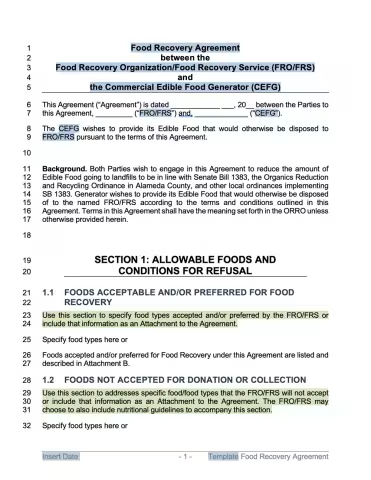
Customizable Food Recovery Agreement Templates
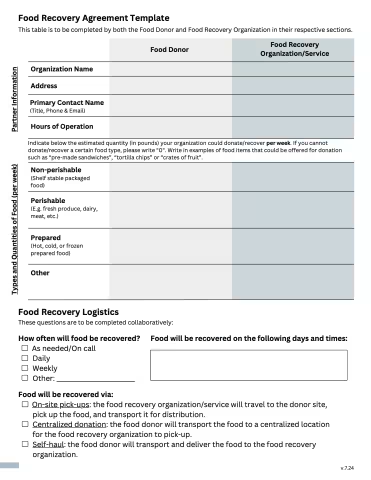
Simplified Food Recovery Agreement Template
Step 3: Maintain Records
Track all food recovered from Tier 1 and Tier 2 generators using monthly logs:
Resource List
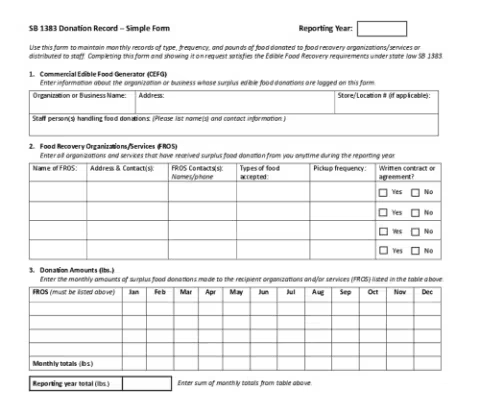
Simple Printable Food Donation Log
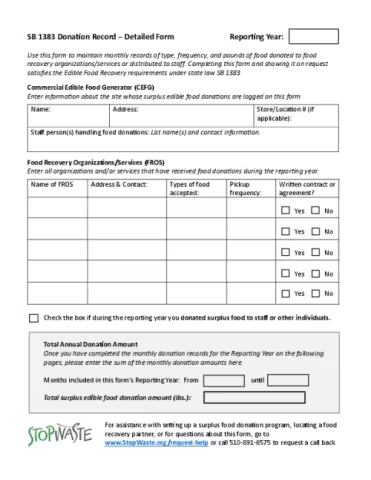
Detailed Printable Food Donation Log
Step 4: Submit Annual Reports
Report total pounds recovered using the Food Recovery Organizations & Services Reporting Form.
Reporting Schedule
| Reporting Year | Portal Opens | Deadline |
|---|---|---|
| 2025 | January 2, 2026 | March 31, 2026 |
| 2026 | January 2027 | March 31, 2027 |
| 2027 | January 2028 | March 31, 2028 |
Resources
Funding & Support
Nonprofits may be eligible for equipment grants up to $10,000 for refrigeration, storage, and transport equipment through StopWaste's Surplus Food Donation Equipment Grants program. The program is currently closed and is anticipated to reopen in Fall 2026.
The Alameda County Food Recovery Network brings together 40+ organizations for collaboration, shared learning, and coordinated capacity planning. The Alameda County Community Food Bank (ACCFB) Food Recovery Program provides additional resources and support.
Report Non-Compliance
If you're aware of a commercial food generator not meeting their SB 1383 obligations, you can file a complaint online.
Call to Action
Need Help?
Contact: rules@stopwaste.org | (510) 891-6575