StopWaste.Org Gets a Fresh Look

Our website, StopWaste.org, is the most visible face of the Agency, and a key tool for connecting people to our work—whether that’s taking action at home, navigating policies and requirements, or partnering with us. We approached this initiative with an incredible amount of intention and rigor from start to finish. Our Communications team focused on making the site clear and accessible, and ensuring it truly serves our communities, with a structure that better reflects our goals and priorities. The new website lets you navigate easily to find what you need, provides action-oriented content with practical tools and resources, and better showcases the impact of our work. Explore our new website and let us know what you think below!
New StopWaste Regulatory Fee Supports Recycling and Composting Programs

Starting July 1, 2026, a StopWaste Regulatory Fee will appear on customer garbage bills in Alameda County. The fee helps fund programs required by California to keep compostable and recyclable materials out of landfills, reduce food waste, recover surplus edible food for donation, and to prevent plastic bag pollution. These requirements protect the environment, reduce climate pollution, and support the health of our communities. However, these efforts are largely unfunded by the state.
StopWaste implements this work countywide on behalf of all 17 Alameda County jurisdictions, and the regulatory fee will allow StopWaste to recover the cost of this required work. The fee adds 30 cents per month for residential customers, and about $2 per month for most commercial customers, depending on service.
Using Compost on Urban Landscapes to Fight Climate Change
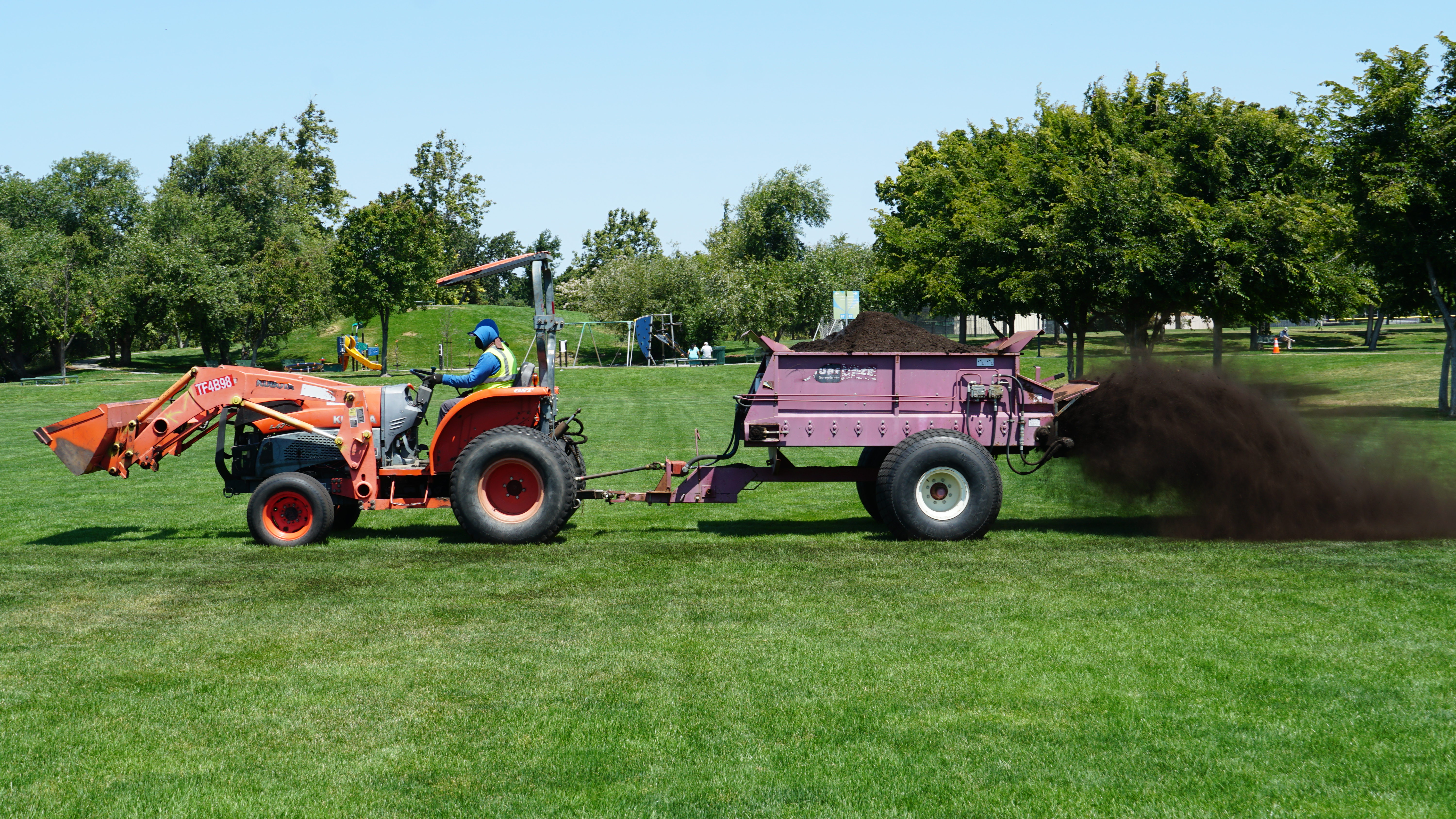
Until recently, little research was available on how applying compost to urban landscapes could affect soil carbon and mitigate climate change. To fill this gap, StopWaste partnered with UC Merced and the cities of Dublin and Pleasanton in 2022 to conduct a multi-year study.
Between 2022 and 2025, we examined compost application on city-managed sports parks. In three overlapping studies, compost treatments reduced soil NO2 emissions—a potent greenhouse gas—and increased soil carbon stocks down to one meter depth. They also mineralized soil carbon, changing it into a form that is better protected, which is important for storing carbon long-term. These results show that using compost is a practical, scalable way to improve soil health and capture more carbon in urban landscapes.
StopWaste will continue to share these findings with member agencies and partners and provide technical assistance to support the expanded use of compost in the county. This work will help jurisdictions meet procurement requirements under State law SB 1383 and support carbon sequestration goals identified in their respective Climate Action Plans.
Staff Spotlight
Ben Duggan

Ben’s journey with StopWaste began in 1998 when he joined the Agency part-time. He studied geography and worked at the student-run recycling center at San Francisco State University, where he was first introduced to the waste reduction industry. When not at StopWaste, Ben runs a small organic farm in Mendocino alongside his wife. Ben is currently a program manager leading the Agency’s Reusable Foodware Program.
What do you do at StopWaste?
Right now, I am leading our reusable foodware program. Our goal is to accelerate the shift from single-use packaging to reusable foodware. It’s a challenging goal because although we know reusables are better than single-use options for the environment, and that they can be cost-effective at scale, they’re still not widely used. So, our strategy is to use grants and incentives to try out some different pilots and work through cost and capacity barriers. We’re assessing the landscape and asking, “Where does reuse work now?” “Where are the systems accessible?” Once we find where reusables do work, we focus on those areas.
Schools, large entertainment venues, and on-site dining are the main spaces we’re seeing reusables have success. We’re seeing momentum in these areas and are doubling down on them. We’ve developed relationships with sites and vendors to start making reuse systems real and happen in the county.
So far, three of the eight total large venues in Alameda County have shifted to reusables, including the Oakland Arena, Cal Memorial Stadium, and Paramount Theatre. In the school's space, a total of 40 schools across Alameda County have shifted to reusable foodware.
How has StopWaste influenced you?
I’ve worked here most of my adult life, so it’s had a big influence on me. I have so many memories—my wife used to work at StopWaste; I have happy memories of bringing our first baby to the San Leandro office back in the 2000s; and I’ve seen different directors and organizational structures come and go. The biggest impact has just been learning from people at StopWaste; there seems to be a really strong group here.
What’s a motto you live by?
I don’t feel like I’ve ever really lived by a motto, but if I had to pick one, it would be, “There's always a way, find it.” Just because I tend to stick with challenges and keep working through them until I can find a path forward.
What do you enjoy doing outside of work?
Outside of work, I like to travel and go mountain biking with my sons and friends. And I also spend a lot of time taking care of my family’s homestead.