Overview of California's organic waste procurement requirements for jurisdictions, with tools, calculators, and model documents for compliance.
California State law SB 1383 requires cities and counties to buy products made from recovered organic waste and meet annual procurement targets. Jurisdictions can choose any combination of compost, mulch, renewable natural gas, and electricity from biomass to comply, and can use the organic products directly or give them away. They can also work with direct service providers that use or give away organic products to meet this requirement.
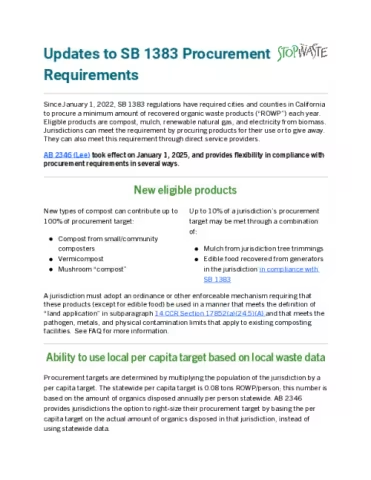
In 2024, AB 2346 and AB 2902 passed, taking effect January 1, 2025. AB 2346 allows new materials and investments to count toward procurement, provides flexibility in certain situations for the direct service provider provision, and allows jurisdictions to use data from local waste characterization studies to calculate an adjusted per capita procurement target. AB 2902 extended waivers for rural jurisdictions, and low population and high elevation areas. For more information see CalRecycle's AB 2346 and AB 2902 Guidance.
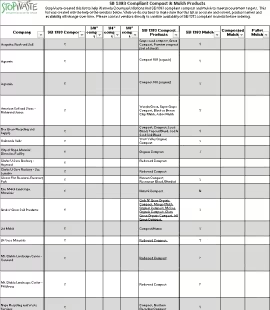
These procurement requirements connect directly to the compost and mulch resources available throughout Alameda County, including bulk compost from local commercial facilities and mulch from recycled green waste.
This document outlines key changes to California's SB 1383 organic waste procurement requirements introduced by AB 2346 and AB 2902, both effective January 1, 2025. It covers new eligible products (such as vermicompost and community compost), options for market development investments, the ability to use local waste data to right-size procurement targets, a five-year averaging option for meeting annual targets, streamlined direct service provider requirements, and updates for rural jurisdictions. A FAQ section addresses common questions about ordinance requirements, unit conversions, and
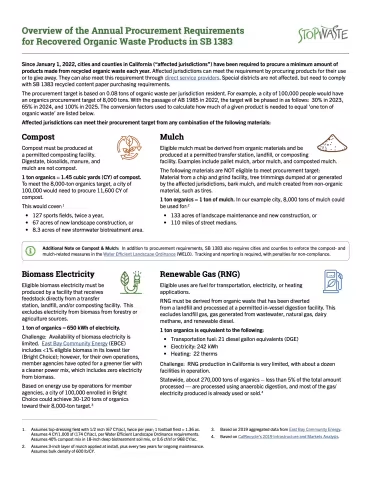
Since January 1, 2022, cities and counties in California (“affected jurisdictions”) have been required to procure a minimum amount of products made from recycled organic waste each year. Affected jurisdictions can meet the requirement by procuring products for their use or to give away. They can also meet this requirement through direct service providers. Special districts are not affected, but need to comply with SB 1383 recycled content paper purchasing requirements. Updated June 2023
Since January 1, 2022, cities and counties in California have been required by SB 1383 to procure a minimum amount of products made from recycled organic waste each year. Cities and counties can meet the requirement by procuring products for their own use or to give away. They can also meet this requirement through agreements with direct service providers to use the products on behalf of the jurisdiction. Recycled organic waste products that can satisfy the procurement requirements are compost and mulch, as well as renewable natural gas and electricity produced from biomass. To be counted
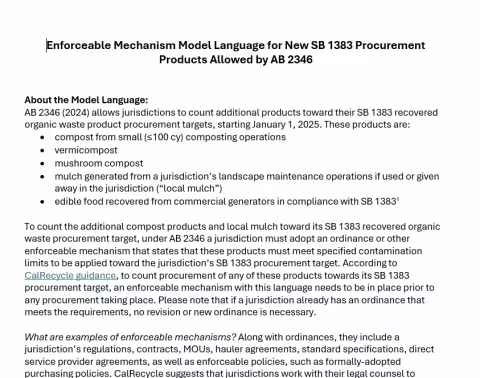
This model language is intended to be used by jurisdictions to develop an ordinance or other enforceable mechanism for mulch, local mulch, community compost, vermicompost, and mushroom compost procured in compliance with SB 1383 regulations or AB 2346.
For complete regulatory guidance, enforcement information, and detailed compliance resources, see the Rules & Compliance section of the StopWaste website.