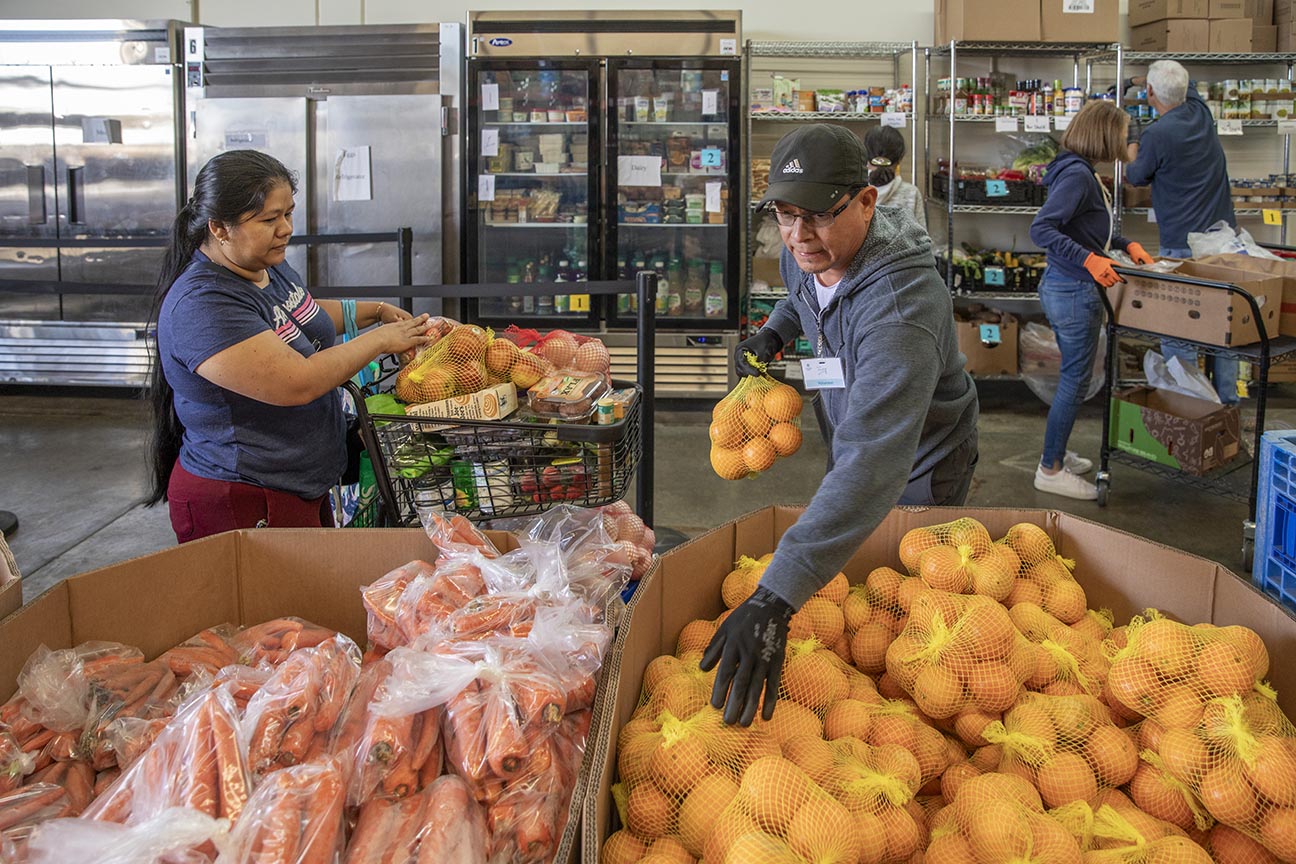
Every year, more than 300 million pounds of food and scraps are thrown away in Alameda County — some of which is edible food that could instead nourish community members and help meet California's climate goals. At the same time, 1 in 4 people in Alameda County experience food insecurity, and the demand for food assistance has grown significantly since the pandemic.
Food recovery is the practice of collecting surplus edible food from grocery stores, restaurants, schools, hospitals, and other food businesses and redistributing it to people who need it. This keeps good food out of landfills while addressing hunger in our community.
In 2024, local food recovery partners together recovered 14 million pounds of edible food — the equivalent of nearly 12 million meals. This represents a steady increase from 12 million pounds recovered in 2023 and reflects the growing capacity and commitment of food recovery organizations across the county.
REMINDER: Certain businesses are required by California law to donate surplus edible food. And of course the best way to reduce food waste is to prevent it in the first place. Visit these pages for more information:
How Food Donation and Recovery Works in Alameda County
- Food banks — The Alameda County Community Food Bank serves as a central hub, coordinating food recovery from 170+ partners and distributing through 70+ pantries and meal sites each week.
- Food recovery organizations — Currently, over 100 organizations have active food recovery programs serving communities across the county, ranging from small community-based groups to large-scale operators serving culturally specific food needs.
- Food recovery services — Logistics providers connect donors with food recovery organizations, offering transport, storage, and matching services, including apps that link donations directly to those in need.
- Community distribution sites — Food pantries, soup kitchens, faith-based organizations, and nonprofits distribute recovered food to people in the community.
StopWaste's Role
StopWaste helps build and sustain the food recovery system by:
- Coordinating countywide edible food recovery education, outreach, and SB 1383 compliance monitoring
- Investing over $2.3 million in grants to nonprofits since 2016 for cold storage, equipment, staffing, and operational costs
- Convening the Alameda County Food Recovery Network, a coalition of more than 40 organizations that fosters collaboration, shared learning, and efficiency
Accordion
How You Can Help
- Fund food recovery operations and infrastructure.
- Provide in-kind support and services utilizing city-owned equipment, secure parking, food storage space, community kitchens, and other assets.
- Integrate food recovery into climate and resilience planning.
- Advocate for state and federal support for SB 1383 compliance.
- Provide flexible multi-year unrestricted funding using a trust-based approach to fund staffing and logistics.
- Invest in cold storage, equipment to facilitate transport of food, such as reusable crates and cooling blankets, and tracking equipment.
- Support mutual use models where organizations are partnering to share resources and infrastructure.
- Join the Alameda County Food Recovery Network to collaborate and advocate together.
- Explore resource-sharing for transportation, storage, and other logistics.
- Document and share stories of impact to strengthen the case for funding.
- Advocate with your donors to consider a fee-for-service model to offset food recovery costs.
- Register to use platforms like Careit to access new donors and easily maintain donation records.
- Partner with the ACCFB or local recovery groups to donate surplus food.
- Use platforms like Careit to make scheduling and maintaining donation documentation easy.
- Offer in-kind support such as fuel, transportation, or equipment.
- Ensure that donations are of high quality and have sufficient shelf-life to remain fresh in the hands of a recipient.
- Coordinate with your food recovery partner to learn what food items are needed and acceptable to donate.
- Provide staff training to reduce unwanted, spoiled, or inedible food.
- Volunteer with a food recovery group or pantry. Find a food recovery organization here. Check with your employer to see if they have a volunteer match program.
- Advocate for policies that strengthen food systems, support food recovery and reduce hunger.
- Encourage food businesses to donate their surplus edible food.
- Donate to local food banks and nonprofit organizations working on food access.
- Reduce wasted food at home. Visit StopFoodWaste.org to learn more.
Learn More
Wayfinding Cards

Food Recovery Network

Capacity Planning

Food Donation and Recovery Guides by Industry

Info for Food Recovery Organizations
For full compliance details under SB 1383, visit our Food Donation Rules section. For school-specific food sharing and donation programs, visit Food Share & Donation at School.