Under California's SB 1383, counties must assess and plan for adequate edible food recovery capacity to ensure surplus food from commercial food generators is recovered rather than sent to landfills. StopWaste leads this planning effort on behalf of all 17 member agencies in Alameda County.
Resource List
2024 Capacity Report
Edible Food Recovery Capacity Planning Report for Alameda County
Key Findings
The 2024 Edible Food Recovery Capacity Plan confirmed that Alameda County has adequate capacity to recover edible surplus food from Tier One and Tier Two Commercial Edible Food Generators operating in every jurisdiction in the county — and that this capacity is projected to remain sufficient through 2034.
Current Capacity (2025)
- Total edible food disposal from commercial food generators: 3,957 tons per year (estimated)
- Current verifiable capacity at food recovery organizations: 6,181 tons per year
- Capacity excess of 2,225 tons per year — the current infrastructure can handle significantly more than the expected disposal amount
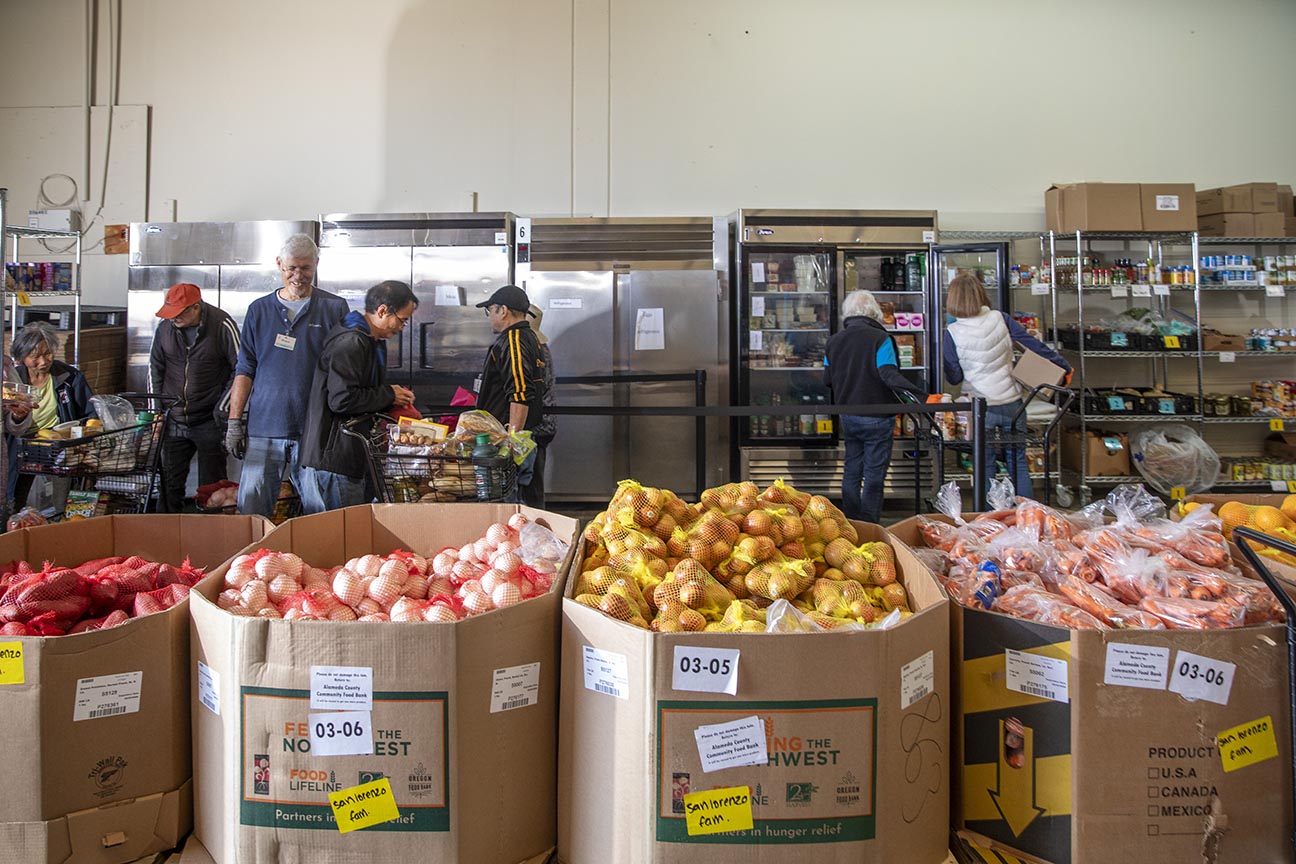
- In 2024, 94 food recovery organizations and services were identified as actively operating in the county, with a 100% reporting rate for edible food recovery data.
Projected Capacity (2034)
- Based on population growth, edible food disposal is projected to increase by about 3% to 4,072 tons per year
- Using current infrastructure, there would still be an excess capacity of 2,110 tons per year
- Additional expansion opportunities could add 1,182 tons per year of new capacity
Numbers Cards
Food Recovery by the Numbers
14.39M lbs
Edible food recovered in 2024 — a 22% increase since 2022.
94
Food recovery organizations and services actively operating across the county.
6,181 tons/yr
Current recovery capacity — 56% more than the estimated need.
Commercial Edible Food Generators
Alameda County has identified 1,302 commercial edible food generators required to comply with SB 1383's food recovery requirements, including:
- Tier 1 (required since January 2022): Supermarkets, grocery stores, food service providers, food distributors, and wholesale food vendors
- Tier 2 (required since January 2024): Large restaurants, hotels, health facilities, large venues and events, state agencies, and K-12 schools with on-site food facilities
Challenges
Despite major progress, food recovery efforts face persistent pressures:
- Funding gaps — SB 1383 is an unfunded mandate, and most food recovery organizations rely on grants and donations
- Capacity strain — Nearly 90% of local food recovery organizations operate with fewer than five paid staff
- Infrastructure needs — Additional cold storage and transportation equipment remain top requests
- Rising demand — The Alameda County Community Food Bank projects distributing 60 million pounds of food in 2025, with need surpassing pandemic-era levels