Businesses across Alameda County are proving that reducing food waste is good for the bottom line and the environment. These case studies show how food service operators, grocery stores, and corporate campuses have made measurable progress — often with free support from StopWaste programs.
Just Fare — Mission-Driven Food Service
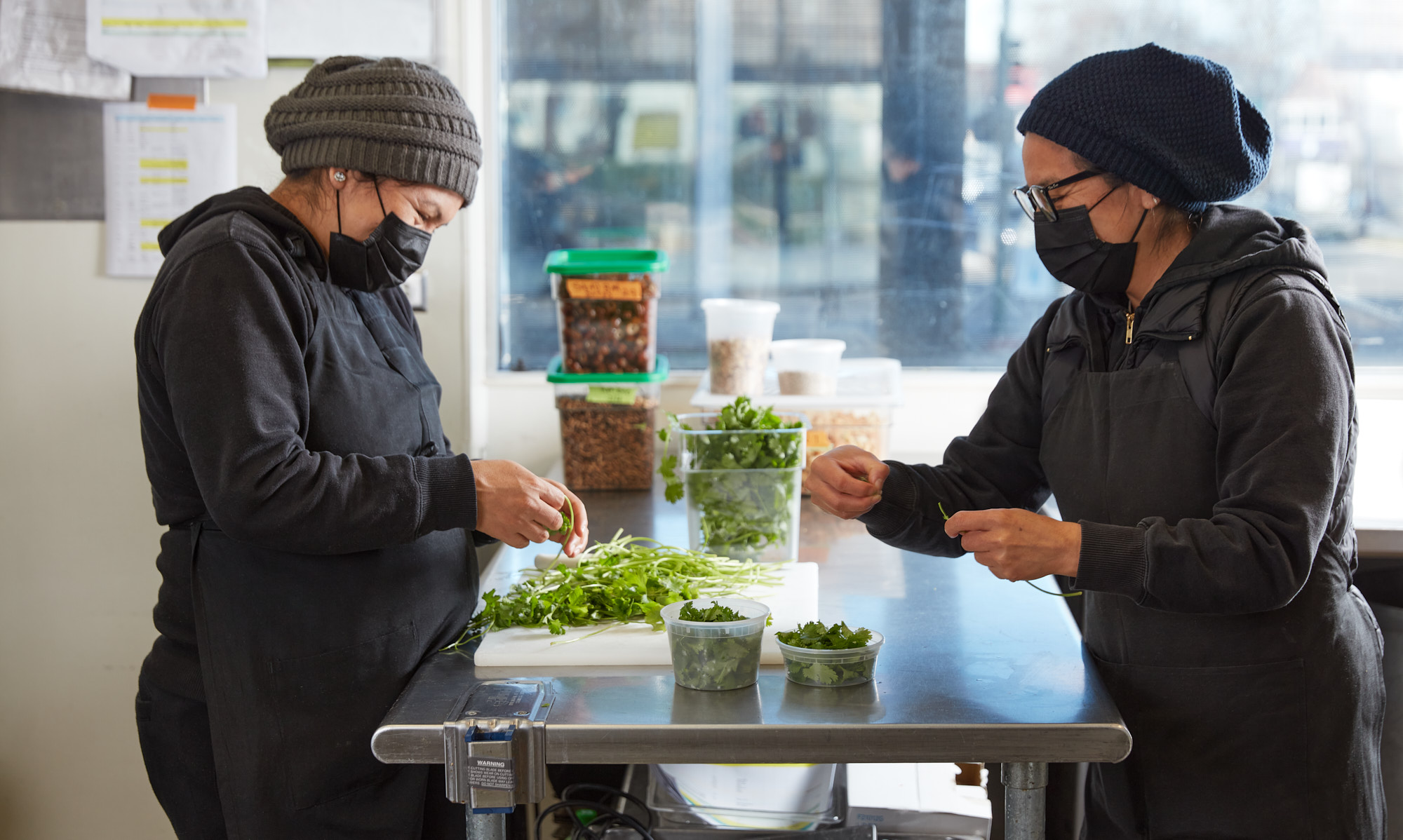
96% reduction in overproduction, preventing 4.5 tons of food waste
Just Fare is a mission-driven food service operator whose goals of minimizing environmental impact and doing the most possible social good permeate all aspects of operations. Besides their business and institutional catering accounts, Just Fare runs a community kitchen and consults on commercial kitchen design and foodservice.
Between August 2019 and April 2022, they used an automated food waste tracking system to determine the amount of pre-consumer food waste they generated — such as surplus and spoiled food. Just Fare then used the results to strategically modify operations, resulting in a 96 percent reduction in overproduction. The changes prevented 4.5 tons of food waste and saved the company close to $35,000.
Guckenheimer — Corporate Cafeterias
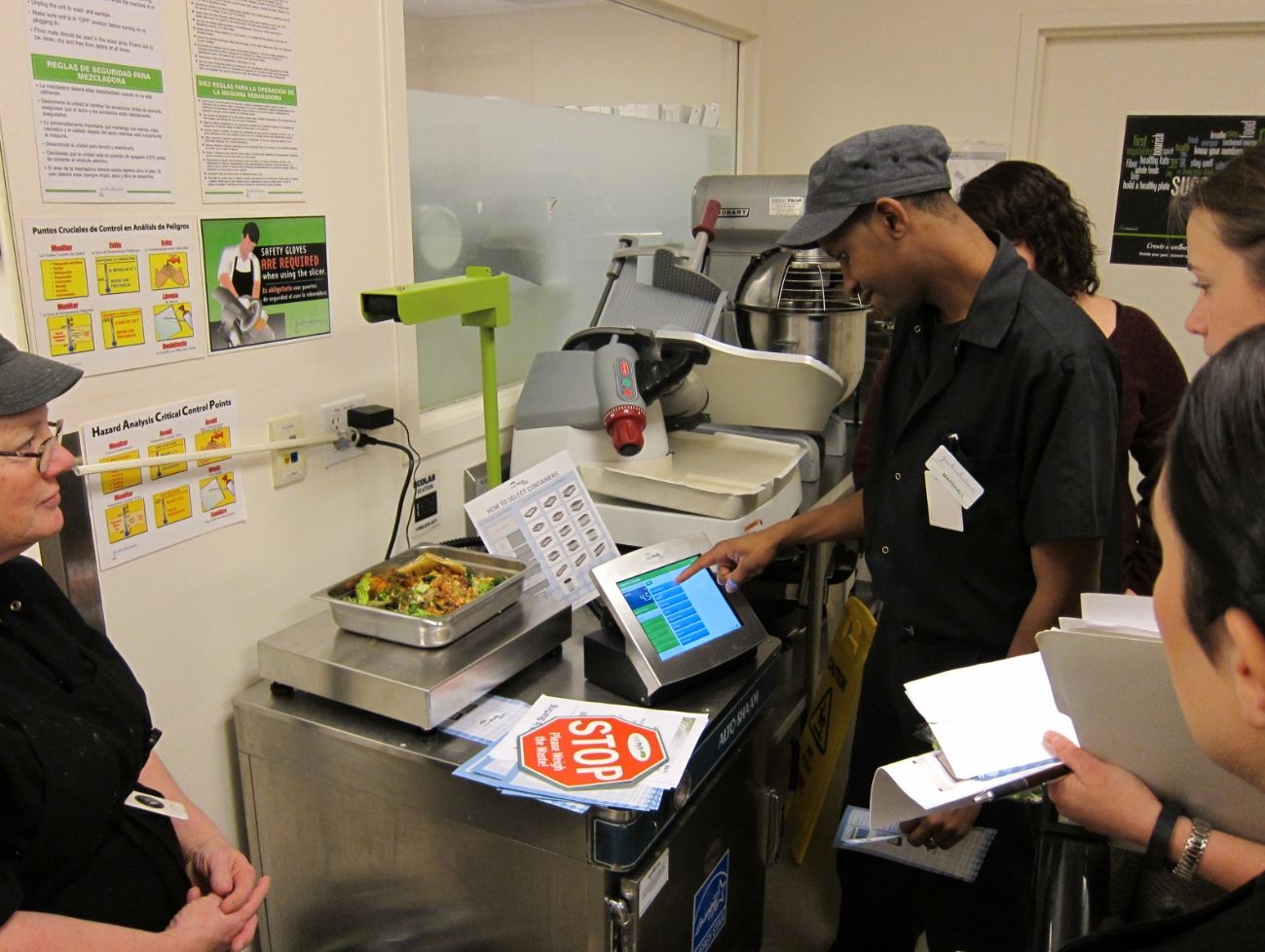
42% reduction in pre-consumer food waste across 13 sites
Guckenheimer, a food service management company, enrolled all 13 of its Alameda County corporate cafeterias and restaurants in StopWaste's Smart Kitchen Initiative. The results were significant: a combined reduction of nearly 68,000 pounds of pre-consumer food waste — 42 percent below baseline.
What worked:
- Dedicated waste tracking stations in each kitchen where staff weighed, categorized, and logged all pre-consumer waste
- Creative solutions for specific waste streams — offering leftover soup as complimentary sides and selling portions in pints
- Salad bar redesign using shallow pans to reduce end-of-day waste
- Monthly coordination calls among chefs and managers to share best practices across sites
Guckenheimer received StopWaste's 2017 Business Efficiency Award for their results.
UC Berkeley CalDining — University Food Service
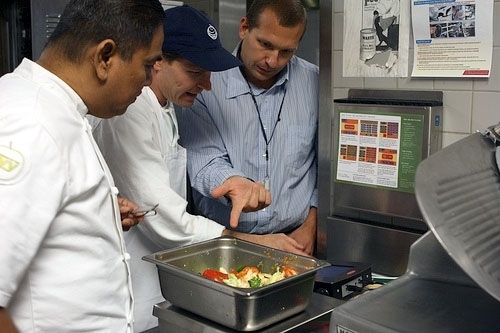
19% reduction, saving $98,000 per year
UC Berkeley's dining services partnered with StopWaste to measure and reduce pre-consumer food waste using specialized tracking equipment. By analyzing what was being wasted and why, CalDining modified its purchasing patterns and food preparation routines.
Results:
- 19 percent reduction in food waste
- 27 tons of food waste prevented annually
- $98,000 in annual savings on food costs
Key Takeaways
- Measure first — Understanding what gets wasted and why is the essential first step. Tracking data drives targeted solutions.
- Engage staff — Kitchen teams and front-line workers are closest to the waste and often have the best ideas for reducing it.
- Start with quick wins — Small operational changes (portion adjustments, storage improvements, menu flexibility) can deliver immediate savings.
- Share what works — Cross-site learning and peer exchange accelerate progress.