Concrete is estimated to be responsible for 6-10% of total global greenhouse gas emissions. Through mix designs that substitute recycled materials for traditional cement, emissions per cubic yard can be significantly lowered.
Local governments have the authority to adopt building code amendments requiring lower-carbon concrete mixes. In November 2019, the County of Marin became the first jurisdiction to pass such an amendment, developed through a regional stakeholder working group funded by a Bay Area Air Quality Management District Climate Protection Grant. Visit the County of Marin's website to learn more.
StopWaste has assembled the resources below to help other jurisdictions adopt similar code amendments.
Adoption Templates
Template language, an adopting resolution, and a staff report based on the Marin County adoption — ready to adapt for your jurisdiction.
Resource List
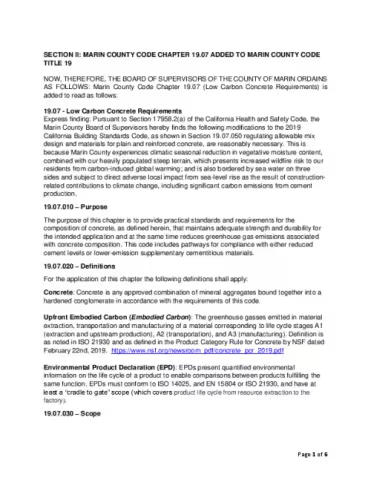
Template and adopted code language for jurisdictions looking to implement low carbon concrete requirements through building code amendments. Includes a template document with model code modification language referencing the 2019 Title 24 California Building Standards Code, with placeholders for jurisdiction-specific details, express findings, definitions, compliance equations, and exemptions. Also includes the adopted Marin County Code Chapter 19.07, which serves as a real-world example of this template put into practice — covering cement content limits and embodied carbon limits by strength
The full draft ordinance adopted by the Marin County Board of Supervisors in November 2019, establishing a new subchapter to Marin County Code Title 19 (Building Code) with requirements for low carbon concrete. The ordinance includes findings on climate change impacts to Marin County (wildfire risk, sea level rise), legal authority under the California Health and Safety Code, and the complete code language for Chapter 19.07 covering definitions, compliance pathways, cement content limits, and embodied carbon limits.
The November 2019 staff report to the Marin County Board of Supervisors recommending adoption of the low carbon concrete ordinance. Provides background on why embodied carbon in construction materials matters as buildings approach zero net operational energy, explains the year-long stakeholder process funded by the BAAQMD, and details the two compliance pathways (cement content limits and embodied carbon limits). Includes discussion of the code's scope, exemptions, and implementation approach.
Implementation Resources
Compliance forms and sample mix specifications for jurisdictions that have adopted a low carbon concrete code.
Resource List
Two fillable compliance forms for documenting and verifying that concrete used on a project meets low carbon concrete requirements. The Cement Limit Path form tracks cement content (lb/cyd) against code maximums for each concrete mix on the project, with sections for both the design team (at plan check) and the contractor (post-construction). The GWP Path form follows the same structure but tracks embodied carbon (kgCO2e/m3) per Environmental Product Declaration. Both forms support individual mix-by-mix compliance as well as a whole-project budget method.
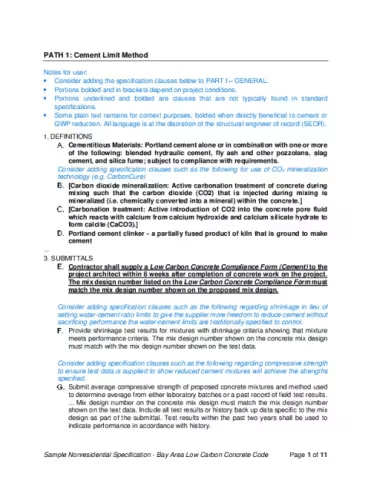
Sample specification language for incorporating low carbon concrete requirements into construction projects. Includes a nonresidential specification with detailed clauses covering cement limits, GWP path compliance, CO2 mineralization technology, submittal requirements, and alternate mixture provisions; and a residential specification with simplified language suitable for single-family and small multifamily projects, including compliance forms and guidance on letting the ready-mix supplier design optimal mixes. Both specifications provide two compliance paths: a cement limit method and an
Background & Industry References
Marin County Development Process
Resource List
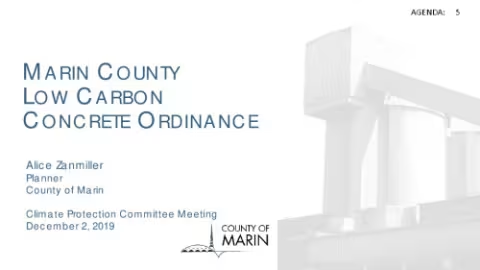
Two documents covering the development and adoption of Marin County's Low Carbon Concrete Code. The Process Summary outlines the year-long journey from initiation to adoption, detailing the phases of team assembly, funding, stakeholder engagement, technical development, code drafting, and adoption — along with lessons learned and keys to success for other jurisdictions pursuing similar amendments. The CPC Presentation is the County of Marin's presentation to the Bay Area Air Quality Management District (BAAQMD) Climate Protection Committee in December 2019, covering the policy context
Industry Documents
Case Studies
The BAAQMD-funded project included technical assistance for four Bay Area projects to specify low carbon concrete mixes.
Resource List
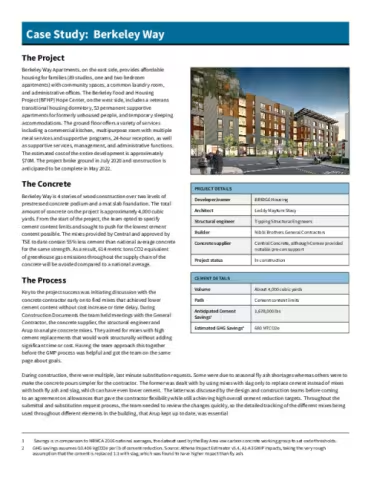
A low carbon concrete case study for Berkeley Way Apartments in Berkeley, CA — a 4-story affordable housing project with approximately 4,000 cubic yards of concrete. The project achieved 55% less cement than national averages by specifying cement content limits from the start. Highlights include early team communication, tracking approved mixes through construction, and the project exceeding Berkeley's 2019 building code amendment requiring 25% substitute cementitious materials, reaching 50-70% SCM content.
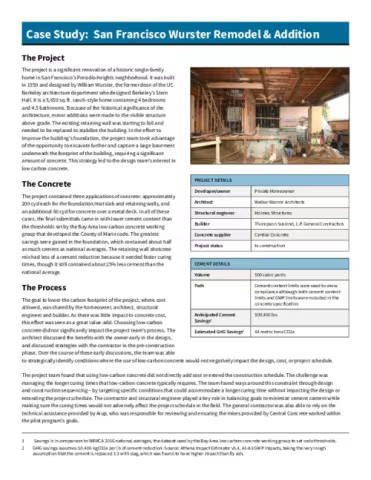
A low carbon concrete case study for a historic single-family home renovation in San Francisco's Presidio Heights — a William Wurster-designed ranch home requiring approximately 500 cubic yards of concrete for foundation, retaining walls, and metal deck applications. All final submittals came in below the cement thresholds set by the Bay Area low carbon concrete working group. Keys to success included early discussions with the homeowner, identifying applications that tolerate longer curing times, and team agreement on carbon reduction goals.
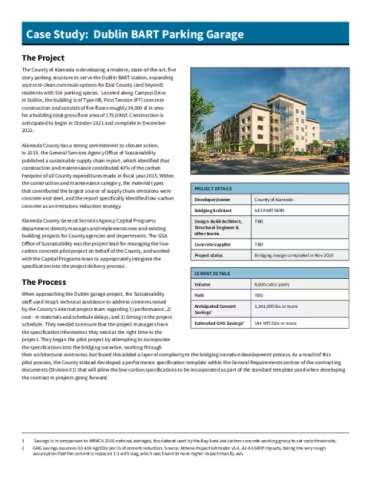
A low carbon concrete case study for the Dublin BART station parking structure in Alameda County — a five-story, 516-space post-tension concrete garage totaling approximately 8,624 cubic yards of concrete. Alameda County incorporated low carbon concrete performance specifications into their Sustainable Building Design owner's specification, requiring contractor reporting at the mix design stage and after concrete placement. Demonstrates how a public agency integrated low carbon requirements into an existing procurement framework.
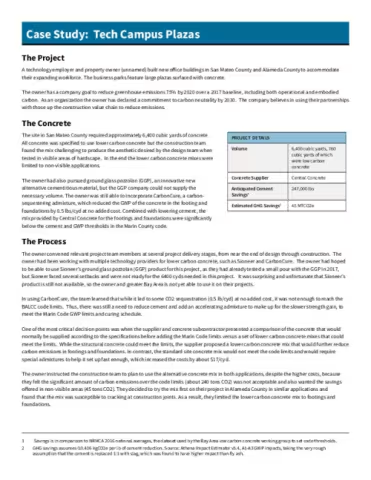
A low carbon concrete case study for a technology company's office campus plazas in San Mateo County and Alameda County. The owner, committed to 75% GHG reduction by 2020 and carbon neutrality by 2030, specified lower carbon concrete for approximately 6,400 cubic yards. Lessons learned include challenges with aesthetics in visible hardscape applications, difficulty scaling new cement alternatives like ground glass pozzolan, and the value of using one project site to test mixes before applying them on another.
Call to Action
Questions About the Toolkit?
Contact StopWaste for help adapting these resources for your jurisdiction.