Waste Prevention Equipment Grant Recipients Selected
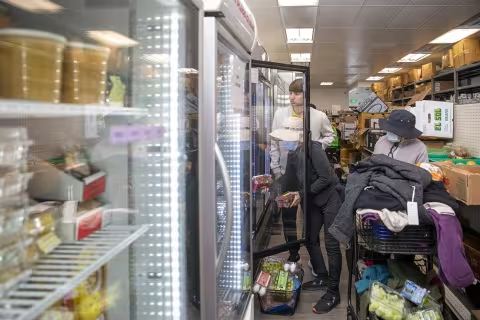
Surplus Food Donation Equipment: Nine recipients will receive funding to purchase equipment that optimizes their food recovery operations while minimizing food waste. Examples of this equipment include cooling blankets to prevent spoilage during transport and freezers to extend the shelf life of perishable foods.
Reusable Foodware for Cafeterias: Funds will be used to roll out or expand reusable foodware in three different school districts: San Leandro Unified School District, Hayward Unified School District, and Emeryville Unified School District. Single-use items like plastic utensils will be replaced with reusable stainless steel utensils and students will eat on reusable stainless steel trays instead of plastic or paper trays that are used for minutes before being discarded.
Reusable Transport Packaging: Eight recipients from various sectors, including agriculture, food service, and retail, will receive funding to transition to reusable transport packaging such as reusable pallets, heavy-duty bulk boxes, and reusable wraps to decrease plastic film waste and implement circular, closed-loop systems.
This year we paused our competitive grants funding and focused specifically on equipment grants while we conduct a comprehensive evaluation of our Agency’s large-scale grants program. This review will help us better align our resources with our Agency's updated priorities and community needs for the next grant cycle in 2026. The Equipment grant application process will re-open soon for grants to be awarded on a first-come, first-served basis until all funds are utilized. Visit our website for updates.
Twenty organizations in Alameda County have been selected to receive equipment grant funding totaling $248,000. The funding aims to help organizations recover surplus edible food and reduce environmental impacts by supporting the transition from single-use disposable items to reusable systems across three categories:
Building Healthy Soil in Alameda County
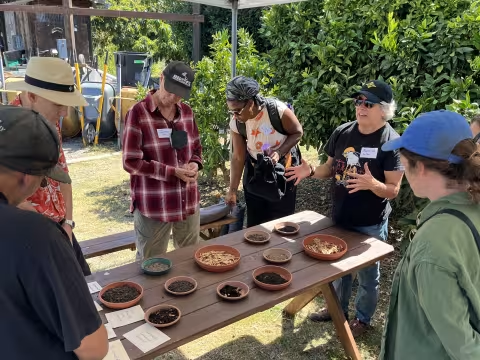
International Compost Awareness Week takes place May 4-10 and provides a timely opportunity to highlight the growing momentum around composting and our efforts to increase organics recycling and improve soil health in Alameda County.
Last fall, our sponsored assembly bill AB 2346 was signed by the governor clearing the way for common sense adjustments that support our member agencies in meeting compost procurement requirements of SB 1383 through new avenues such as investing in communal compost distribution hubs. We launched the first compost hub in collaboration with the City of Alameda in the summer of 2022, and now there are a total of eight compost hubs across the county, offering community members access to free compost.
In addition to providing access to compost, we are committed to educating the community about how to use compost and the benefits it brings to soil health and the environment. We provide technical assistance to gardening and food-growing organizations, and in partnership with our collaborators, we host public gardening and compost workshops for all ages and experience levels.
Major Regulatory Advances for Recycling and EPS Reduction in California
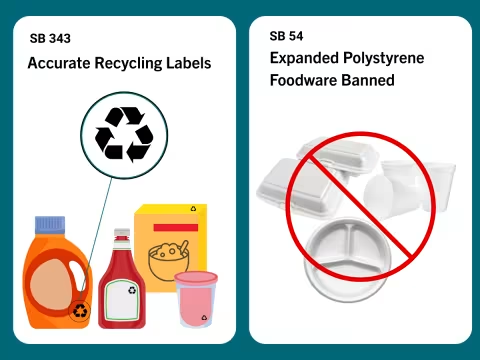
The chasing arrows symbol is universally recognized to indicate that an item is potentially recyclable. However, until recently California did not have a set standard or criteria for the use of this symbol, which has created confusion among consumers as to what is recyclable and what goes where. In a move toward greater transparency and clarity in labeling, CalRecycle has released a set of “recyclability” findings under SB 343. Packaging manufacturers must use this to determine whether they are allowed to use the chasing arrows symbol in California. This is a major step toward restoring consumer trust in recycling and to improve our recycling systems across the state.
In other good news, and building on momentum that began more than three decades ago with the City of Berkeley’s local Expanded Polystyrene (EPS) ban in 1988, EPS foodware—including containers, cups, and plates—is now banned from being sold or distributed in California. The ban stems from the requirements set under SB 54 where producers were required to demonstrate that their materials meet a twenty-five percent recycling rate by the January 1, 2025 deadline. EPS did not meet the requirements.
We're optimistic to see brands, producers, and retailers rethink packaging and move toward more sustainable, circular solutions. StopWaste continues to provide leadership in the SB 54 rulemaking process to ensure that the needs and voices of local government and our jurisdictions are heard.
Employee Spotlight
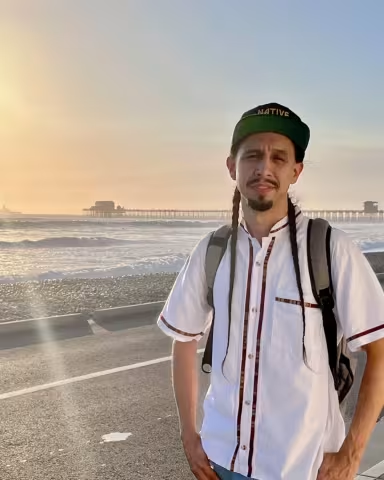
Cristian Aguilar
Program Services Specialist
Cristian Aguilar joined StopWaste in 2015 as part of the Schools team's field trip program and is currently a Program Services Specialist. He is a long-time educator in his hometown of Oakland. He has extensive experience in roles centered around justice, community organizing, and volunteering. Cristian attended San Francisco State University and Peralta Community Colleges for Ethnic Studies and Media Communications. He is an award-winning documentary film maker with a specialization in testimonio documentaries.
What do you do at StopWaste?
I am part of the amazing StopWaste Schools team, and I get the privilege to laugh, learn, play, and talk trash with students and educators through our K-12 in-class program as well as through our prominent award-winning free 4th grade field trip program to our education centers located at two of our local transfer stations.
How did you start your career in sustainability?
One day I noticed a lot of recycling flyers posted around the school I was working at, and I asked about them. That’s when one of my 4th graders told me about her recent field trip to the Davis Street Transfer Station with StopWaste. My student returned motivated by the field trip and said, “Mr. Cristian, I want to help the younger kids sort in the cafeteria.” So, I helped her establish the school’s green team. That forever stayed with me—that a field trip inspired change. Our school had already implemented food waste prevention strategies like food share, which I also practiced at home so, I was familiar with sustainable practices and concepts but hadn’t learned them through a formal education setting. That’s just how I was raised—being resourceful. If there was ever extra food and it was still good to eat, I felt bad throwing it away, so I’d share with others before letting it go to waste. At the time, I wasn’t knowledgeable about recycling or compost and never would have thought I’d be working in the waste industry. It’s really cool how intersectional it can be. Waste is a part of everyday life and there are many ways to connect with people and their interests.
How has working at StopWaste impacted you?
It's had a profound impact on my journey. I’m consistently in awe of the magic of young people, and that I receive so much from it. It fills me with joy to hold space for young people to advocate for the things that they feel are important. Also, being part of Angelina’s team has given me a lot of space to grow, learn, and lean into my strengths and work on my challenges. StopWaste has impacted a lot on how I see the world through my work lens and part of that is how I approach relationship building with people; I’m able to use my lived experience and my work lens to connect with people in the field. Wherever I go, I find myself looking in garbage bins and checking out what their sorting system is like.
What’s a practice or motto you live by?
I have three.
Creative for life is my motto. It’s really important for me to be creative because that’s how I move a lot of what I feel.
Learn, grow, and make mistakes.
Care. Community care is self-care. So, I often ask myself how is it that we care for one another?
What do you enjoy doing outside of work?
I’ve always been about family and community—blood and chosen family. We gather over food, stories, and laughter, which can take place in different locations but we usually convene at my grandma’s house.
Castlemont has also been a place I frequent that provides learning opportunities, both personally and professionally. It's a school in deep east Oakland with a one-acre farm and garden orchard. And to be able to put your hands in the soil is healing. I don’t have many nature spaces around me, and there’s just something special about being in community and growing thing together at their monthly work-parties.