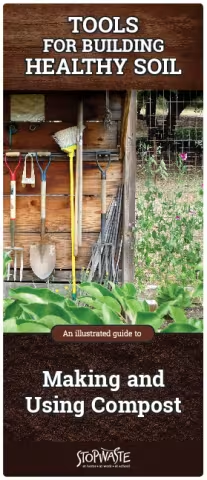
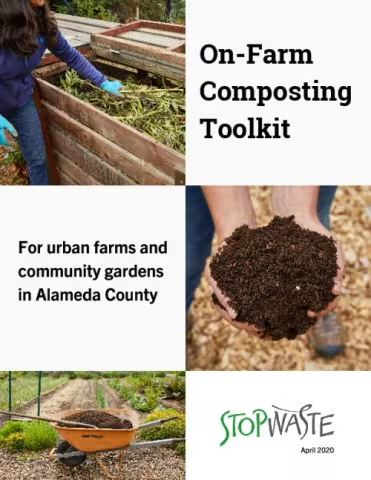
Your role as a composter is to provide the conditions for nature's crew of decomposers—the bacteria, fungi, and invertebrates such as sow bugs and worms—to go to work for you! Browns, Greens, Air and Water are the "big four" that will keep every compost pile happy. We have some basic information about making compost below, for more details check out our Tools for Building Healthy Soil guide.
What to Put in Your Backyard Bin
Additional Resources And Videos
Build or Buy a Compost Bin
The right bin makes composting easier and keeps pests out. Whether you want a simple wire-mesh enclosure for yard trimmings or a rodent-resistant tumbler for food scraps, we have a guide to help you choose — plus step-by-step plans for building your own.
What to Put in Your Backyard Compost Bin
Deciding what to put in your backyard compost bin is an important part of the process. Maintaining the right balance between "brown" and "green" materials will help your compost pile break down faster and keep it from getting smelly. If you are going to compost food scraps you must use a rodent-proof bin.
Browns
- Fallen leaves
- Chopped, woody prunings
- Pine needles
- Sawdust from untreated wood
- Straw
Greens
- Fruit & vegetable trimmings and rinds
- Lawn clippings
- Weeds without seed heads
- Coffee grounds & filters, paper tea bags
- Herbivore manures: e.g. goats, horses, chickens
What NOT to Put in Your Bin
These items can attract pests, create odors, or introduce harmful substances into your compost. Put them in your curbside green cart instead — commercial composting facilities can handle what backyard bins can't.
- Grains, beans, or breads
- Sawdust from plywood or treated wood
- Meat, bones, or fish
- Pet feces (dog, cat, or bird)
- Diseased plants (in cold piles)
- Dairy products or grease
- Large amounts of soiled paper (e.g. pizza boxes)
- Bio-plastics, even if labeled "compostable"
How to Make Good Compost
This 'recipe' works for mixing food scraps and yard trimmings together, requires a rodent-resistant compost bin and active maintenance to prevent animal nesting and feeding.
Four basic elements or 'ingredients' are necessary for effective composting to happen: browns, greens, air and moisture.
- Add yard trimmings to your bin, chopping all materials into pieces 4"-6” or smaller. 'Greens' are moist, fresh material (nitrogen) and 'browns' are dry, woody material (carbon). Add equal parts of greens and browns, with alternate 4" tall layers of each. You can gently mix the layers with a pitchfork.
- Wet all material with water as you add. Moisture is critical for effective decomposition.
- Food scraps need to be buried and mixed into the center of the pile.
- Add to the bin as often as you like but be sure to mix in enough browns to balance your greens, and always top with browns (never dump food and run).
- Turn or mix the pile about once a week. Keep all materials in the bin as moist as a wrung-out sponge.
- Harvest rich, brown, finished compost by sifting out coarse, unfinished materials after 3 to 8 months.
How can you tell when compost is done?
- It will look like soil and smell sweet and earthy.
- The volume of the pile will shrink by 30-50 percent.
- The original materials will be unrecognizable, except some woody pieces.
Storing Compost
We recommend “aging” your compost by letting it sit for six months before using. If unfinished compost is added to your soil, the decomposer organisms compete with plants for nitrogen, resulting in stunted plant growth and yellow leaves.
- Cover with a tarp or keep in a sheltered space to protect from the rain and sun.
- Remove the tarp periodically to provide air.
Troubleshooting & FAQ
Smelly pile? Not breaking down? Attracting pests? Most composting problems have simple fixes. Our troubleshooting guide covers the most common issues and answers frequently asked questions so you can get your compost back on track.
Image + Text

FREE SERVICE