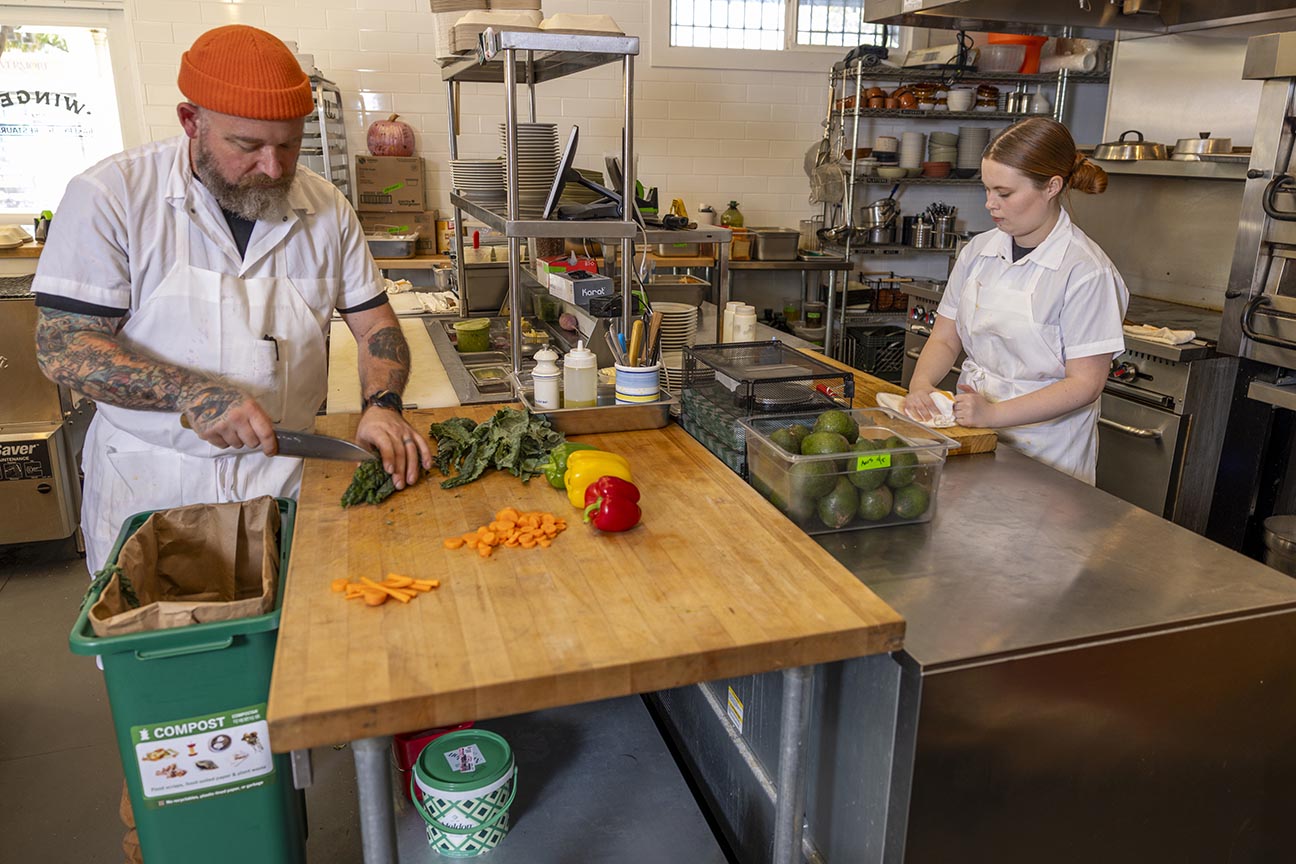
Food waste is a significant cost for businesses. Across the supply chain — from restaurants and grocery stores to hotels, hospitals, and caterers — wasted food represents lost revenue, wasted labor, and unnecessary disposal costs. At the same time, businesses have enormous potential to lead on food waste reduction.
- Food remains one of the top ten materials still disposed of in Alameda County landfills from the commercial sector
- Preventing food waste upstream is the most cost-effective strategy, saving businesses money on both purchasing and disposal
StopWaste works with businesses and institutions across Alameda County to implement practical food waste prevention strategies. Whether it's improving inventory management, training kitchen staff, rethinking portion sizes, or finding better ways to handle surplus food, there are proven approaches that save money while reducing environmental impact.
Best Practices for Reducing Surplus Food
Every business that generates food can take steps to reduce waste. These five best practices — from prevention to partnership — offer practical strategies at every stage, along with guidance on documenting your efforts for SB 1383 compliance.
- Prevent Surplus Edible Food
- Sell Surplus at a Discount
- Donate Surplus Food to Employees
- Use a Food Recovery Platform
- Partner with Food Recovery Organizations
1. Prevent Surplus Edible Food
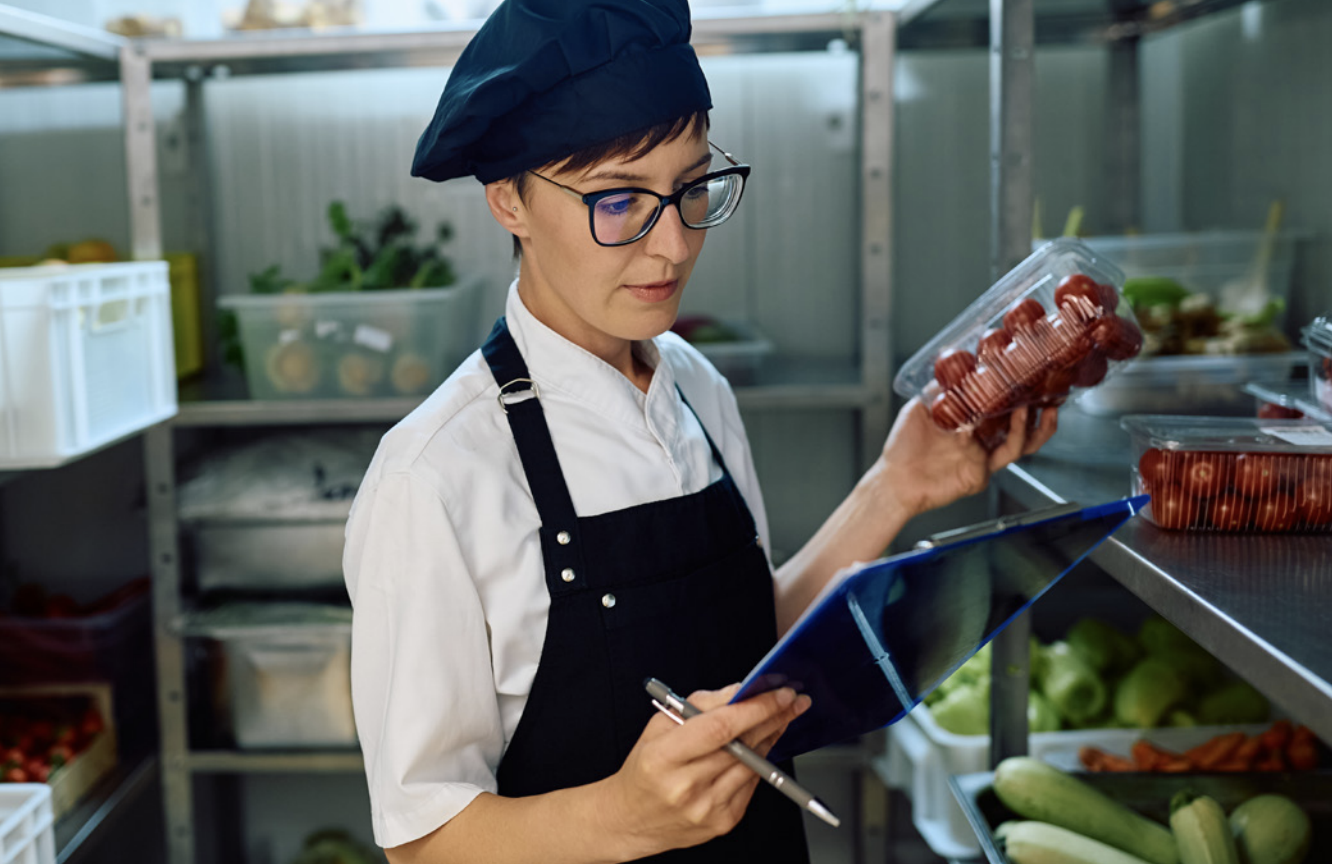
Prevention is the most effective strategy — if you don't produce surplus, it can't go to waste. Review your operations and identify ways to minimize overproduction: cook meals to order, repurpose surplus into the next day's menu, train staff on waste reduction, and use tracking tools like LeanPath to pinpoint recurring losses. Rewarding creative ideas from kitchen staff can also improve morale and retention.
SB 1383 compliance: Document your prevention strategy using the Alternative Compliance Form. Be specific about practices you've implemented, and keep a copy on hand for inspections. Browse Solution Providers for tracking tools.

2. Sell Surplus at a Discount
Toward the end of the business day, move product by selling at a discount. Designate a section of shelving for marked-down items, or use apps like Too Good To Go to connect with consumers looking for deals on surplus meals and groceries. This practice can even bring new customers to your business.
SB 1383 compliance: Document your discount sales practices using the Alternative Compliance Form. If you use a surplus food app, download activity reports as additional documentation.
3. Donate Surplus Food to Employees
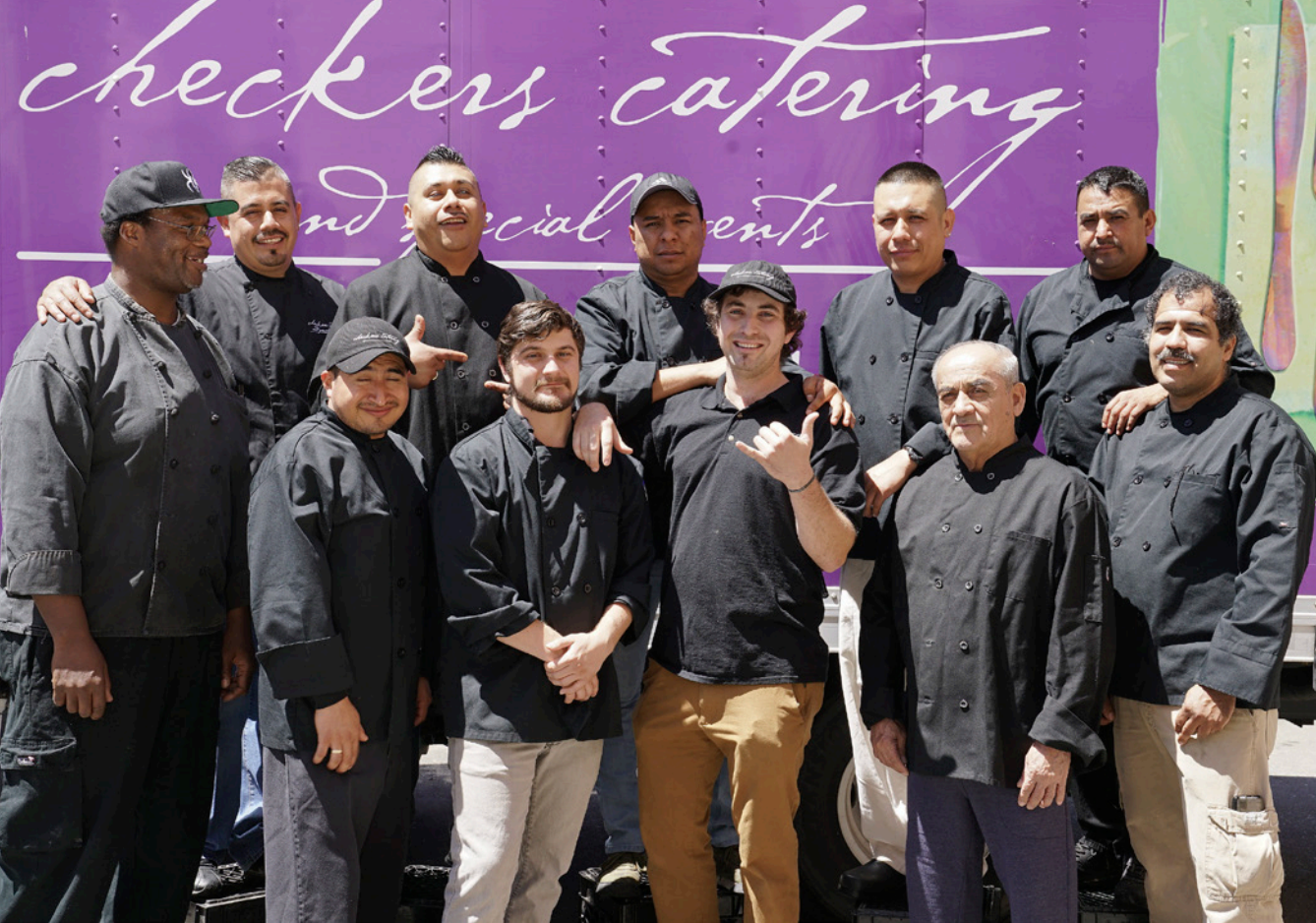
Allowing staff to consume or take home surplus edible food is one of the easiest practices to implement — bakery staff taking home unsold goods, hotel staff eating unserved breakfast buffet items, or caterers sending leftovers home with staff and event guests. Formalize the program with a written policy to manage expectations and support documentation.
SB 1383 compliance: Document your employee donation program using the Alternative Compliance Form, and maintain a donation log. A written policy is highly recommended as additional documentation.

4. Use a Food Recovery Platform
Food recovery apps let you post surplus food for pickup by nonprofit organizations, eliminating the need to find partners on your own. Careit and FoodRecovery.org offer free service. Set up an account ahead of time and designate an employee to post surplus when available. Allow reasonable lead time for pickups, and note that not every posting may result in a pickup.
SB 1383 compliance: Document your practices using the Alternative Compliance Form. Platform activity reports serve as additional documentation. Be sure to log unsuccessful donation attempts and reasons why. See Solution Providers for a full list of platforms.
5. Partner with Food Recovery Organizations
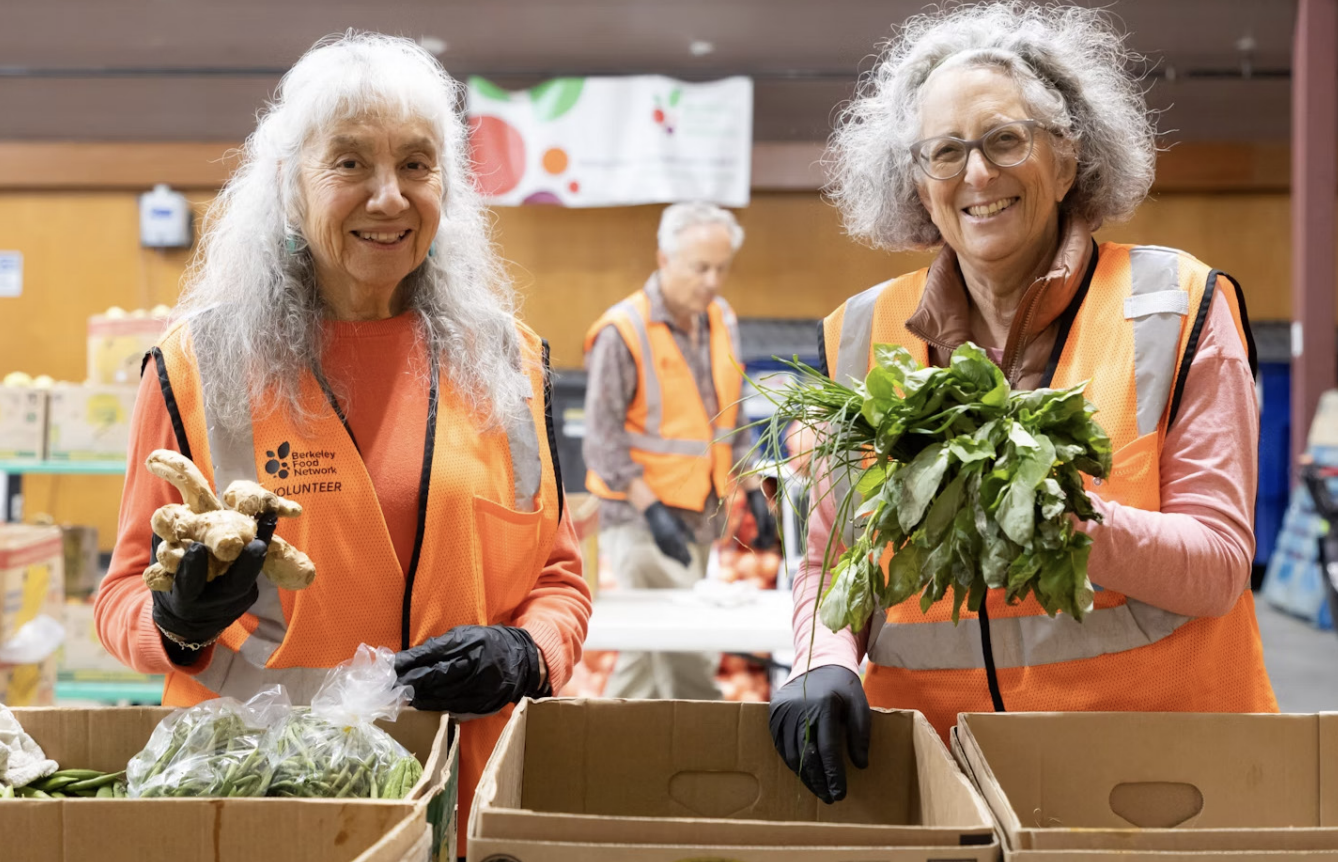
For businesses with consistent surplus, establishing a recurring partnership with a food recovery organization is the most reliable approach. Formalize your program with a written food recovery agreement specifying pickup schedules and expectations. Consider partnering with two or more organizations in case your primary partner is unavailable. Maintain your own donation records alongside what partners provide.
SB 1383 compliance: Keep a signed agreement plus monthly donation logs recording type, frequency, and weight in pounds. Log any declined donations and reasons. Find food recovery organizations through the RE:Source directory.
Compliance
Under California's SB 1383, certain large food-generating businesses are required to recover and donate surplus edible food.
- For compliance information including who must comply, how to set up a program, and tracking requirements, visit our Food Donation & Recovery Rules section.
- For industry-specific guidance, see the Industry-Specific Food Donation Guides in our Rules section.
Resource List
Top Resources
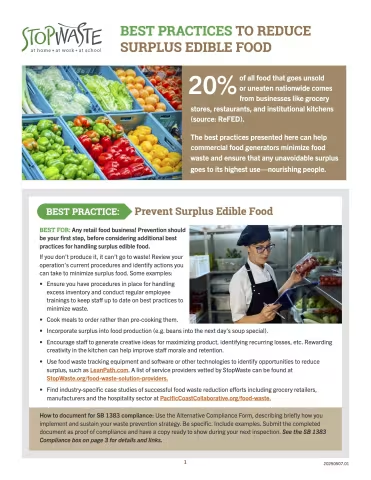
Best Practices to Reduce Surplus Edible Food
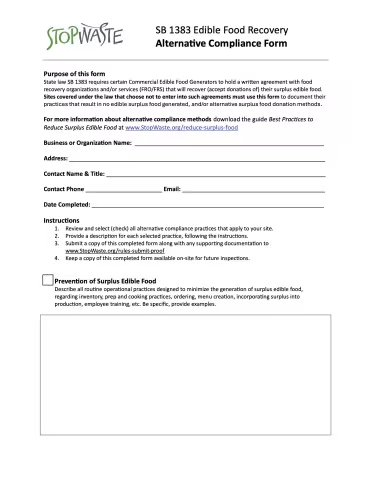
SB 1383 Edible Food Recovery Alternative Compliance Form
Additional Information
Wayfinding Cards

Solution Providers
