Follow these steps to help your site sort correctly:
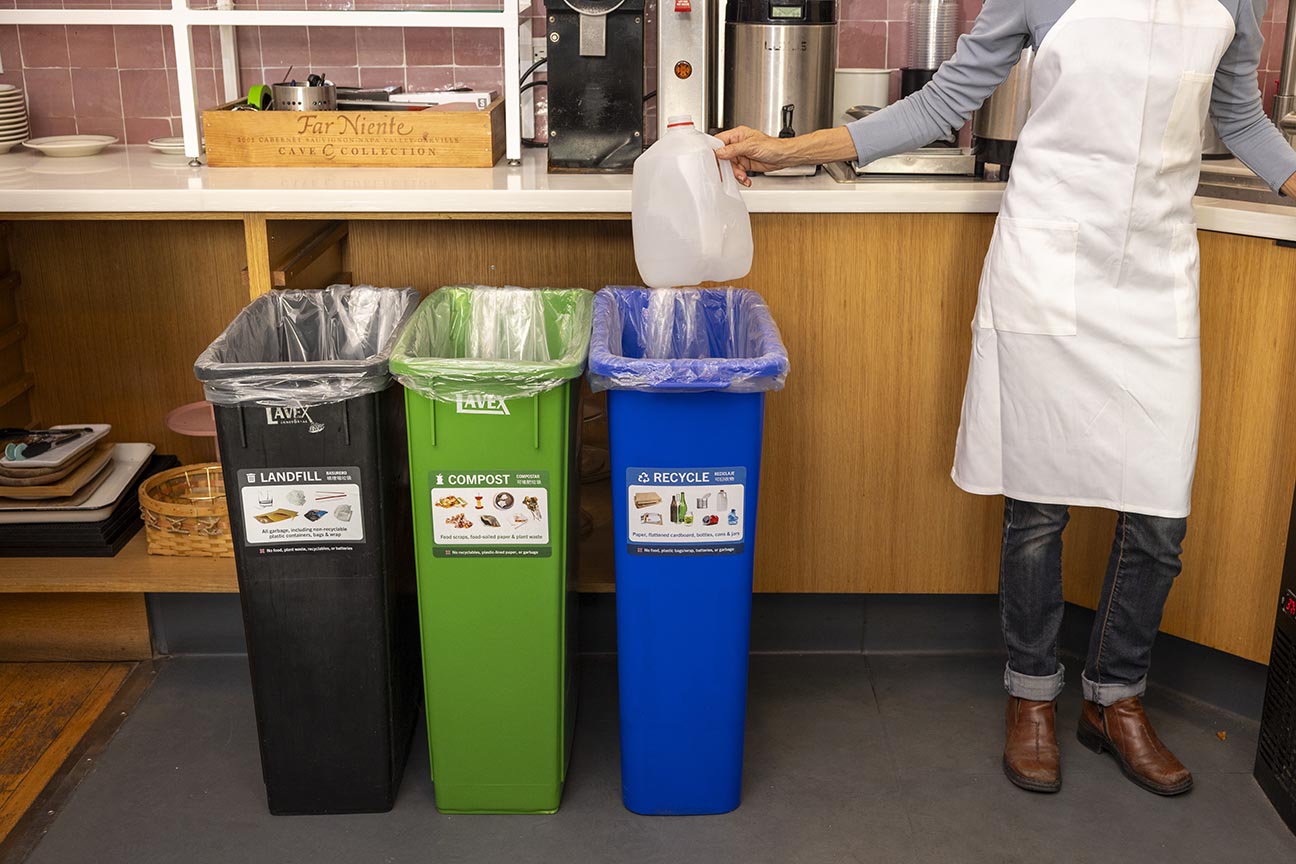
See below for free resources to help your site sort correctly.
1. Understand What Goes Where
The materials shown below must be recycled and composted under the law. For a full list of materials that can be recycled and composted visit the RE:Source Guide's Curbside Directory and select your city.
| Compost (Green) | Recycling (Blue) | Garbage (Black/Gray) |
|---|---|---|
| Food scraps | Paper & cardboard | Non-recyclable plastics |
| Food-soiled paper | Bottles & cans | Chip bags & wrappers |
| Coffee grounds & filters | Clean containers | Expanded polystyrene |
| Napkins & paper towels | Glass jars | Broken ceramics |
2. Check Bins Regularly
Inspect both indoor containers as well as collection carts and bins to ensure proper sorting. If you notice materials placed incorrectly, be sure to remind employees, contractors, and tenants of the rules. Property owners and managers are responsible for proper sorting at their site.
Tip: Make sure containers are set up and labeled properly to help people sort correctly. Review rules and how-to instructions for setting up indoor bins.
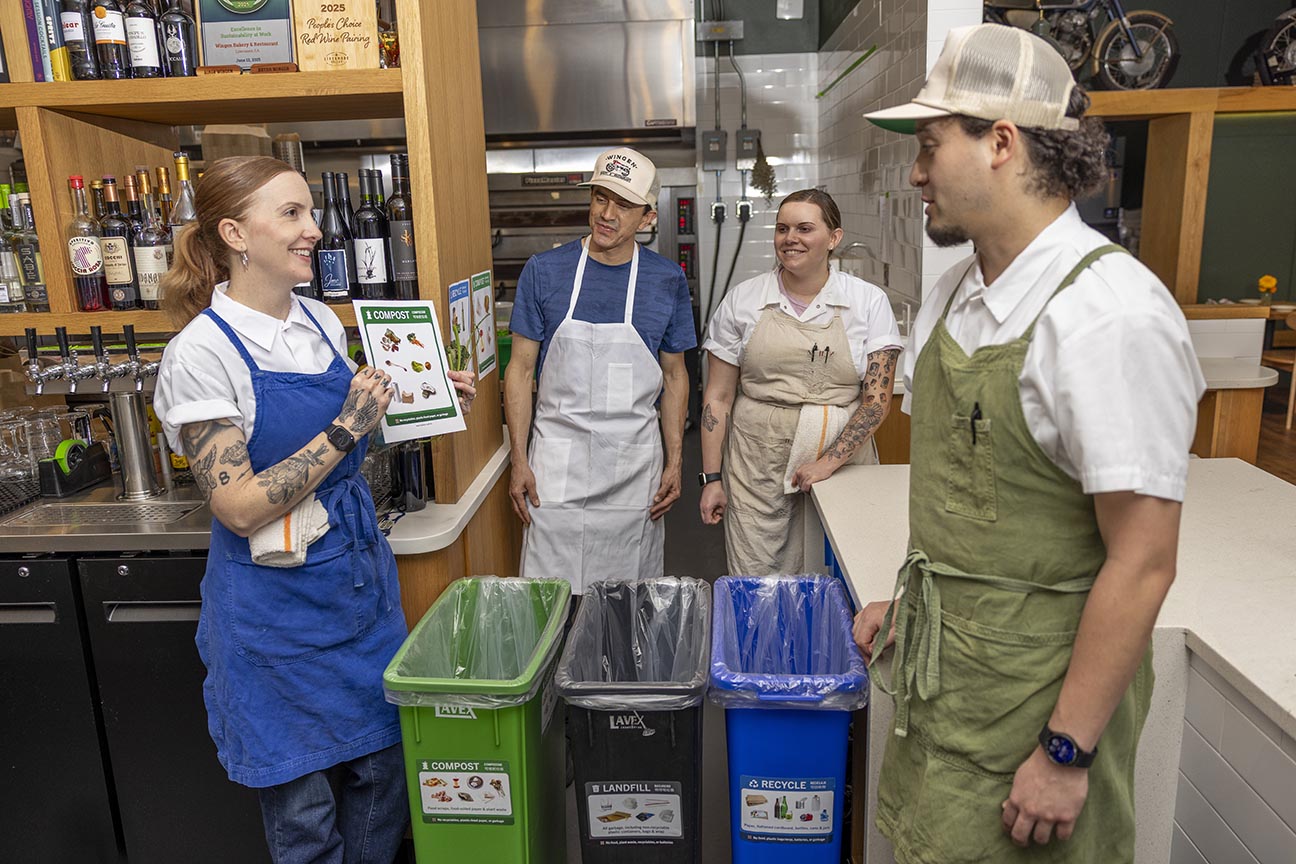
3. Educate Staff and Tenants
The law requires that at least once a year and during move-in and move-out, owners/managers of businesses, nonprofits, institutions and multifamily properties must inform employees, contractors, such as janitorial staff, and tenants of the law, and how to sort materials properly.
Tip: Request in-person training support from StopWaste tailored to your site.
Free Resources to Help Your Site Sort Correctly
Workplace Sorting Video
This 5-minute training video shows businesses how to sort materials properly into recycling, compost and garbage bins. Also available in Spanish and Chinese.
Customizable Memo for Employees
Tailor this template memo to educate staff and custodians about your composting and recycling program. The memo can be emailed, distributed in hard copy, or posted in high traffic back-of-house areas.
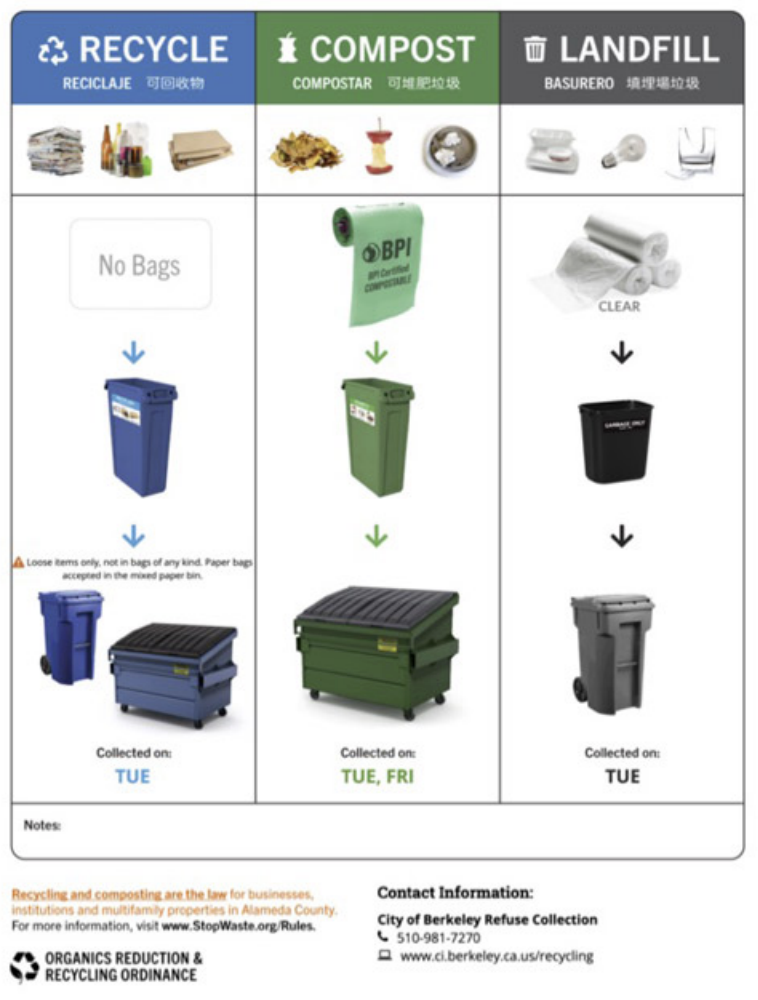
"Bags to Bins" Poster Tool
Create a custom visual sorting guide to help employees and custodians sort common items properly and choose the correct bags, bins and pickup days. Especially useful for staff who transfer materials from indoor bins to collection carts and bins.
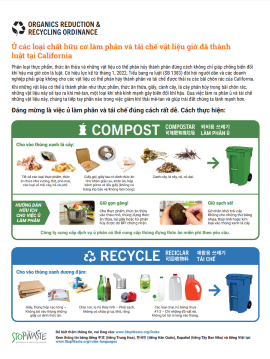
1-Page Overview Flyer for Tenants
This flyer gives tenants an overview of how to properly sort recyclables & compostables, and provides tips for preventing food waste. Distribute this flyer by email or as a hard copy, or post in a high-traffic location such as a lobby.
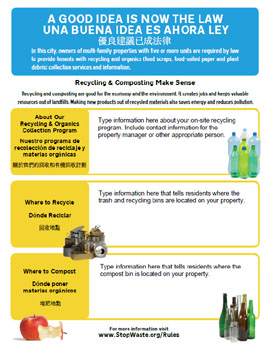
Customizable Flyer for Multifamily Property Tenants
Tailor this notification template to educate tenants about your property's composting and recycling program. The memo can be emailed, distributed in hard copy, or posted in a high traffic area such as a lobby or near mailboxes.
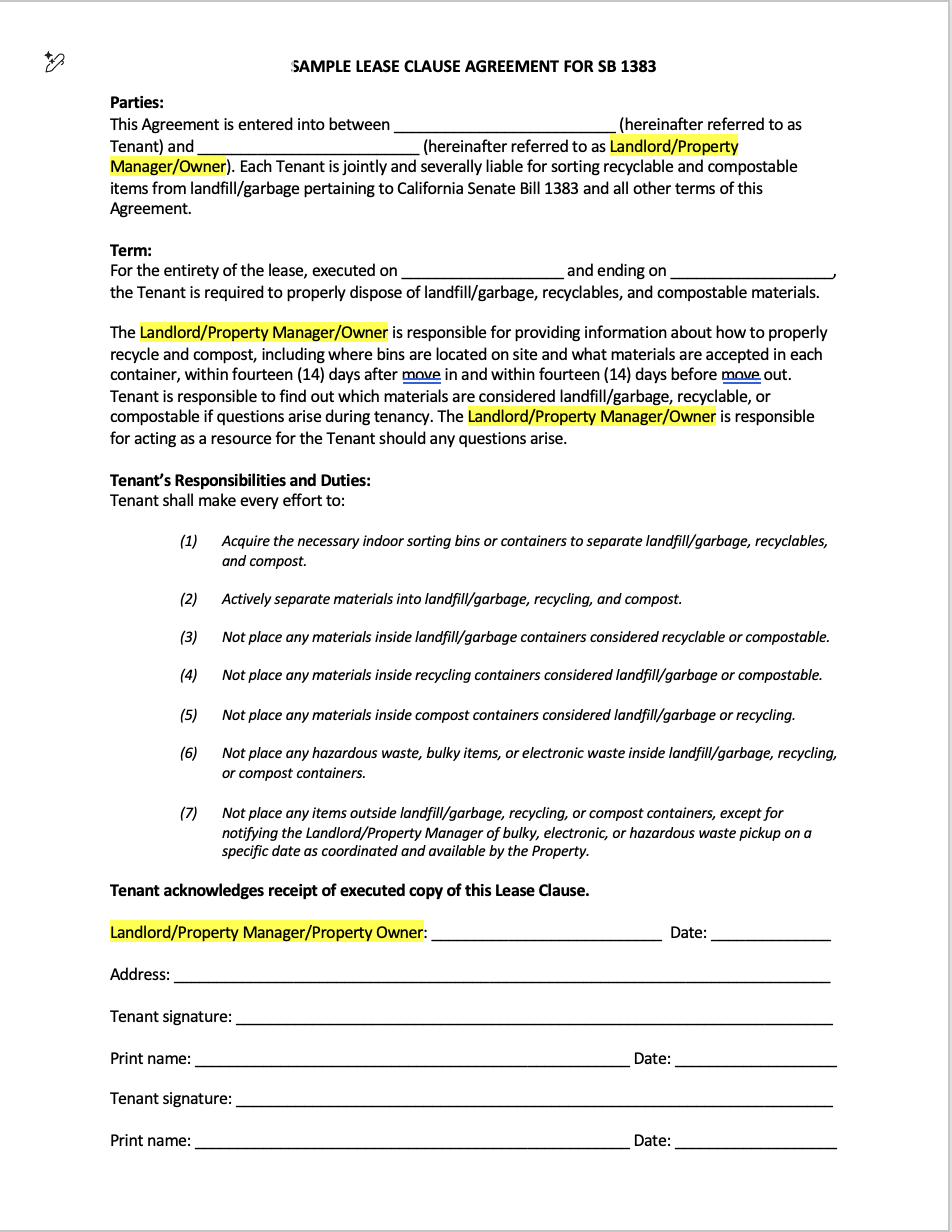
Sample Lease Language for Property Rentals
Include this sample language in your lease agreement to get written commitment from tenants to comply with the sorting requirements. Language appropriate for both residential and commercial multi-tenant properties.
Image + Text

COMPLIANCE