Find tailored guidance for setting up a food recovery program in your specific industry. Each guide covers safe recovery practices, operational tips, and real-world examples.


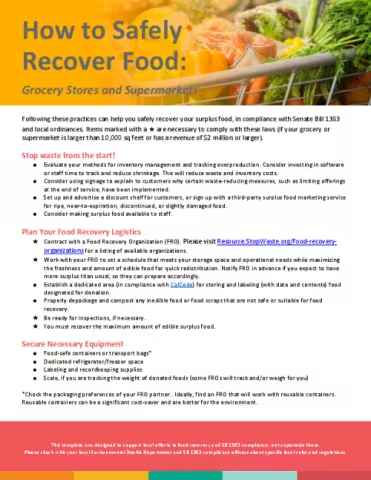
Grocery Stores & Supermarkets

Safe recovery practices for perishable items approaching expiration dates and partnering with food recovery organizations for regular pickups. See how Raley's is optimizing its operations to reduce food waste.

Key considerations: Establish regular pickup schedules, rotate stock to maximize donation windows, and train deli/bakery staff on end-of-day recovery procedures.

Guide to Safe Food Recovery for Grocery Stores and Supermarkets

A quick-reference guide for grocery stores and supermarkets on safely recovering surplus food in compliance with California's SB 1383, covering waste prevention, donation guidelines, food safety, and recordkeeping requirements.

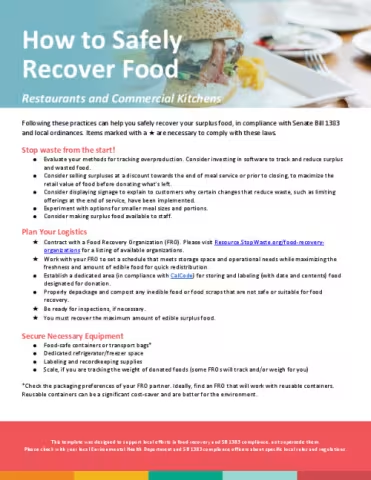
Restaurants & Commercial Kitchens

Streamline kitchen procedures to facilitate regular surplus food contributions while maintaining food safety standards.

Key considerations: Designate a staff lead for food recovery, set up a labeled holding area for donation items, and coordinate pickup times around your service schedule.

Guide to Safe Food Recovery for Restaurants & Commercial Kitchens

A quick-reference guide for restaurants and commercial kitchens on safely recovering surplus food in compliance with California's SB 1383, covering waste prevention, donation guidelines, food safety, and recordkeeping requirements.

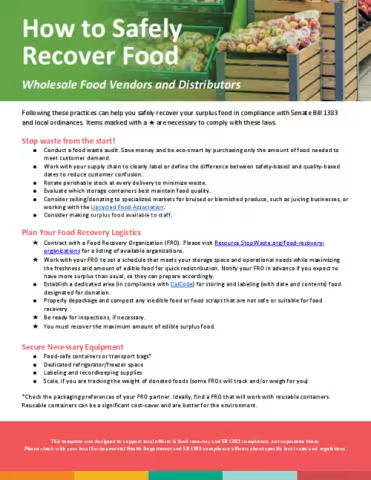
Wholesale Vendors & Distributors

Managing bulk surplus inventory and establishing partnerships with food recovery organizations.

Key considerations: Identify products nearing "sell by" dates early, establish standing arrangements with food banks for bulk donations, and document rejected or returned product for recovery.

Guide to Safe Food Recovery for Wholesale Food Vendors & Distributors

A quick-reference guide for wholesale food vendors and distributors on safely recovering surplus food in compliance with California's SB 1383, covering waste prevention, donation guidelines, food safety, and recordkeeping requirements.

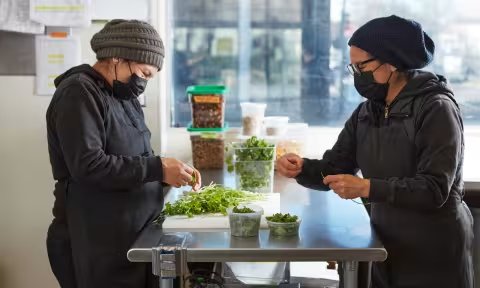
Foodservice & Caterers

Integrate food donation into your daily operations while empowering staff and strengthening community connections.

Key considerations: Build donation into event planning, train staff on safe cooling and packaging for transport, and track surplus patterns to improve future ordering.

Just Fare: Preventing Food Waste, Empowering People
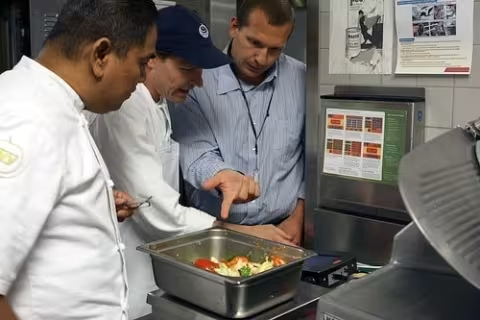
Just Fare is a mission-driven food service operator whose goals of minimizing environmental impact and doing the most possible social good permeate all aspects of operations. Besides their business and institutional catering accounts, Just Fare runs a community kitchen and consults on commercial kitchen design and foodservice. Their achievements in food waste prevention are impressive: Between August 2019 and April 2022, they used an automated food waste tracking system to determine the amount of pre-consumer food waste they generated—such as surplus and spoiled food. Just Fare then used the

Cal Dining: Food Waste Prevention

Results at a Glance Reduced food waste by 19%, equivalent to 27 tons per year. Cost of food waste avoided equivalent to saving more than $98,000 a year. Continue to reduce waste using automated food waste tracking system. Overview UC Berkeley’s foodservice provider Cal Dining measures types and amounts of pre-consumer food waste with specialized tracking equipment, then uses the findings to modify purchasing and food prep routines. As a result, Cal Dining has reduced food waste by 19%, equivalent to 27 tons/year, or $98,402/year in reduced food costs. Cal Dining is also benefitting from

K-12 Schools

Special guidance for school cafeterias, including holiday break protocols and student-safe recovery practices. For more school-specific resources, see Food Share Tables & Donation at School and SB 1383 Edible Food Recovery for Schools.

Key considerations: Coordinate with district nutrition services, set up share tables for unopened items, and plan ahead for holiday and summer breaks when surplus spikes.

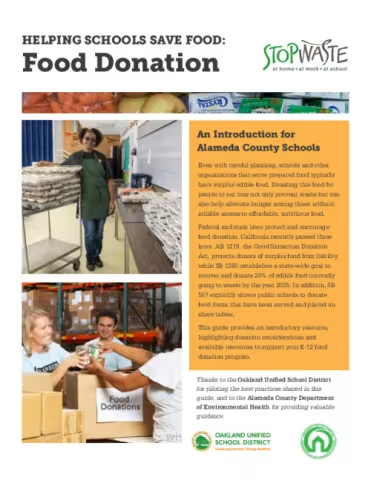
Food Donation Guide: Helping Schools Save Food
A four-page introduction for Alameda County schools interested in setting up a donation program for surplus edible food. Includes guidance on legal protections, program models, food safety precautions and how to find and form a partnership with a food recipient non-profit partner. This guide was created in partnership with the Oakland Unified School District and to the Alameda County Department of Environmental Health.

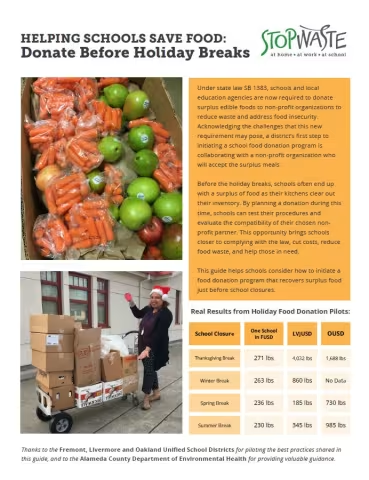
Helping Schools Save Food: Donate Before Holiday Breaks
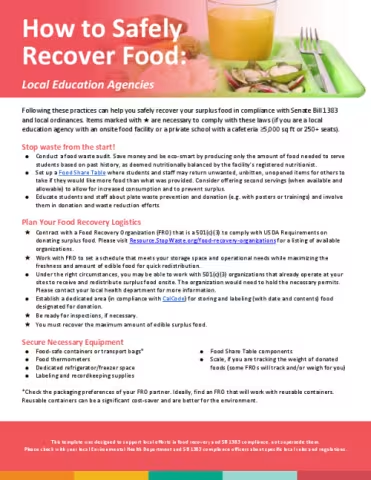
A two-page guide for Alameda County schools interested in setting up a donation program before holiday breaks.

Guide to Safe Food Recovery for Local Education Agencies
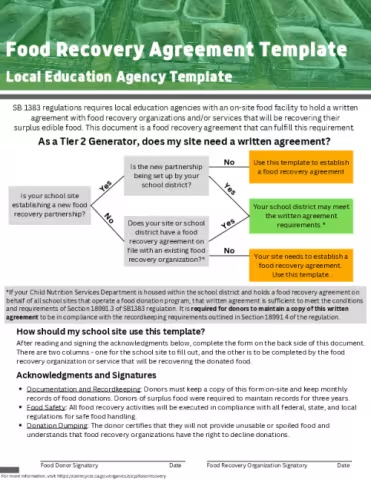
A quick-reference guide for local education agencies on safely recovering surplus food in compliance with California's SB 1383, covering waste prevention, Food Share Tables, donation guidelines, food safety, and recordkeeping requirements.

School Food Recovery Agreement - Simplified Template

SB 1383 regulations requires local education agencies with an on-site food facility to hold a written agreement with food recovery organizations and/or services that will recover their surplus edible food. This template is a simplified food recovery agreement that can fulfill this requirement.

Hospitality & Large Events

Guidance for high-volume food operations including hotels, banquets, conferences, and temporary event catering.

Key considerations: Coordinate with event planners to estimate portions accurately, include food recovery in vendor contracts, designate collection points at events, and establish relationships with multiple recovery partners for variable volumes.

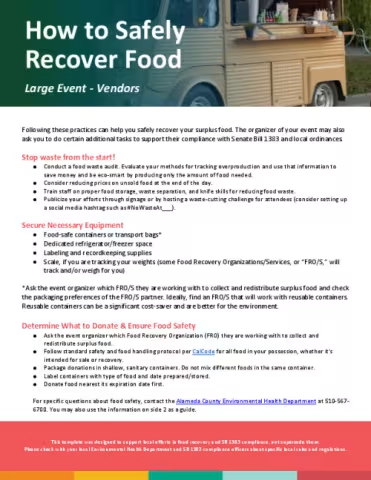
Guide to Safe Food Recovery for Vendors at Large Events
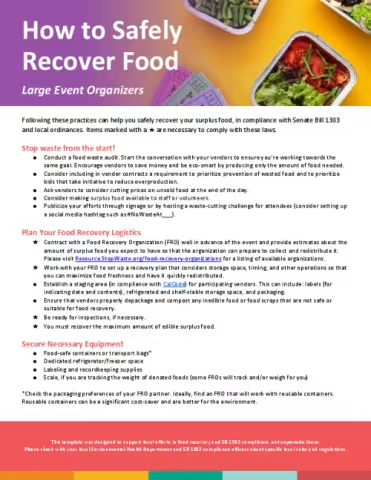
A quick-reference guide for large event vendors on safely recovering surplus food in compliance with California's SB 1383, covering waste prevention, donation guidelines, food safety, and recordkeeping requirements.

Guide to Safe Food Recovery for Large Event Organizers

A quick-reference guide for large event organizers on safely recovering surplus food in compliance with California's SB 1383, covering waste prevention, donation guidelines, food safety, and recordkeeping requirements.

Health Facilities

Guidance for hospitals, nursing homes, and similar institutions with on-site food service.

Key considerations: Work with dietary staff to identify consistent surplus items, ensure recovery procedures meet health facility food safety standards, and track patient meal tray waste for reduction opportunities.
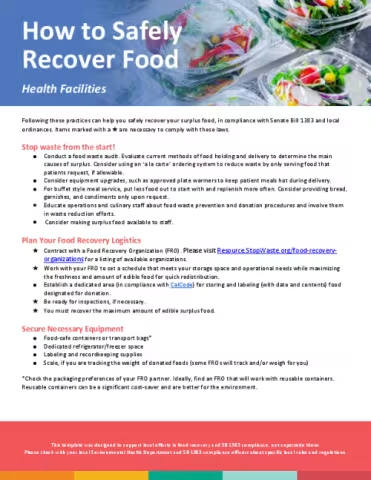
Guide to Safe Food Recovery for Health Facilities

A quick-reference guide for health facilities on safely recovering surplus food in compliance with California's SB 1383, covering waste prevention, donation guidelines, food safety, and recordkeeping requirements.

Webinar: How to Donate Surplus Food & Comply with the Law (2022)

Need Help?

StopWaste offers free personalized assistance for your specific industry, including on-site visits and customized program setup.