California's SB 1383 requires large generators of food waste — including many school districts — to recover surplus edible food and donate it to feed people. Redirecting surplus food helps reduce food insecurity in our communities while keeping organic waste out of landfills, where it produces methane, a powerful greenhouse gas.
What Schools Must Do
Under SB 1383, school districts that meet food-generator thresholds must:
- Establish written agreements with food recovery organizations to pick up or receive surplus edible food
- Donate the maximum amount of surplus edible food that would otherwise be discarded
- Keep monthly records of the type, frequency, and pounds of food donated — see tracking requirements and forms
- Store surplus food safely so it doesn't spoil before pickup — review food safety and date label guidance
- Provide annual notifications to staff about food recovery programs
There are no waivers for the edible food recovery requirements. For detailed compliance steps — including how to assess your surplus, find a partner, and set up a donation process — see Food Donation Rules. The Food Donation FAQ covers common questions about liability, waivers, and what to do if donations are declined.
If your district has received a non-compliance notice, you can submit proof of compliance online. StopWaste collects this information on behalf of local jurisdictions and CalRecycle.
Getting Started
If your district hasn't yet set up food recovery, here's a practical path forward:
- Assess your surplus. Track what's left over after meal service for 1–2 weeks to understand volumes and patterns.
- Find a food recovery partner. Use StopWaste's partner directory or connect through the Alameda County Food Recovery Network (40+ active organizations).
- Set up a written agreement. Use the simplified School Food Recovery Agreement template to formalize your partnership.
- Train staff and start donating. Designate a food recovery lead, set up a labeled holding area, and coordinate pickup times around your meal schedule.
- Track and report. Log donations monthly using a printable donation log. Keep records for at least five years.
For industry-specific guidance tailored to K-12 cafeterias — including holiday break protocols and student-safe recovery practices — see the K-12 Schools section of the Industry Guides.
Food Share Tables
In addition to donating to recovery organizations, many schools set up food share tables where students can return unopened, whole food items for other students to take. Share tables aren't required by SB 1383, but they're a best practice that reduces waste and feeds students at the same time. See Food Share Tables & Donation for setup guides and training videos.
How StopWaste Helps
StopWaste provides free compliance support for school districts in Alameda County:
- Templates and guidance — Sample agreements, donation logs, and step-by-step documentation to streamline compliance
- Partner connections — Help identifying and connecting with food recovery organizations serving your area
- Technical assistance — On-site support for donation logistics, food safety protocols, and staff training
- SAGE Network — The StopWaste Advisory Group in Education connects districts to share compliance strategies and best practices
Resource List
Tools and Templates for Schools
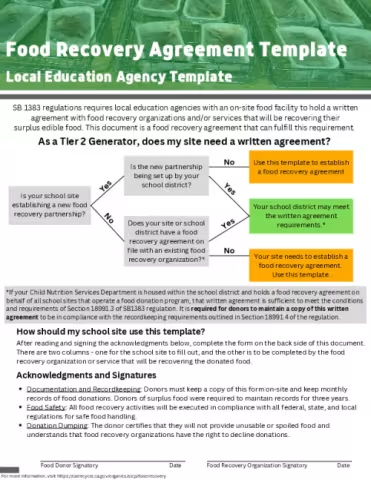
School Food Recovery Agreement - Simplified Template
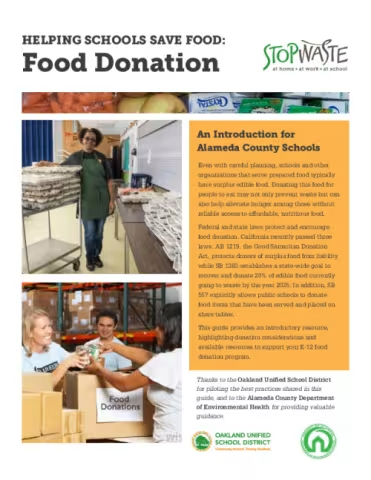
Food Donation Guide: Helping Schools Save Food
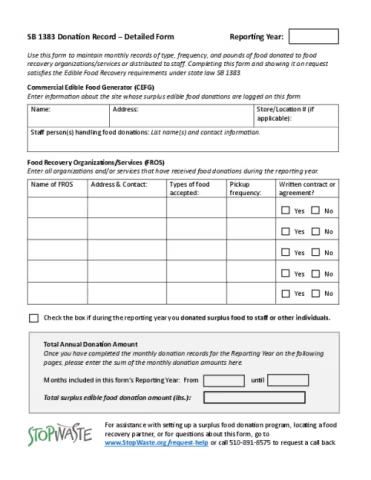
Detailed Printable Food Donation Log
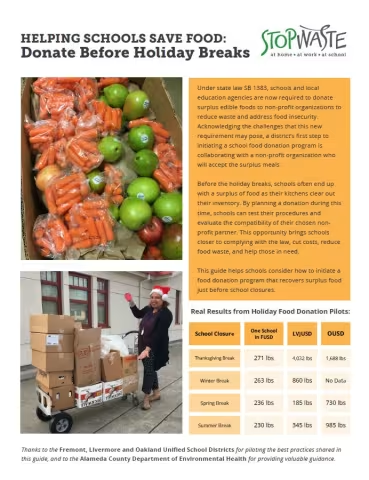
Helping Schools Save Food: Donate Before Holiday Breaks
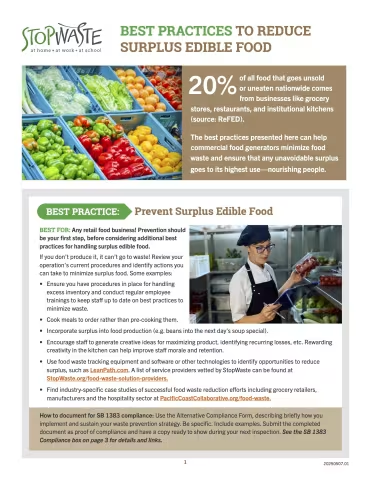
Best Practices to Reduce Surplus Edible Food
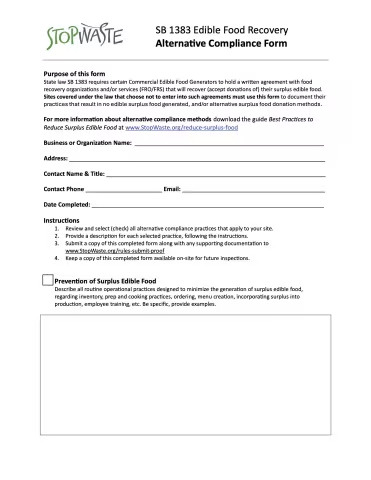
SB 1383 Edible Food Recovery Alternative Compliance Form
Related Resources
Wayfinding Cards

Food Share & Donation

Food Donation Rules
