Our Impact at a Glance - April 2026
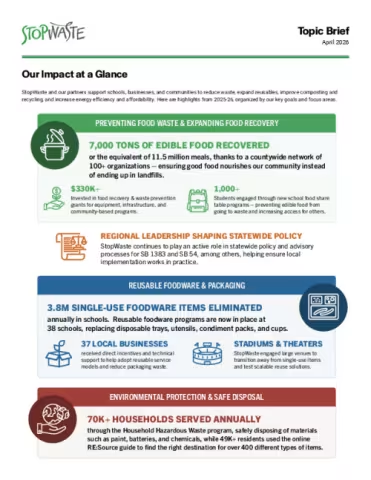
StopWaste and our partners support schools, businesses, and communities to reduce waste, expand reusables, improve composting and recycling, and increase energy efficiency and affordability. Here are highlights from 2025-26, organized by our key goals and focus areas. Preventing Food Waste & Expanding Food Recovery 7,000 tons of edible food recovered — equivalent of 11.5 million meals, thanks to a countywide network of 100+ organizations. $330K+ invested in food recovery and waste prevention grants for equipment, infrastructure, and community-based programs. 1,000+ students engaged through new
Carbon Farming in City Parks - March 2026
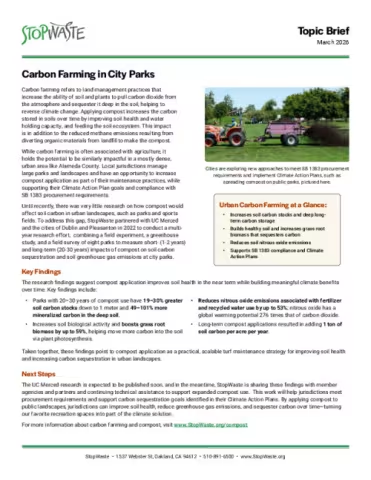
Carbon farming refers to land management practices that increase the ability of soil and plants to pull carbon dioxide from the atmosphere and sequester it deep in the soil, helping to reverse climate change. Applying compost increases the carbon stored in soils over time by improving soil health and water holding capacity, and feeding the soil ecosystem. This impact is in addition to the reduced methane emissions resulting from diverting organic materials from landfill to make the compost. While carbon farming is often associated with agriculture, it holds the potential to be similarly
Home Energy Score California - February 2026
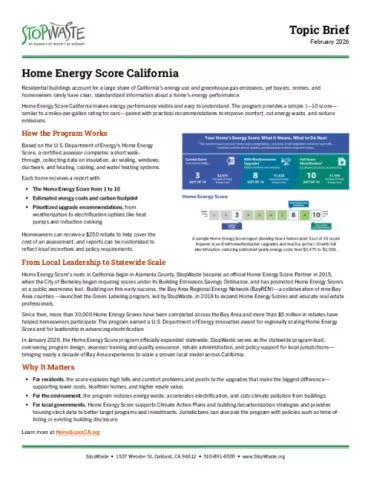
Residential buildings account for a large share of California’s energy use and greenhouse gas emissions, yet buyers, renters, and homeowners rarely have clear, standardized information about a home’s energy performance. Home Energy Score California makes energy performance visible and easy to understand. The program provides a simple 1–10 score—similar to a miles-per-gallon rating for cars—paired with practical recommendations to improve comfort, cut energy waste, and reduce emissions.
What’s the Problem with Compostable Plastic? - December 2025
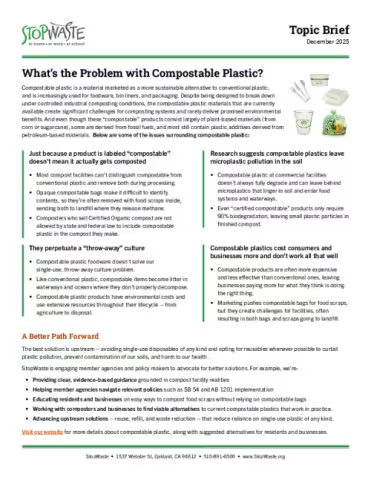
Compostable plastic is a material marketed as a more sustainable alternative to conventional plastic, and is increasingly used for foodware, bin liners, and packaging. Despite being designed to break down under controlled industrial composting conditions, the compostable plastic materials that are currently available create significant challenges for composting systems and rarely deliver promised environmental benefits. And even though these “compostable” products consist largely of plant-based materials (from corn or sugarcane), some are derived from fossil fuels, and most still contain
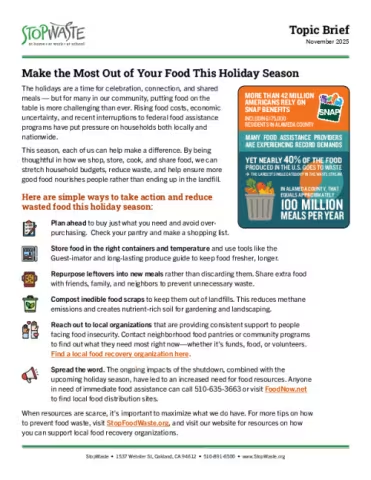
Make the Most Out of Your Food This Holiday Season - November 2025
The holidays are a time for celebration, connection, and shared meals — but for many in our community, putting food on the table is more challenging than ever. Rising food costs, economic uncertainty, and recent interruptions to federal food assistance programs have put pressure on households both locally and nationwide. This season, each of us can help make a difference. By being thoughtful in how we shop, store, cook, and share food, we can stretch household budgets, reduce waste, and help ensure more good food nourishes people rather than ending up in the landfill.
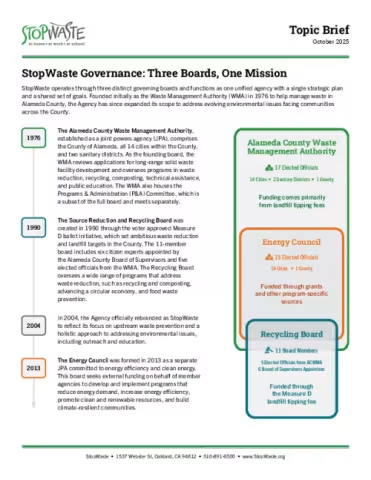
StopWaste Governance - October 2025
StopWaste operates through three distinct governing boards and functions as one unified agency with a single strategic plan and a shared set of goals. Founded initially as the Waste Management Authority (WMA) in 1976 to help manage waste in Alameda County, the Agency has since expanded its scope to address evolving environmental issues facing communities across the County.
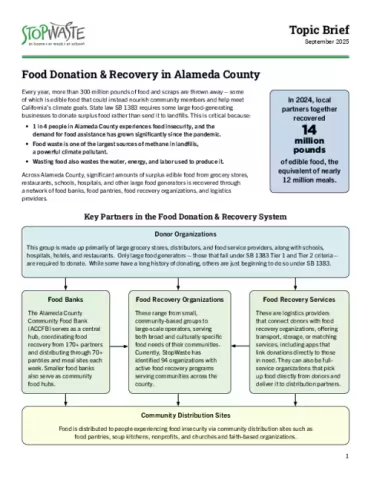
Food Donation & Recovery in Alameda County - September 2025
Every year, more than 300 million pounds of food and scraps are thrown away – some of which is edible food that could instead nourish community members and help meet California’s climate goals. State law SB 1383 requires some large food-generating businesses to donate surplus food rather than send it to landfills. This is critical because: 1 in 4 people in Alameda County experiences food insecurity, and the demand for food assistance has grown significantly since the pandemic. Food waste is one of the largest sources of methane in landfills, a powerful climate pollutant. Wasting food also
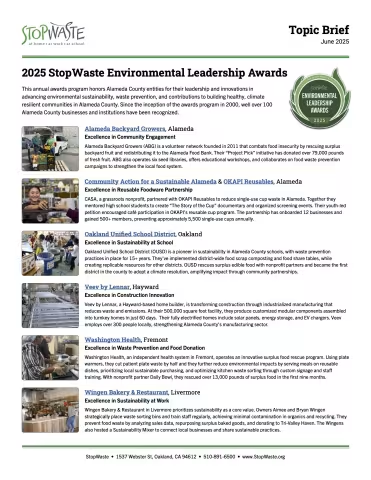
Environmental Leadership Awards - June 2025
This annual awards program honors Alameda County entities for their leadership and innovations in advancing environmental sustainability, waste prevention, and contributions to building healthy, climate resilient communities in Alameda County. Since the inception of the awards program in 2000, well over 100 Alameda County businesses and institutions have been recognized.
Community Compost Hubs - May 2025
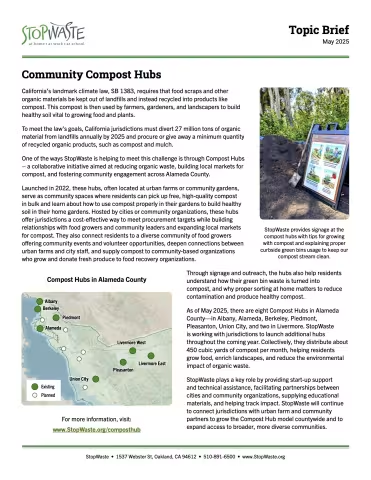
California’s landmark climate law, SB 1383, requires that food scraps and other organic materials be kept out of landfills and instead recycled into products like compost. This compost is then used by farmers, gardeners, and landscapers to build healthy soil vital to growing food and plants. To meet the law’s goals, California jurisdictions must divert 27 million tons of organic material from landfills annually by 2025 and procure or give away a minimum quantity of recycled organic products, such as compost and mulch. One of the ways StopWaste is helping to meet this challenge is through
StopWaste Goals and Focus Areas - April 2025
StopWaste’s work is guided by three overarching goals, rooted in our core mission and vision: Thriving Circular Economy • Healthy Local Food System • Innovative Bay Area Construction Sector We use these long-term goals to inform our budget and help shape our strategy and programming. To achieve these goals, we organize our work and activities around a set of focus areas that collectively guide our programmatic work plan for fiscal years 2026-2028. We engage partners and community at the local, regional, and state levels to maximize our impact across all of the goals and focus areas. This is a