Image + Text
Image

benefits and Impacts
Why Reduce Food Waste?
Households are the greatest contributor to food waste in the United States, wasting about $3,000 worth of food each year (for a family of four).
At the same time, the Alameda County Community Food Bank reports that at least 1 in 4 of our neighbors in the county are experiencing food insecurity. When wasted food ends up in the landfill, it emits methane, a powerful greenhouse gas, and contributes significantly to climate change.
The good news is that most food waste is preventable. Reducing food waste will not only save you money and keep your cupboard organized, but it is also one of the leading solutions to climate change. Small changes in how you shop, store, and cook can make a big difference — for your wallet, your neighbors, and the planet. StopWaste has tools to help you make the most of your food.
Wayfinding Cards
Plan, Store, Eat and Compost to Reduce Food Waste
Food is too essential to throw away. By making small shifts in how you shop, prepare, and store food, you can waste less, eat well, save money, and save resources used to produce and distribute food. StopWaste has tools to help you make the most of your food.
Image

Buy Only What You Need
Shop smarter by planning meals and making a list. A few minutes of planning each week can save you time, money, and reduce the amount of food you throw away.
Image

Keep Fruits & Vegetables Fresh
Keep food fresh longer with proper storage. The right storage can add days or even weeks to the life of your groceries.
Image

Eat What You Buy
Get creative with leftovers and prep ahead. Eating what you already have is the best way to prevent waste.
Image

Compost the Scraps
Learn how to properly sort and compost food scraps using your green bin. Composting keeps organic waste out of landfills, reduces methane emissions, and creates nutrient-rich soil.
Image + Text
Image

Expiration Dates
Understanding Food Date Labels
Confusion over food date labels is responsible for an estimated 20 percent of consumer food waste. Most people assume that the dates printed on food packaging indicate when food is no longer safe to eat. In reality, with the exception of infant formula, date labels are about quality — not safety.
Image + Text
Image

Tips and Tricks
Food Waste Prevention Tips Library
Browse or search our library of recipes, storage, shopping and planning tips.
Resource List
Top Resources
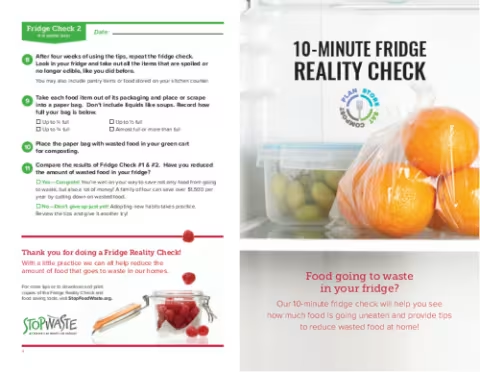
Fridge Reality Check
Wasting Money on Wasted Food? Do a Fridge Reality Check to find out! In just a few minutes, our handy step-by-step guide will show you just how much food is going uneaten in your fridge every week, and also provides customized tips & tools to save money by reducing wasted food at home! Download the guide, and print it out if possible to help record your results. Watch this step-by-step guide on how to conduct a Fridge Reality Check. 2. Use your results to discover which food-saving tips can help you most, then download the tools to help you stop wasting food. 3. Bonus: See how your findings
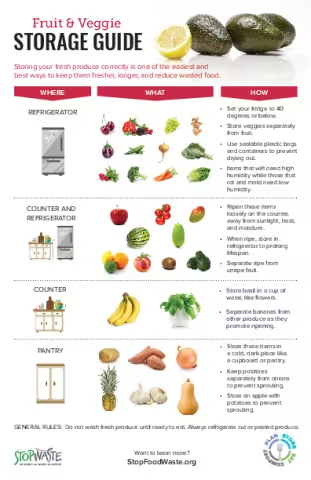
Fruit & Veggie Storage Guide
Learn which fruits and vegetables stay fresh longer inside or outside the fridge with this storage guide. Post the guide on your fridge for quick reference.
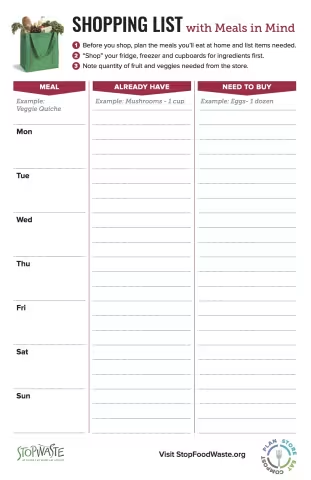
Shopping List with Meals in Mind
Use this printable shopping list to plan meals for the upcoming week with ingredients you already have.
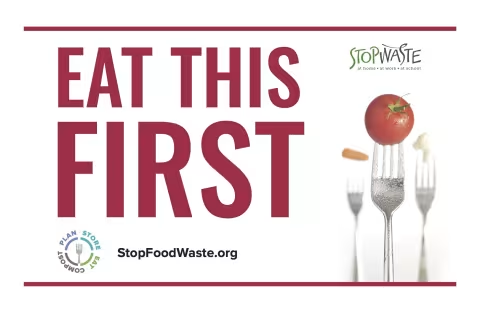
Eat This First Sign
Place this sign inside your fridge or pantry to designate an area for foods that need to be eaten soon.
Image + Text
Image

Community Stories
Across Alameda County, residents, businesses, and organizations are finding creative ways to reduce food waste and strengthen our local food system. Discover how your neighbors and local changemakers are making a difference.
Numbers Cards
Food Waste by the Numbers
over $2,900
wasted on uneaten food per household of four each year
Almost 35%
of all food produced in the U.S. is never eaten
25%
of U.S. freshwater consumed goes to food we never eat