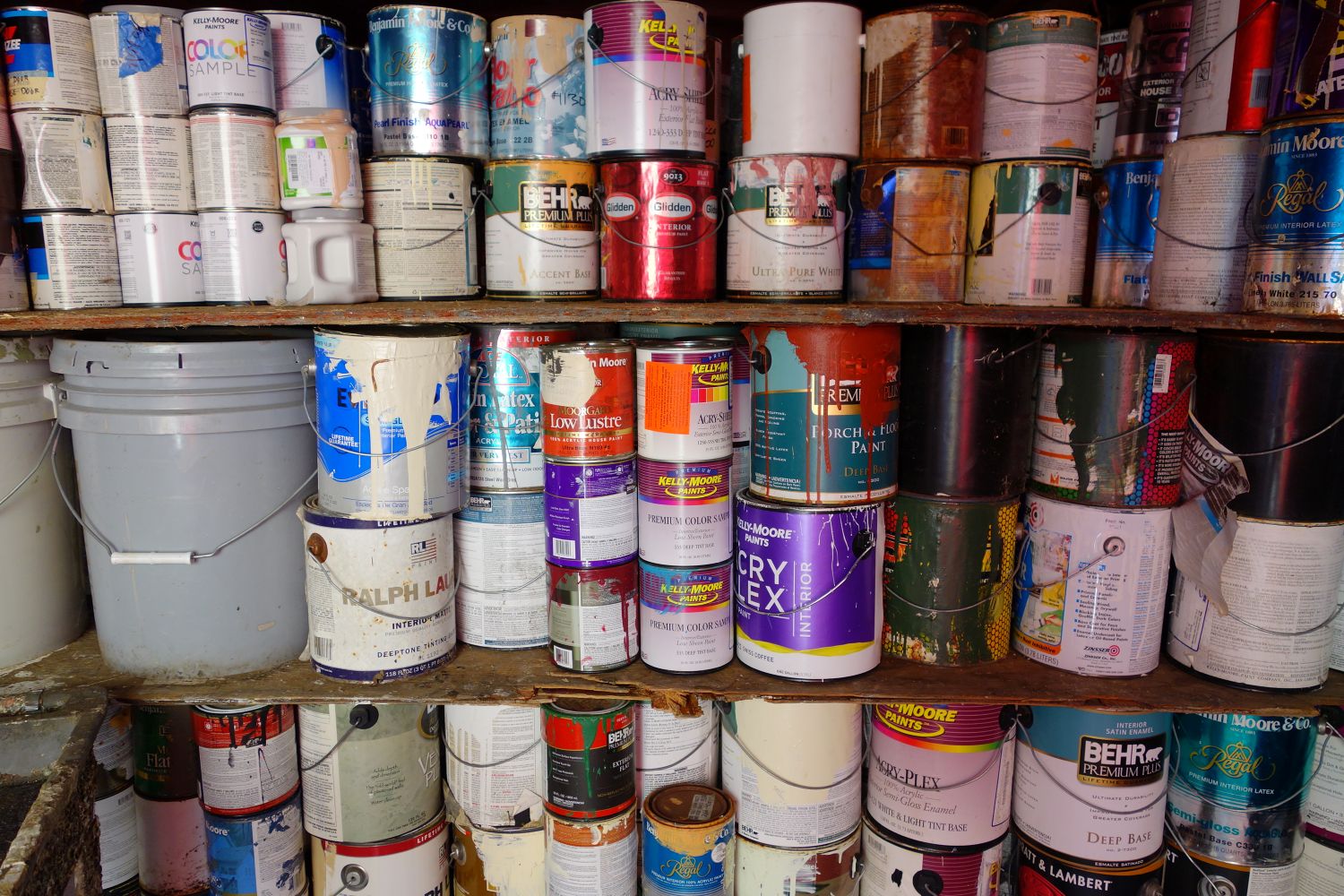
Alameda County provides a free service for residential landlords to dispose of their tenants' hazardous waste. Under federal and state law, residential landlords are classified as businesses and cannot use the regular residential HHW drop-off service.
Who Can Participate
Eligible Properties:
- Owners of rental housing in Alameda County
- Condo Owners Associations located in Alameda County
- Properties with 5 or more units
Exception: A residential landlord with 4 or fewer units on the same parcel, whose legal residence is in one of those units, is considered a household and may use the regular residential HHW drop-off service.
How to Get Started
- Obtain an EPA Hazardous Waste Identification Number. EPA ID numbers are free and easy to obtain. Visit the California DTSC website or call (800) 618-6942. To get an account with the HHW program to deliver hazardous waste your site must have an active EPA ID number. An EPA ID number is not required if your site will deliver ONLY latex paint and Universal Waste batteries, lamps, and aerosol cans.
- Apply for an account. Download and complete the Residential Landlord Service Packet (Certification Form, Information Form, and Inventory Form). Submit completed forms by mail to Alameda County HHW VSQG, 1131 Harbor Bay Parkway, M/S 51701, Alameda, CA 94502-6540; by fax to (510) 293-9374; or by email to hhw@acgov.org.
- Make an appointment. After receiving confirmation with your account number, call (800) 606-6606 to schedule. Landlords cannot make appointments online and cannot deliver waste on days when facilities are open for residents.
VSQG Requirements
To qualify as a Very Small Quantity Generator, landlords must:
- Produce less than 220 pounds (about 27 gallons) of hazardous waste per month
- Produce less than 2.2 pounds of extremely hazardous waste per month
- Have less than 2,200 pounds of hazardous waste in storage at any time (equivalent to about 220 one-gallon paint cans or 45 five-gallon pails)
Note: Latex paint, aerosol cans, household batteries, and Universal Waste lamps are NOT included in the monthly 220-pound delivery and 2,200-pound storage limits.
Accepted Materials
- Paint and paint-related materials (stains, varnishes, roofing tar, adhesives, joint compounds, petroleum-based products)
- Landscape care products (pesticides, herbicides, fungicides, fertilizers)
- Propane tanks and aerosol cans
- Automotive products (motor oil, lubricants, oil filters, antifreeze)
- Batteries and lamps
- Cleaners and pool chemicals
Not Accepted
- Treated wood waste (including railroad ties)
- Electronics and small appliances
- Large appliances (A/C, refrigerators, stoves, washers)
- Construction and demolition waste
- Compressed gas cylinders (5-gallon propane tanks and smaller are acceptable)
- Fire extinguishers, asbestos, explosives, radioactive materials
- Unlabeled or unknown chemicals
- Contaminated soil, plastic sheeting, or cleanup waste from lead paint removal
Transportation Requirements
- Landlord, property owner, or their employee must transport waste — for-hire haulers cannot deliver waste for another company
- Use containers that prevent leaks, are securely closed, and in good condition
- No hazardous residue on the exterior of containers
- Containers must be impervious to waste contents
- Liquid or volatile waste requires hermetically sealed containers
- Dry solid waste may use thick sealed plastic bags (up to 5 gallons)
- Sharps require rigid, puncture-resistant containers
- Mark or label all containers clearly
- Pack and brace waste to prevent movement, breakage, or spills — do not mix incompatible chemicals
- Keep waste accessible for HHW staff (not in passenger area)
- Stay in vehicle — staff will unload waste
- The facility retains all containers
Best Practices
Tenant Communication
- Inform tenants of their responsibility for safe waste handling
- Include proper waste disposal in lease agreements
- Consider waste disposal standards for security deposits
- Provide HHW program flyers when tenants move in/out
- Share information about local retail take-back options (paint stores, hardware stores, oil changers, pharmacies)
Property Management
- Inspect properties for hazardous building materials during turnovers (mercury thermostats, chemicals, electronics, treated wood, asbestos)
- Use the RE:Source Guide to find recycling and disposal options
- Use qualified contractors for materials requiring special handling
Accordion
Frequently Asked Questions
Owners of rental properties in Alameda County and Condo Owners Associations that generate waste within the county and qualify as Very Small Quantity Generators (VSQGs). Landlords with 4 or fewer units where their legal residence is in one of the units may use the regular residential HHW drop-off service instead.
Complete the Certification Form from the Residential Landlord Service Packet. You must generate less than 220 pounds of hazardous waste per month, less than 2.2 pounds of extremely hazardous waste per month, and maintain less than 2,200 pounds in storage at any time.
Federal and state law caps business hazardous waste acceptance at 220 pounds per month. Latex paint, aerosol cans, household batteries, and fluorescent lamps are exempt from this limit.
Inform tenants of safe waste handling responsibilities. Include proper disposal in lease agreements and consider waste disposal standards for security deposits. Distribute HHW program flyers at move-in and move-out. Share information about local retail disposal options such as paint stores, hardware stores, oil changers, and pharmacies. Use the RE:Source Guide to find additional recycling and disposal options.
Related Services
- Residents: Free, no-appointment drop-off at four facilities. Household hazardous waste
- Businesses: Appointment-based and drop-in services for qualifying businesses. Business hazardous waste
Call to Action
Get Started
Download the Residential Landlord Service Packet, complete your application, and call (800) 606-6606 to schedule your first drop-off. This service is free for qualifying landlords.