Every school day, cafeterias generate mountains of disposable trays, cups, and utensils that serve a useful life of just minutes. StopWaste helps Alameda County schools replace single-use foodware with durable, washable alternatives — reducing waste, cutting costs, and creating healthier dining environments for students.
Numbers Cards
School Reusables on the Rise!
42 Schools
Across 8 districts have made the switch to reusable foodware.
4.7 Million
Single-use foodware items avoided every year across participating schools.
$210,000
In annual savings from reduced purchasing and lower garbage bills.
Reusable Foodware Grants: Up to $50,000
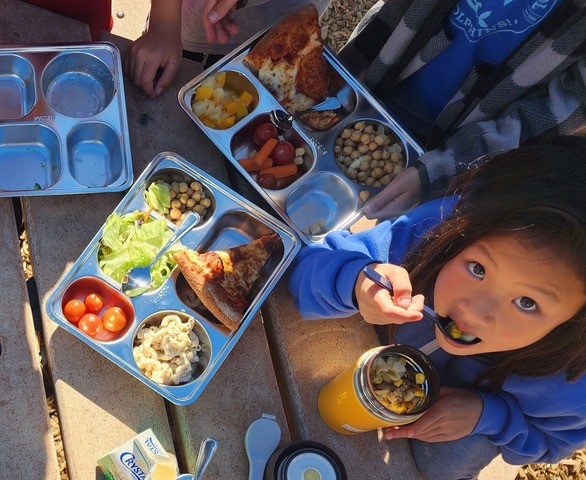
StopWaste's Reusable Foodware Grants can help schools cover the upfront costs of transitioning. Grants fund:
- Reusable foodware — trays, plates, bowls, cups, and utensils
- Dishwashing equipment — commercial dishwashers, drying racks, and installation
- Dispensing systems — milk dispensers and condiment stations to replace single-serve packets
- Off-site dishwashing services — for schools without space for on-site equipment
Applications are accepted on a rolling basis. Schools serving 150 or more meals daily are eligible. A letter of support from district administration is required. K-12 schools with high free and reduced-price lunch enrollment receive priority.
Resource List
Guides and Templates
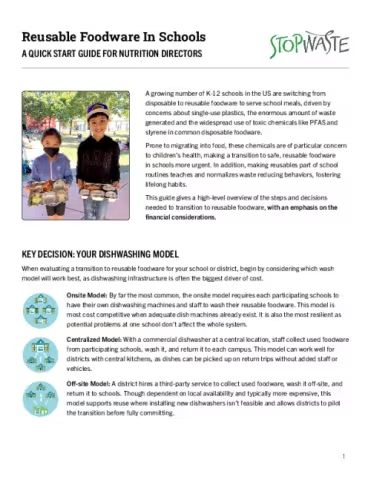
Reusable Foodware in Schools: A Quick Start Guide for Nutrition Directors
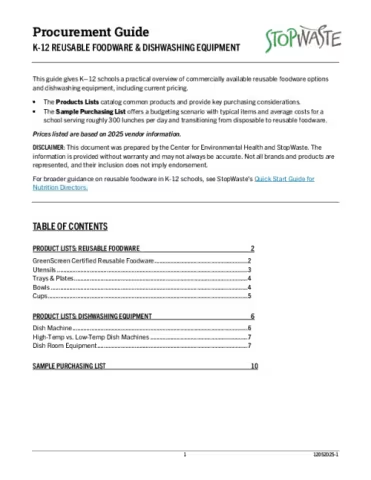
K-12 Reusable Foodware Procurement Guide
The Center for Environmental Health also has a comprehensive toolkit aimed at helping your school or school district make the transition from single-use food service ware containing harmful chemicals towards healthier and more sustainable options. Visit the Ditching Disposables Toolkit.
Resource List
Case Studies
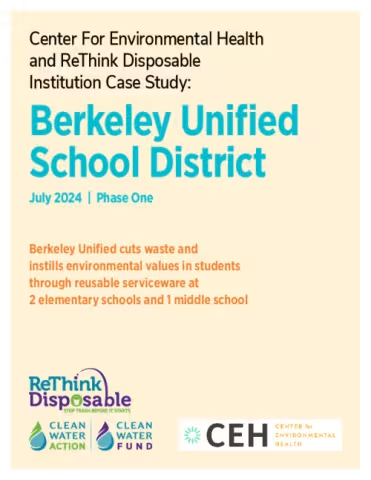
Berkeley Unified School District Reusable Foodware
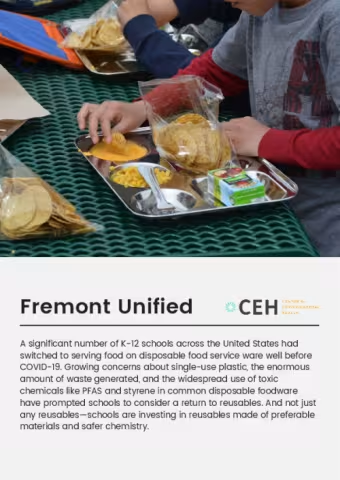
Fremont Unified School District: Reusable Foodware Case Study
Back to Reusables: Helping School Districts Transition to Reusable Foodware
"Back to Reusables" is a project to give schools the tools, information, and assistance they need to transition from a disposable foodware system to a reusable foodware system that fits their budget and context.