Once you've found a food recovery partner, the next step is to establish a formal donation process. SB 1383 requires a written agreement between your business and the food recovery organization that will receive your surplus edible food.
Set Up a Written Agreement
You must have a written agreement with at least one food recovery organization or service. The agreement ensures both parties understand:
- Types of food to be donated
- Pickup schedule and procedures
- Food safety and handling requirements
- Contact information for coordination
Agreement Templates
StopWaste provides free, customizable templates to help you create your agreement:
Resource List
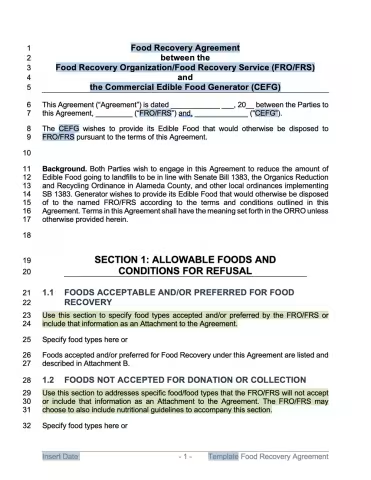
Customizable Food Recovery Agreement Templates
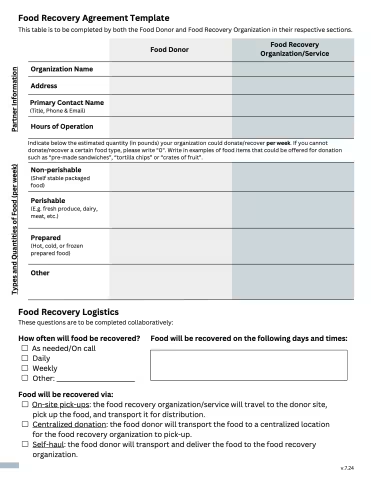
Simplified Food Recovery Agreement Template
Need help completing them? Request free assistance.
Establish Donation Procedures
Work with your food recovery partner to set up clear, repeatable procedures:
- Designate a donation area — Set aside a clean, temperature-appropriate space where surplus food is collected for pickup
- Set a pickup schedule — Agree on regular pickup days and times that work for both parties
- Define food safety protocols — Ensure proper handling, labeling, and storage of donated items
- Assign responsibility — Identify staff members who will manage the donation process day-to-day
Train Your Staff
Ensure employees understand:
- What foods can be safely donated
- Proper storage and handling procedures for items awaiting pickup
- When and how pickups occur
- Who to contact with questions
Staff training doesn't need to be formal — a brief walkthrough of the process and a posted reference guide near the donation area is often sufficient.
Liability Protection
Your business is protected when donating food in good faith. Federal and state laws shield food donors from liability:
- Food Donation Improvement Act (Federal, 2022)
- California Good Samaritan Food Donation Act (State, 2017)
- Bill Emerson Good Samaritan Food Donation Act (Federal, 1996)
Next Steps
- Track Donations and Keep Records — Set up the monthly record-keeping required for compliance
Resources
- Industry-Specific Food Donation Guides — Tailored guidance for your business type
- Food Safety and Date Labels — What food can be safely donated
- Surplus Food Donation Guide for Food Service Providers