Latest Topic Brief
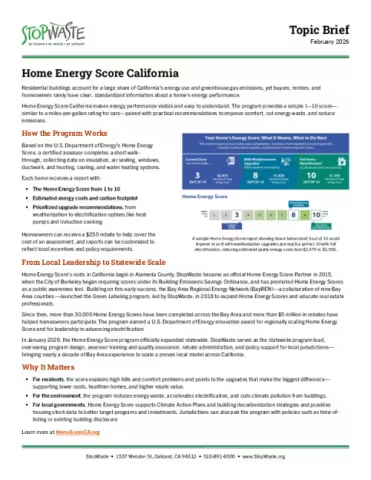
Home Energy Score California - February 2025
Latest Agency Update
Agency Update
Agency Update - Winter 2026
Updated Mar 16, 2026
StopWaste Pilots Solar Panel Collection Event In partnership with the California Product Stewardship Council, StopWaste hosted a free, one-day residential solar panel collection event at the Fremont Recycling & Transfer Station for Alameda County residents. Event staff collected 171 solar panels, and of those, 47 panels were tested and confirmed suitable for reuse, while 124 panels were designated for recycling. Funded by CalRecycle, this initiative helps keep hazardous materials from being disposed of improperly and supports market development for used solar panels. Launched in 2025, the
Recent News
News
Water Conservation Success in Hayward
Updated Jan 16, 2025
Bay-Friendly landscaping along a five-mile stretch of Route 238 will save more than two million gallons of water annually.
News
StopWaste Recognized for Energy Efficiency Work
Updated Jan 16, 2025
The Association of Bay Area Governments has recognized StopWaste with its Preserving and Protecting the Environment Award.
News
Bag Ordinance: No increase in minimum charge
Updated Jan 16, 2025
As a result of Reusable Bag Ordinance 2012-2, people are bringing their own bags in larger quantities than expected. Data collected has shown that the ordinance not only has had a positive impact on litter reduction but on waste prevention as well.
News
Successful Results from Bag Ordinance
Updated Nov 17, 2014
Since the ordinance began in January, 2013, overall bag purchases by affected retail stores in Alameda County have declined by 85 percent.
News
Household Hazardous Waste Program Fee Adopted
Updated Sep 24, 2014
At its meeting on May 28, 2014, the Alameda County Waste Management Authority Board adopted a new household hazardous waste fee of $9.55 per year per residential unit. The fee goes into effect July 1, 2014 and will be collected via the property tax roll. Revenue from the fee will be used to support the countywide household hazardous waste program, which provides safe, legal, environmentally sound collection and disposal services for residential household hazardous waste such as paint, solvents and pesticides.
News
StopWaste Celebrates 2014 Business Efficiency Award Winners
Updated Sep 15, 2014
At its annual Business Efficiency Awards ceremony, StopWaste honored twelve companies from around Alameda County for their outstanding achievements in waste reduction and efficiency.
News
Alameda County Residents and Businesses Buried $70 Million of Resources in 2013
Updated Jul 21, 2014
Most of us say that recycling is important, but are we good at it? StopWaste spent the past year taking a look at garbage carts to find out. A report being mailed this week shows that residents and businesses in Alameda County dumped as much as $70 million of recyclable and compostable items in the garbage last year. The report is part of a new Benchmark Service from StopWaste, a public agency responsible for reducing waste in Alameda County.
News
Mandatory Recycling and Single-Use Bag Reduction Ordinances Adopted
Updated May 30, 2014
In January 2012, the Alameda County Waste Management Authority adopted two ordinances that will help the county achieve its long-term waste reduction goals. The mandatory recycling ordinance requires larger businesses and multifamily properties to collect recyclables. The reusable bag ordinance prohibits free distribution of single-use bags at check out in stores that sell packaged food. The laws are designed to reduce waste and litter, stimulate the local economy and create jobs.