California State law, SB 1383, aims to keep food and other compostable materials ("organics") out of landfills to reduce emissions that contribute to climate change. In Alameda County, the law is implemented and enforced under the Organics Reduction and Recycling Ordinance. Under the law, businesses, nonprofits, institutions, and multifamily properties must comply with the rules detailed on this page.
Rules for residents are slightly different and focus on sorting compostable and recyclable materials into the appropriate containers. For a list of what goes where by city visit the RE:Source curbside guide, or download this flyer.
Rules for schools can be found here.
To report a violation of this law, click here.
Wayfinding Cards
Three Steps to Compliance
Follow these steps to meet California's SB 1383 recycling and composting requirements.
2. Have the Correct Indoor Bins
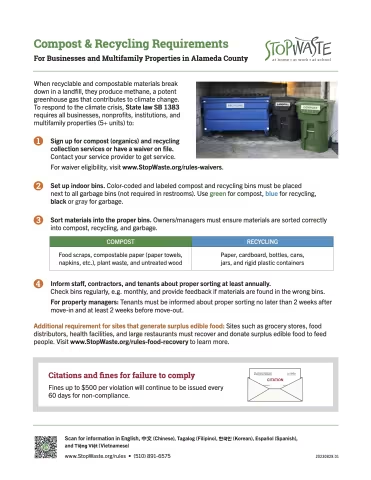
Businesses, nonprofits, institutions, and multifamily properties must place color-coded, labeled compost, recycling, and garbage stations throughout their facility.
3. Sort Materials Correctly
Businesses, nonprofits, institutions, and multifamily properties must sort materials into the proper bins and educate staff and tenants about the rules at least annually.
Image + Text
FOOD RECOVERY
4. Food Donation & Recovery
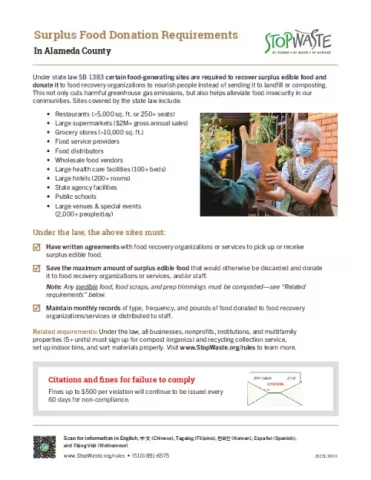
In addition, businesses that generate large amounts of edible food — including grocery stores, restaurants, and food distributors — are required to donate surplus food rather than send it to landfill.
Resource List
Overview Flyers for Download
This document provides an overview of the requirements for businesses, nonprofits, institutions, and multifamily properties under California law SB 1383.
This document provides an overview of the rules under California law SB 1383 requiring certain food-generating sites to recover surplus edible food and donate it to nourish people instead of sending it to landfill or composting.
Image + Text
COMPLIANCE
Need Help?
StopWaste provides free assistance, including personalized consultations, staff training sessions, help setting up indoor bins, and more. Use the buttons below or contact us at 510-891-6575 to leave a message for a call back.
Call to Action
Did You Receive a Letter?
If you've received a notice about recycling, composting or surplus edible food recovery compliance, take action promptly to avoid future fines.