Minimize Surplus Edible Food First

Before focusing on surplus food donation, consider operational changes that can reduce how much edible food goes unused in the first place — such as improved inventory management, menu planning, portion adjustments, and staff training.
For practical tools and programs to help your business reduce food waste at the source, visit Reducing Food Waste for Businesses.
Three Core Requirements
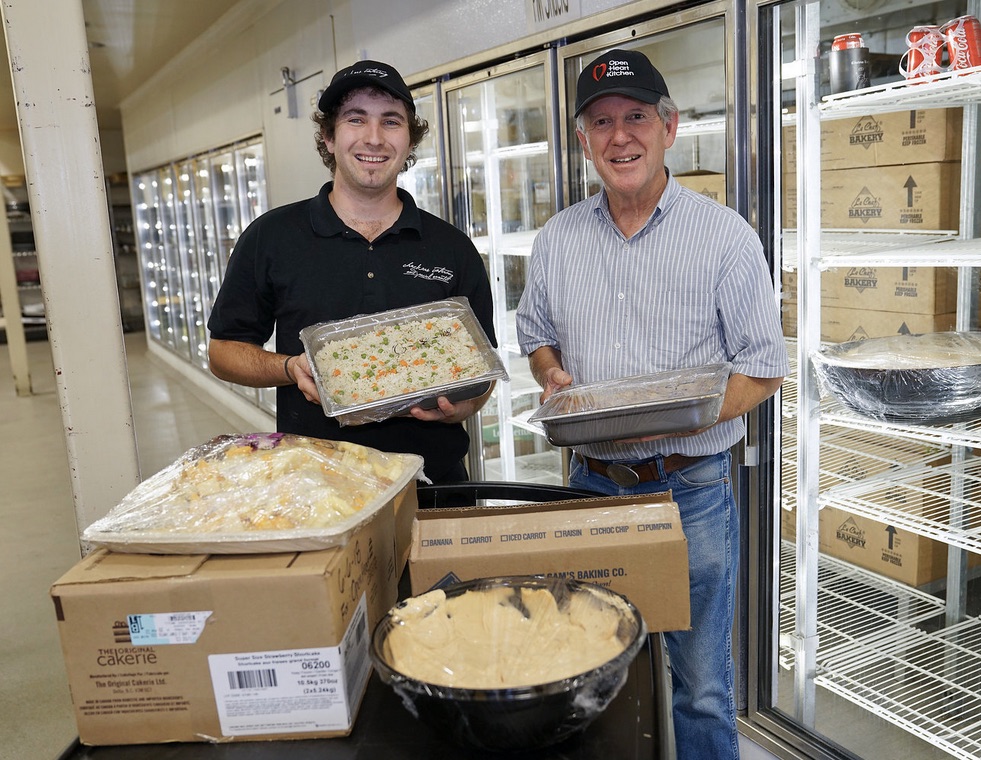
SB 1383 requires commercial food generators of a certain size to recover any surplus edible food and donate it to nourish people instead of sending it to landfill or composting. The goal is to cut greenhouse gas emissions while helping to nourish communities across Alameda County. Find out if your site is covered under the law.
- Have a written agreement with at least one food recovery organization or service.
- Maintain monthly records of the type, frequency, and pounds of food donated.
- Donate the maximum amount of edible food that would otherwise be discarded.
Citations and fines up to $500 are being issued for non-compliance. Inspectors may arrive unannounced to check for written agreements and monthly donation records. If you've received a notice, visit the Citations & Enforcement section to learn more.
Wayfinding Cards
How to Comply in Four Steps

1. Assess Your Surplus Edible Food

2. Find a Food Recovery Partner

3. Establish a Donation Process

4. Track Donations and Keep Records
Top Resources to Start a Food Recovery Program
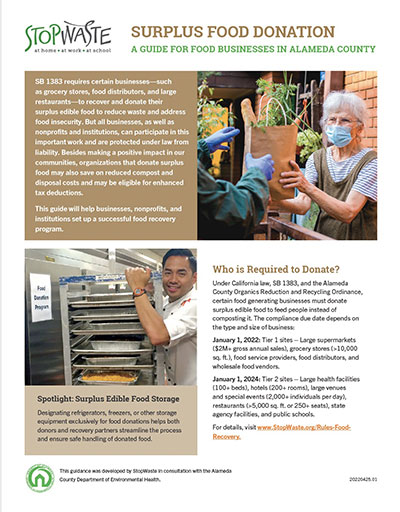
Food Donation Guide
Step-by-step guide for setting up a surplus food recovery & donation program, including how to find a non-profit donation partner. Includes guidance on legal protections and safe food handling requirements.
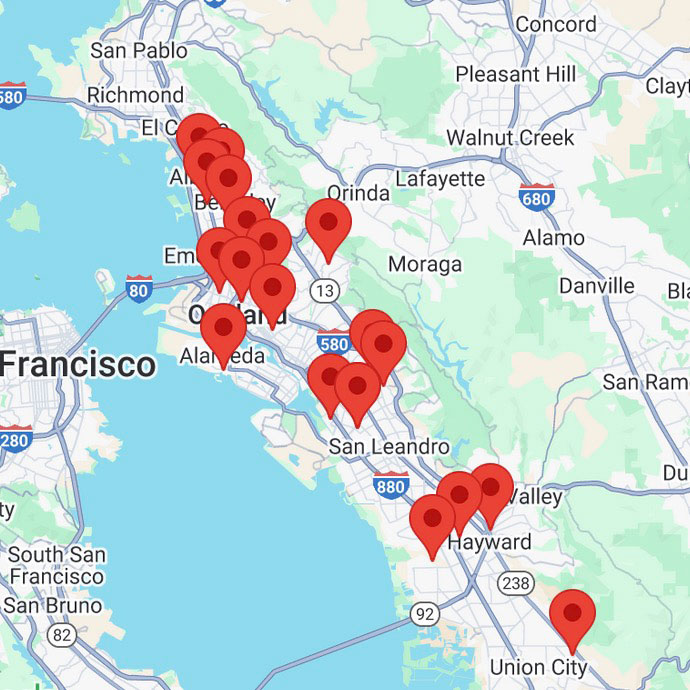
Find Food Recovery Partners
Find food recovery organizations and services in Alameda County, searchable by service area, donations accepted and collection method.

Food Recovery Agreement Template
Use this customizable food recovery agreement to formalize food donation arrangements with one or more food recovery partners and/or services. Required to have on-site during inspections.

Printable Food Donation Log
Download and print this record keeping template to track your monthly surplus edible food donations, as required by law. the records can also help you can tax benefits for your business.
Image + Text

TOP RESOURCES
Guides by Industry
Wayfinding Cards
Additional Resources

Food Donation FAQ

Food Safety & Date Labels

For Food Recovery Organizations
Who Must Comply
The law affects only larger commercial food generators:
| "Tier 1" Sites | "Tier 2" Sites |
|---|---|
| Supermarkets with $2 million or more in annual gross sales | Hotels with 200 or more rooms |
| Grocery stores exceeding 10,000 square feet | Health facilities with 100 or more beds |
| Food service providers (caterers, cafeterias) | Large venues and events with 2,000+ daily attendees |
| Food distributors | Restaurants exceeding 5,000 square feet OR with 250+ seats |
| Wholesale food vendors | State agency facilities with on-site food service |
| Local education agencies (public schools and districts) |
If your organization generates significant amounts of edible surplus food, you may be subject to these requirements even if you don't fit the categories above exactly. Contact StopWaste to verify.
Image + Text

COMPLIANCE