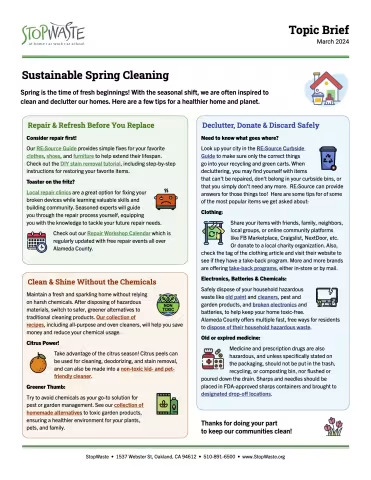
Sustainable Spring Cleaning - March 2024
Spring is the time of fresh beginnings! With the seasonal shift, we are often inspired to clean and declutter our homes. Here are a few tips for a healthier home and planet.
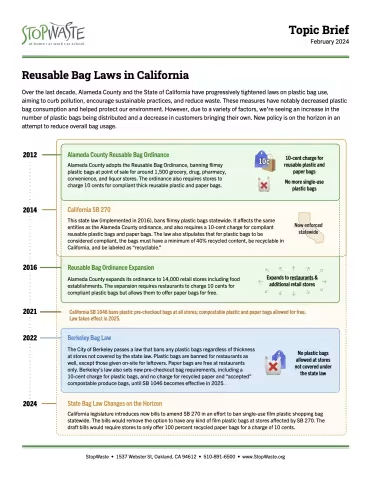
Reusable Bag Laws in California - February 2024
Over the last decade, Alameda County and the State of California have progressively tightened laws on plastic bag use, aiming to curb pollution, encourage sustainable practices, and reduce waste. These measures have notably decreased plastic bag consumption and helped protect our environment. However, due to a variety of factors, we’re seeing an increase in the number of plastic bags being distributed and a decrease in customers bringing their own. New policy is on the horizon in an attempt to reduce overall bag usage.
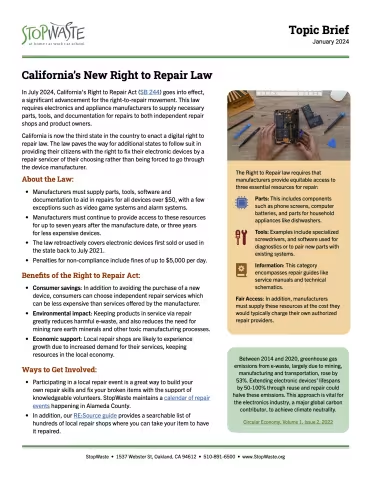
California’s New Right to Repair Law - January 2024
In July 2024, California’s Right to Repair Act ( SB 244) goes into effect, a significant advancement for the right-to-repair movement. This law requires electronics and appliance manufacturers to supply necessary parts, tools, and documentation for repairs to both independent repair shops and product owners. California is now the third state in the country to enact a digital right to repair law. The law paves the way for additional states to follow suit in providing their citizens with the right to fix their electronic devices by a repair servicer of their choosing rather than being forced to
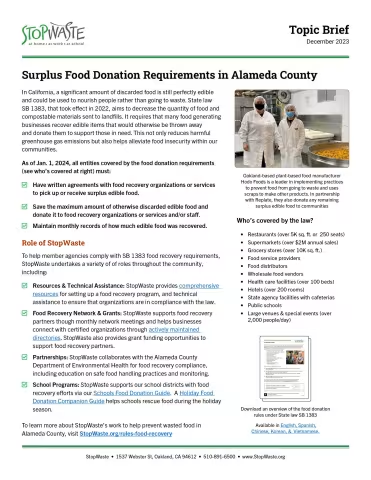
Surplus Food Donation Requirements in Alameda County - December 2023
In California, a significant amount of discarded food is still perfectly edible and could be used to nourish people rather than going to waste. State law SB 1383, that took effect in 2022, aims to decrease the quantity of food and compostable materials sent to landfills. It requires that many food generating businesses recover edible items that would otherwise be thrown away and donate them to support those in need. This not only reduces harmful greenhouse gas emissions but also helps alleviate food insecurity within our communities.
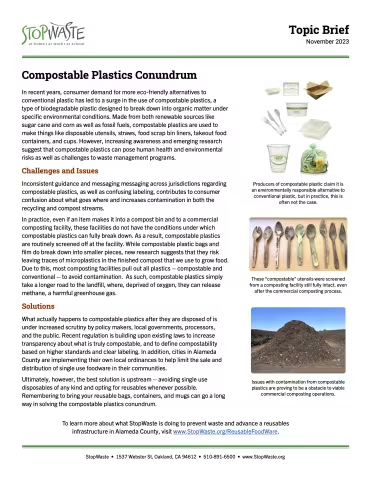
Compostable Plastics Conundrum - November 2023
In recent years, consumer demand for more eco-friendly alternatives to conventional plastic has led to a surge in the use of compostable plastics, a type of biodegradable plastic designed to break down into organic matter under specific environmental conditions. Made from both renewable sources like sugar cane and corn as well as fossil fuels, compostable plastics are used to make things like disposable utensils, straws, food scrap bin liners, takeout food containers, and cups. However, increasing awareness and emerging research suggest that compostable plastics can pose human health and
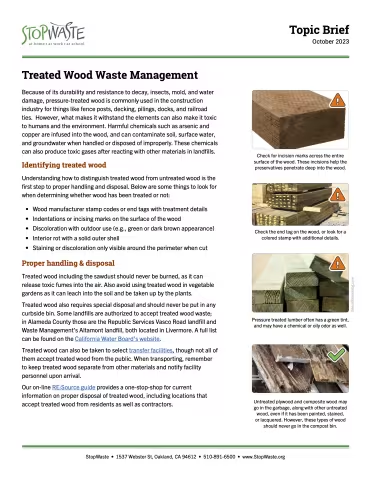
Treated Wood Waste Management - October 2023
Because of its durability and resistance to decay, insects, mold, and water damage, pressure-treated wood is commonly used in the construction industry for things like fence posts, decking, pilings, docks, and railroad ties. However, what makes it withstand the elements can also make it toxic to humans and the environment. Harmful chemicals such as arsenic and copper are infused into the wood, and can contaminate soil, surface water, and groundwater when handled or disposed of improperly. These chemicals can also produce toxic gases after reacting with other materials in landfills.
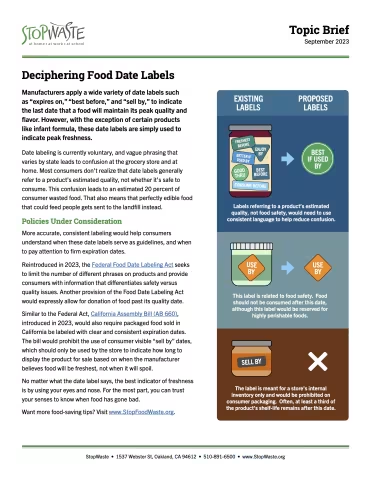
Deciphering Food Date Labels - September 2023
Manufacturers apply a wide variety of date labels such as “expires on,” “best before,” and “sell by,” to indicate the last date that a food will maintain its peak quality and flavor. However, with the exception of certain products like infant formula, these date labels are simply used to indicate peak freshness. Date labeling is currently voluntary, and vague phrasing that varies by state leads to confusion at the grocery store and at home. Most consumers don’t realize that date labels generally refer to a product’s estimated quality, not whether it’s safe to consume. This confusion leads to
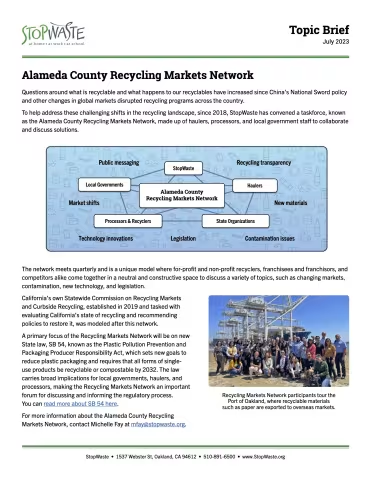
Alameda County Recycling Markets Network - July 2023
Questions around what is recyclable and what happens to our recyclables have increased since China’s National Sword policy and other changes in global markets disrupted recycling programs across the country. To help address these challenging shifts in the recycling landscape, since 2018, StopWaste has convened a taskforce, known as the Alameda County Recycling Markets Network, made up of haulers, processors, and local government staff to collaborate and discuss solutions. The network meets quarterly and is a unique model where for-profit and non-profit recyclers, franchisees and franchisors
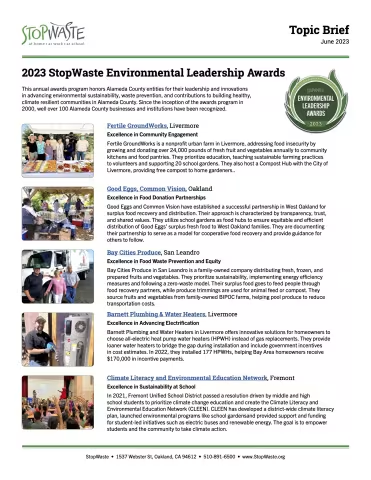
2023 StopWaste Environmental Leadership Awards - June 2023
This annual awards program honors Alameda County entities for their leadership and innovations in advancing environmental sustainability, waste prevention, and contributions to building healthy, climate resilient communities in Alameda County. Since the inception of the awards program in 2000, well over 100 Alameda County businesses and institutions have been recognized.
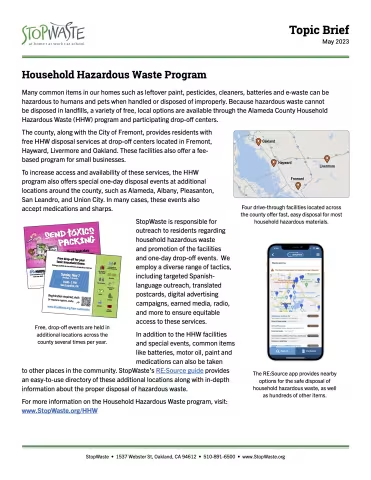
Household Hazardous Waste Program - May 2023
Many common items in our homes such as leftover paint, pesticides, cleaners, batteries and e-waste can be hazardous to humans and pets when handled or disposed of improperly. Because hazardous waste cannot be disposed in landfills, a variety of free, local options are available through the Alameda County Household Hazardous Waste (HHW) program and participating drop-off centers.