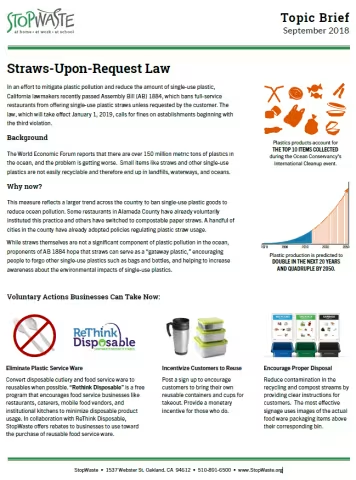
Straws-Upon-Request Law - September 2018
In an effort to mitigate plastic pollution and reduce the amount of single-use plastic, California lawmakers recently passed Assembly Bill (AB) 1884, which bans full-service restaurants from offering single-use plastic straws unless requested by the customer. The law, which will take effect January 1, 2019, calls for fines on establishments beginning with the third violation.
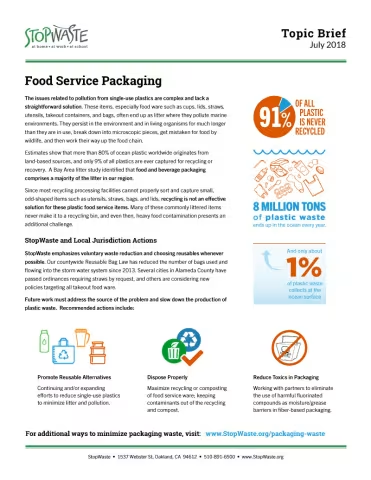
Food Service Packaging - July 2018
The issues related to pollution from single-use plastics are complex and lack a straightforward solution. These items, especially food ware such as cups, lids, straws, utensils, takeout containers, and bags, often end up as litter where they pollute marine environments. They persist in the environment and in living organisms for much longer than they are in use, break down into microscopic pieces, get mistaken for food by wildlife, and then work their way up the food chain.
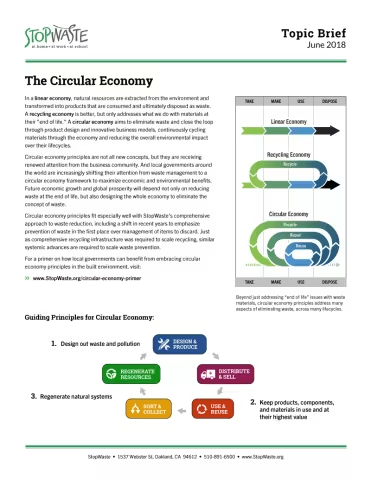
The Circular Economy - June 2018
In a linear economy, natural resources are extracted from the environment and transformed into products that are consumed and ultimately disposed as waste. A recycling economy is better, but only addresses what we do with materials at their "end of life." A circular economy aims to eliminate waste and close the loop through product design and innovative business models, continuously cycling materials through the economy and reducing the overall environmental impact over their lifecycles. Read our primer on the circular economy to learn how local governments can benefit from embracing circular
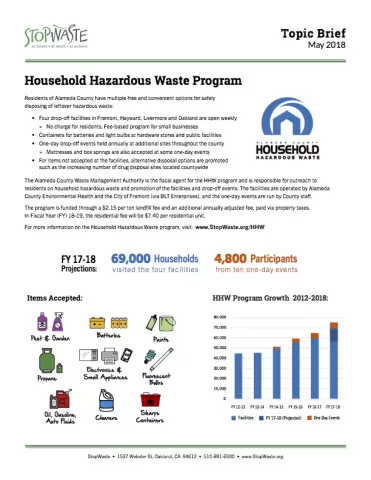
Household Hazardous Waste Program - May 2018
Residents of Alameda County have multiple free and convenient options for safely disposing of leftover hazardous waste: Four drop-off facilities in Fremont, Hayward, Livermore and Oakland are open weekly No charge for residents; fee-based program for small businesses Containers for batteries and light bulbs at hardware stores and public facilities One-day drop-off events held annually at additional sites throughout the county Mattresses and box springs are also accepted at some one-day events For items not accepted at the facilities, alternative disposal options are promoted such as drug
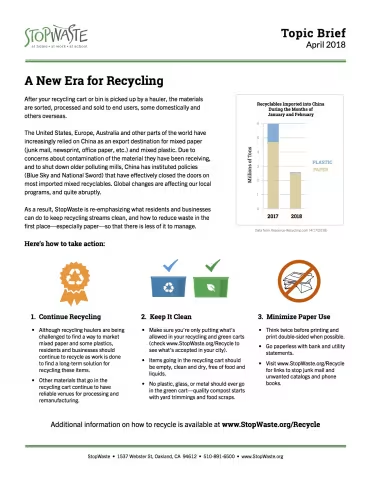
A New Era for Recycling - April 2018
The United States, Europe, Australia and other parts of the world have increasingly relied on China as an export destination for mixed paper (junk mail, newsprint, office paper, etc.) and mixed plastic. Due to concerns about contamination of the material they have been receiving, and to shut down older polluting mills, China has instituted policies (Blue Sky and National Sword) that have effectively closed the doors on most imported mixed recyclables. Global changes are affecting our local programs, and quite abruptly.
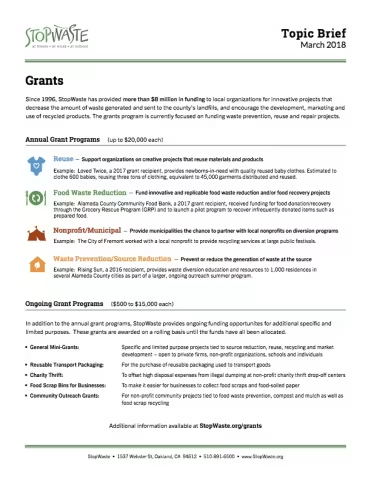
Grants Program - March 2018
Since 1996, StopWaste has provided more than $8 million in funding to local organizations for innovative projects that decrease the amount of waste generated and sent to the county's landfills, and encourage the development, marketing and use of recycled products. The grants program is currently focused on funding waste prevention, reuse and repair projects.
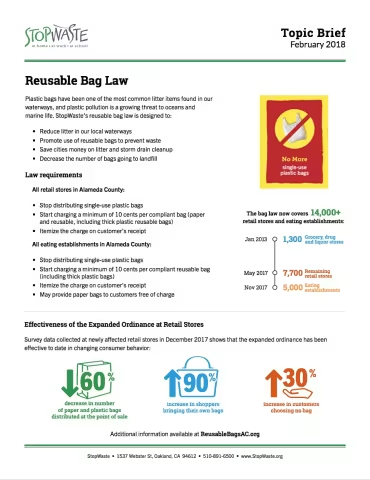
Reusable Bag Law - February 2018
Plastic bags have been one of the most common litter items found in our waterways, and plastic pollution is a growing threat to oceans and marine life. StopWaste’s reusable bag law is designed to: Reduce litter in our local waterways Promote use of reusable bags to prevent waste Save cities money on litter and storm drain cleanup Decrease the number of bags going to landfill
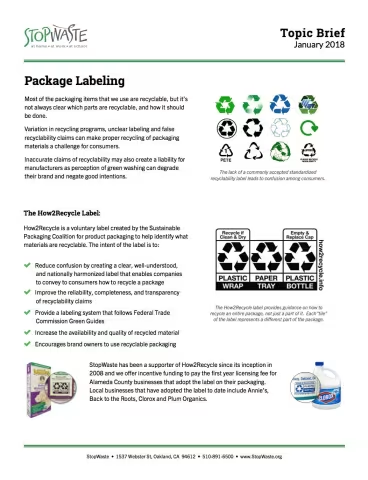
Package Labeling - January 2018
Most of the packaging items that we use are recyclable, but it’s not always clear which parts are recyclable, and how it should be done. Variation in recycling programs, unclear labeling and false recyclability claims can make proper recycling of packaging materials a challenge for consumers. Inaccurate claims of recyclability may also create a liability for manufacturers as perception of green washing can degrade their brand and negate good intentions.
Stop Food Waste at Home - December 2017
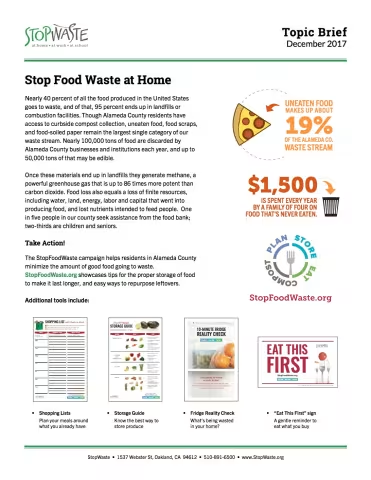
Nearly 40 percent of all the food produced in the United States goes to waste, and of that, 95 percent ends up in landfills or combustion facilities. Though Alameda County residents have access to curbside compost collection, uneaten food, food scraps, and food-soiled paper remain the largest single category of our waste stream. Nearly 100,000 tons of food are discarded by Alameda County businesses and institutions each year, and up to 50,000 tons of that may be edible. The StopFoodWaste campaign helps residents in Alameda County minimize the amount of good food going to waste. StopFoodWaste
Business Recycling - November 2017
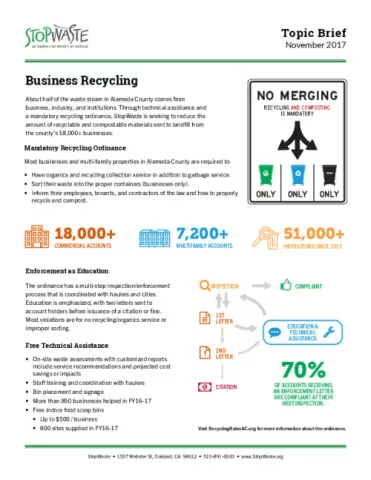
About half of the waste steam in Alameda County comes from business, industry, and institutions. Through technical assistance and a mandatory recycling ordinance, StopWaste is working to reduce the amount of recyclable and compostable materials sent to landfill from the county’s 18,000+ businesses.