Sustainable Textiles Management - April 2023
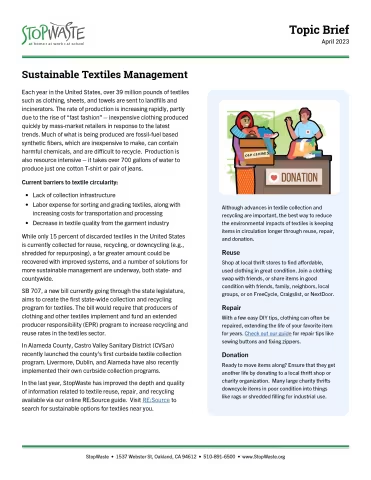
Each year in the United States, over 39 million pounds of textiles such as clothing, sheets, and towels are sent to landfills and incinerators. The rate of production is increasing rapidly, partly due to the rise of “fast fashion” – inexpensive clothing produced quickly by mass-market retailers in response to the latest trends. While only 15 percent of discarded textiles in the United States is currently collected for reuse, recycling, or downcycling (e.g., shredded for repurposing), a far greater amount could be recovered with improved systems, and a number of solutions for more sustainable
Disposable Food Service Ware Reduction and Reuse Ordinance - March 2023
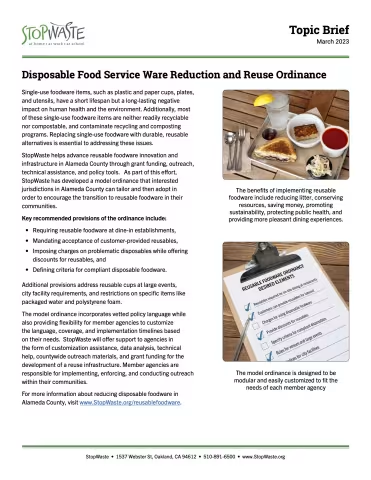
Single-use foodware items, such as plastic and paper cups, plates, and utensils, have a short lifespan but a long-lasting negative impact on human health and the environment. Additionally, most of these single-use foodware items are neither readily recyclable nor compostable, and contaminate recycling and composting programs. Replacing single-use foodware with durable, reusable alternatives is essential to addressing these issues. StopWaste helps advance reusable foodware innovation and infrastructure in Alameda County through grant funding, outreach, technical assistance, and policy tools. As
Stop Food Waste Campaign - February 2023
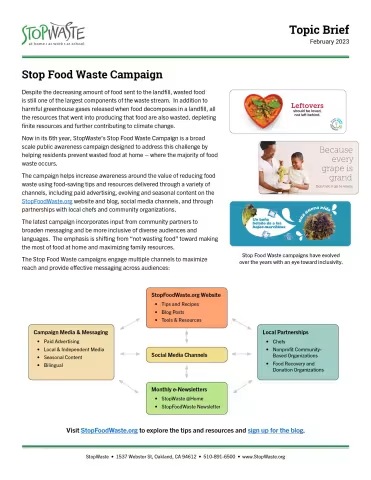
Despite the decreasing amount of food sent to the landfill, wasted food is still one of the largest components of the waste stream. In addition to harmful greenhouse gases released when food decomposes in a landfill, all the resources that went into producing that food are also wasted, depleting finite resources and further contributing to climate change. Now in its 6th year, StopWaste’s Stop Food Waste Campaign is a broad scale public awareness campaign designed to address this challenge by helping residents prevent wasted food at home – where the majority of food waste occurs. Visit
Benefits of Induction Cooking - January 2023
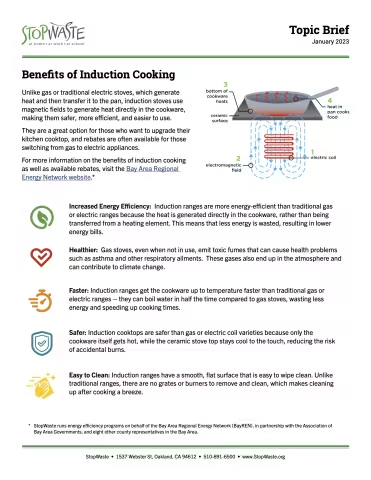
Unlike gas or traditional electric stoves, which generate heat and then transfer it to the pan, induction stoves use magnetic fields to generate heat directly in the cookware, making them safer, more efficient, and easier to use. They are a great option for those who want to upgrade their kitchen cooktop, and rebates are often available for those switching from gas to electric appliances. For more information on the benefits of induction cooking as well as available rebates, visit the Bay Area Regional Energy Network website.
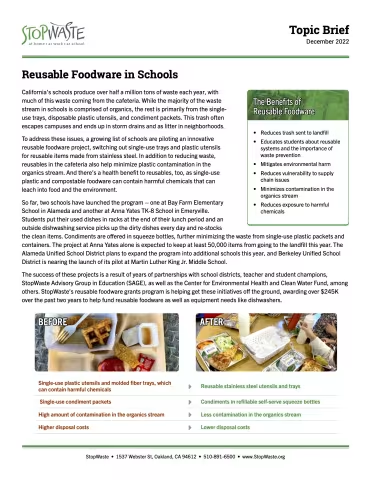
Reusable Foodware in Schools - December 2022
California’s schools produce over half a million tons of waste each year, with much of this waste coming from the cafeteria. While the majority of the waste stream in schools is comprised of organics, the rest is primarily from the single-use trays, disposable plastic utensils, and condiment packets. This trash often escapes campuses and ends up in storm drains and as litter in neighborhoods. To address these issues, a growing list of schools are piloting an innovative reusable foodware project, switching out single-use trays and plastic utensils for reusable items made from stainless steel
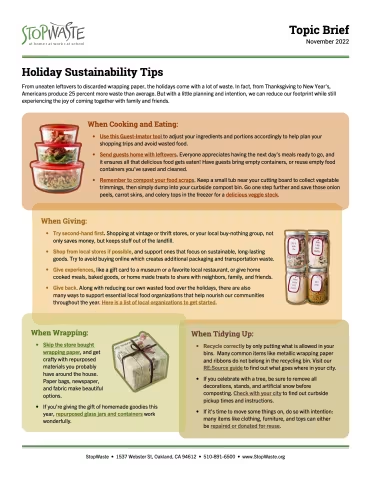
Holiday Sustainability Tips - November 2022
From uneaten leftovers to discarded wrapping paper, the holidays come with a lot of waste. In fact, from Thanksgiving to New Year’s, Americans produce 25 percent more waste than average. But with a little planning and intention, we can reduce our footprint while still experiencing the joy of coming together with family and friends.
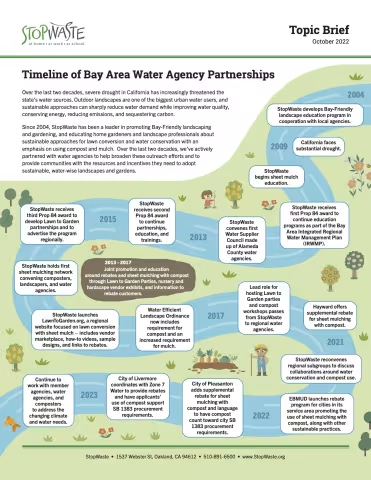
Timeline of Bay Area Water Agency Partnerships - October 2022
Over the last two decades, severe drought in California has increasingly threatened the state’s water sources. Outdoor landscapes are one of the biggest urban water users, and sustainable approaches can sharply reduce water demand while improving water quality, conserving energy, reducing emissions, and sequestering carbon. Since 2004, StopWaste has been a leader in promoting Bay-Friendly landscaping and gardening, and educating home gardeners and landscape professionals about sustainable approaches for lawn conversion and water conservation with an emphasis on using compost and mulch. Over
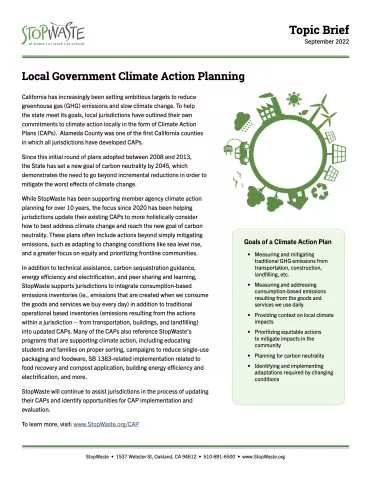
Local Government Climate Action Planning - September 2022
California has increasingly been setting ambitious targets to reduce greenhouse gas (GHG) emissions and slow climate change. To help the state meet its goals, local jurisdictions have outlined their own commitments to climate action locally in the form of Climate Action Plans (CAPs). Alameda County was one of the first California counties in which all jurisdictions have developed CAPs.
SB 54: New California Law to Cut Plastic Pollution - July 2022
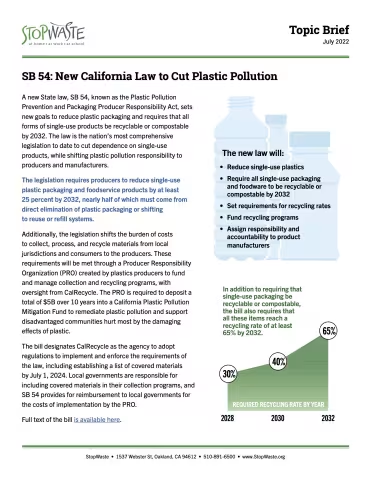
A new State law, SB 54, known as the Plastic Pollution Prevention and Packaging Producer Responsibility Act, sets new goals to reduce plastic packaging and requires that all forms of single-use products be recyclable or compostable by 2032. The law is the nation’s most comprehensive legislation to date to cut dependence on single-use products, while shifting plastic pollution responsibility to producers and manufacturers.
2022 StopWaste Efficiency Award Winners - June 2022
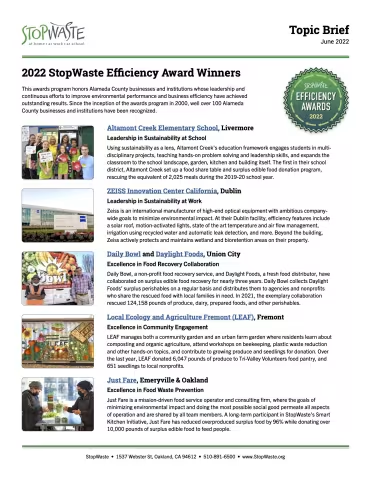
This awards program honors Alameda County businesses and institutions whose leadership and continuous efforts to improve environmental performance and business efficiency have achieved outstanding results. Since the inception of the awards program in 2000, well over 100 Alameda County businesses and institutions have been recognized.