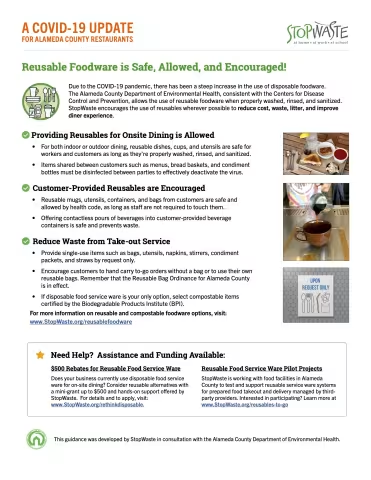
COVID-19 - Reusable Foodware Update - June 2021
Due to the COVID-19 pandemic, there has been a steep increase in the use of disposable foodware. The Alameda County Department of Environmental Health, consistent with the Centers for Disease Control and Prevention, allows the use of reusable foodware when properly washed, rinsed, and sanitized. StopWaste encourages the use of reusables wherever possible to reduce cost, waste, litter, and improve diner experience.
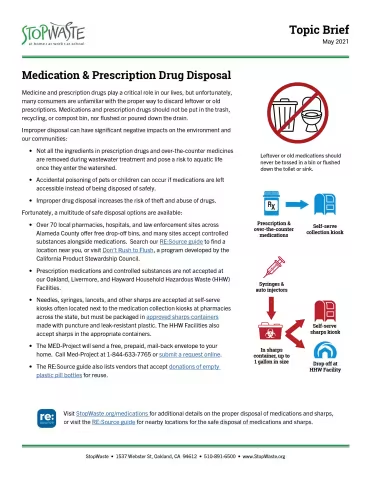
Medication & Prescription Drug Disposal - May 2021
Medicine and prescription drugs play a critical role in our lives, but unfortunately, many consumers are unfamiliar with the proper way to discard leftover or old prescriptions. Medications and prescription drugs should not be put in the trash, recycling, or compost bin, nor flushed or poured down the drain. Improper disposal can have significant negative impacts on the environment and our communities, but fortunately, a multitude of safe disposal options are available.
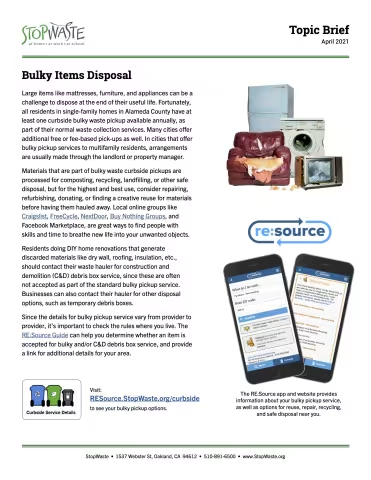
Bulky Items Disposal - April 2021
Large items like mattresses, furniture, and appliances can be a challenge to dispose at the end of their useful life. Fortunately, all residents in single-family homes in Alameda County have at least one curbside bulky waste pickup available annually, as part of their normal waste collection services. Since the details for bulky pickup service vary from provider to provider, it’s important to check the rules where you live. The RE:Source Guide can help you determine whether an item is accepted for bulky and/or C&D debris box service, and provide a link for additional details for your area.
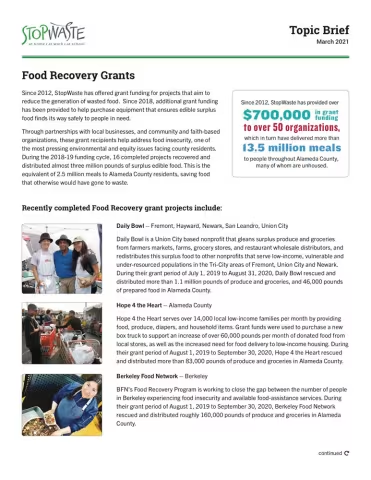
Food Recovery Grants - March 2021
Since 2012, StopWaste has offered grant funding for projects that aim to reduce the generation of wasted food. Since 2018, additional grant funding has been provided to help purchase equipment that ensures edible surplus food finds its way safely to people in need.
State Recycling Commission Recommendations - February 2021
In the wake of changes in global markets for recyclable materials, in 2019, Governor Newsom signed into law AB 1583, requiring CalRecycle to convene a Statewide Commission on Recycling Markets and Curbside Recycling. This collaborative concept was modeled after StopWaste’s own Alameda County Recycling Markets Network, and is tasked with evaluating California’s current state of recycling and recommending policies to fix it.
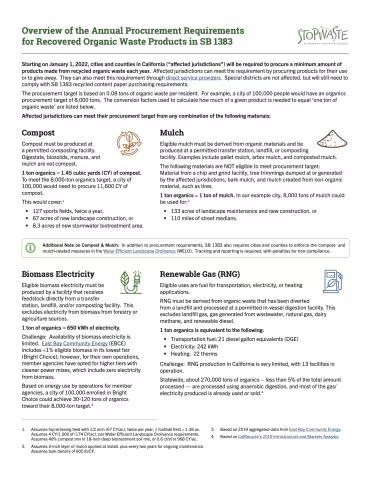
SB 1383 - Annual Procurement Requirements - January 2021
The procurement target is based on 0.08 tons of organic waste per resident. For example, a city of 100,000 people would have an organics procurement target of 8,000 tons. Affected jurisdictions can meet their procurement target from any combination of the following materials: compost, mulch, electricity generated from biomass, and renewable gas. Starting on January 1, 2022, cities and counties in California will be required to procure a minimum amount of products made from recycled organic waste each year. Affected jurisdictions can meet the requirement by procuring products for their use or
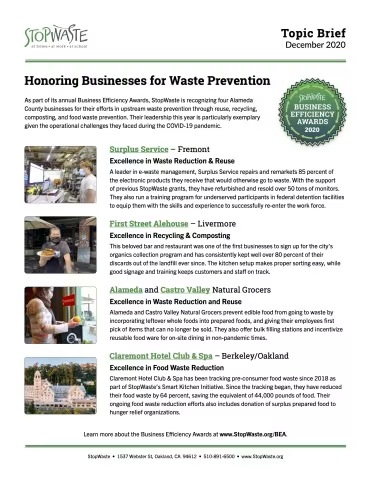
Honoring Businesses for Waste Prevention - December 2020
As part of its annual Business Efficiency Awards, StopWaste is recognizing four Alameda County businesses for their efforts in upstream waste prevention through reuse, recycling, composting, and food waste prevention. Their leadership this year is particularly exemplary given the operational challenges they faced during the COVID-19 pandemic.
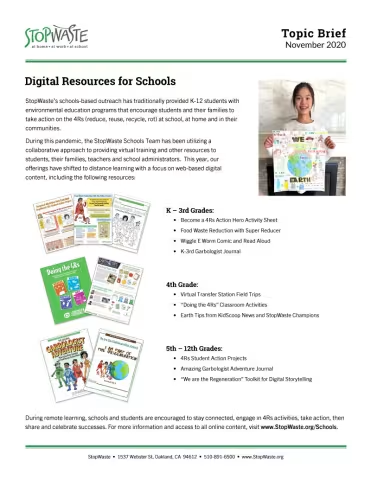
Digital Resources for Schools - November 2020
StopWaste’s schools-based outreach has traditionally provided K-12 students with environmental education programs that encourage students and their families to take action on the 4Rs (reduce, reuse, recycle, rot) at school, at home and in their communities. During this pandemic, the StopWaste Schools Team has been utilizing a collaborative approach to providing virtual training and other resources to students, their families, teachers and school administrators. This year, our offerings have shifted to distance learning with a focus on web-based digital content.
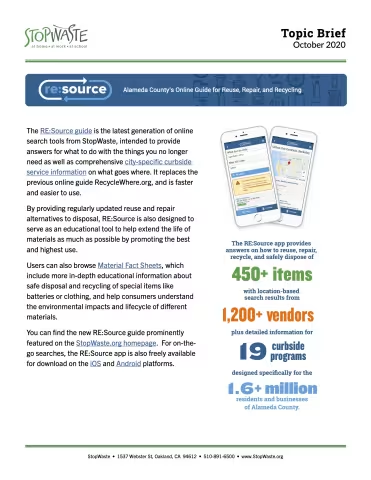
RE:Source Guide - October 2020
The RE:Source guide is the latest generation of online search tools from StopWaste, intended to provide answers for what to do with the things you no longer need as well as comprehensive city-specific curbside service information on what goes where. It replaces the previous online guide RecycleWhere.org, and is faster and easier to use.
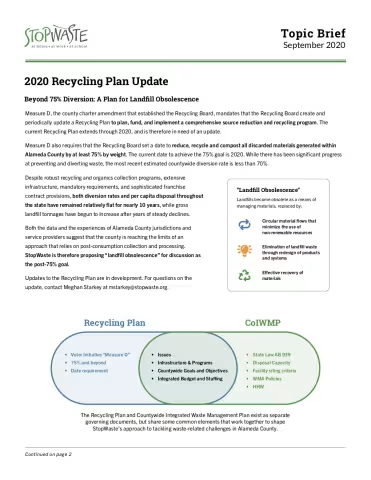
Recycling Plan Update - September 2020
Measure D, the county charter amendment that established the Recycling Board, mandates that the Recycling Board create and periodically update a Recycling Plan to plan, fund, and implement a comprehensive source reduction and recycling program. The current Recycling Plan extends through 2020, and is therefore in need of an update.